Skip to content

Southern Fried Science

Over 15 years of ocean science and conservation online

  • Home
  • About SFS
  • Authors
  • Support SFS

Recent Posts

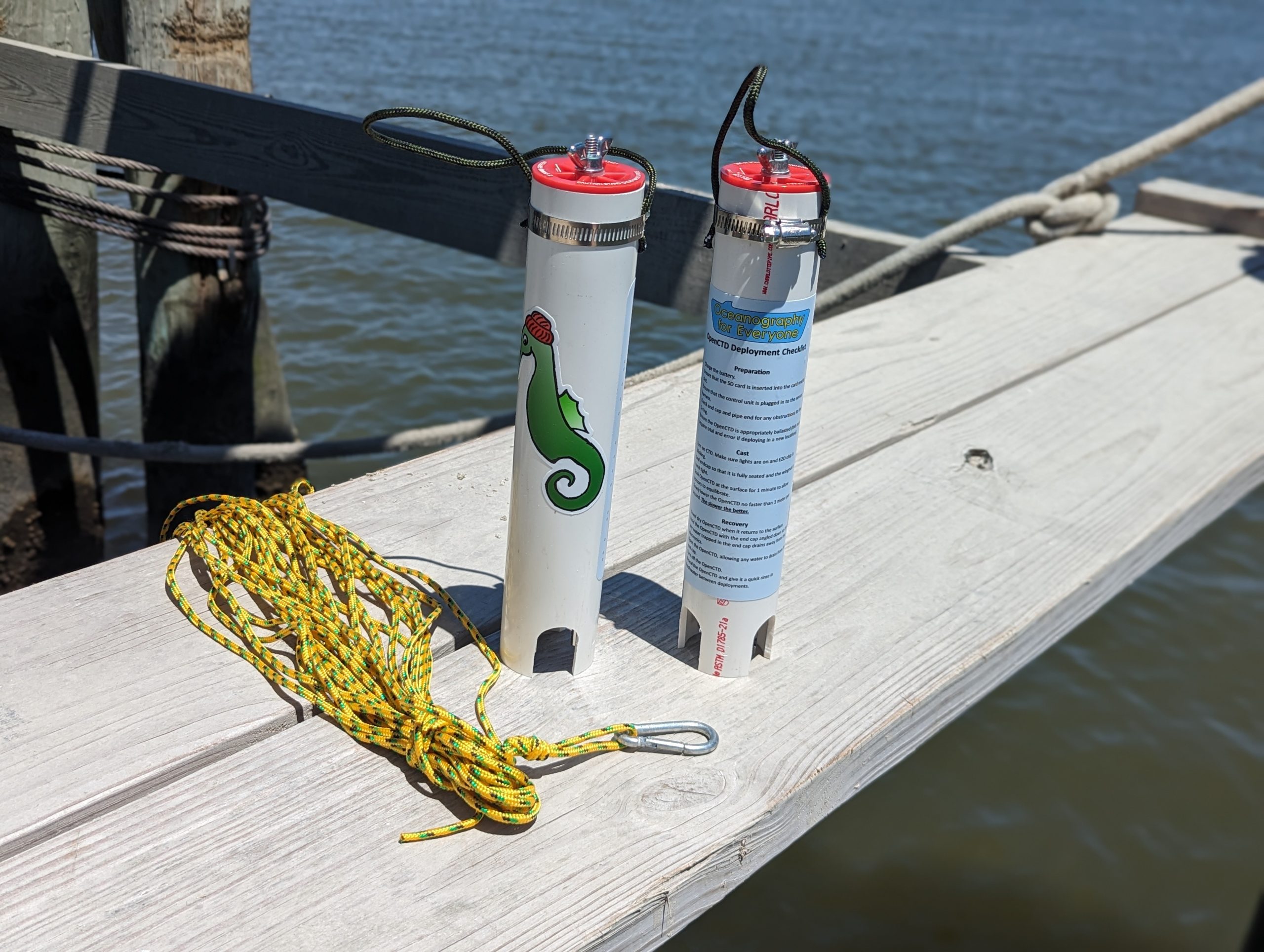
The next OpenCTD is here!
June 22, 2026
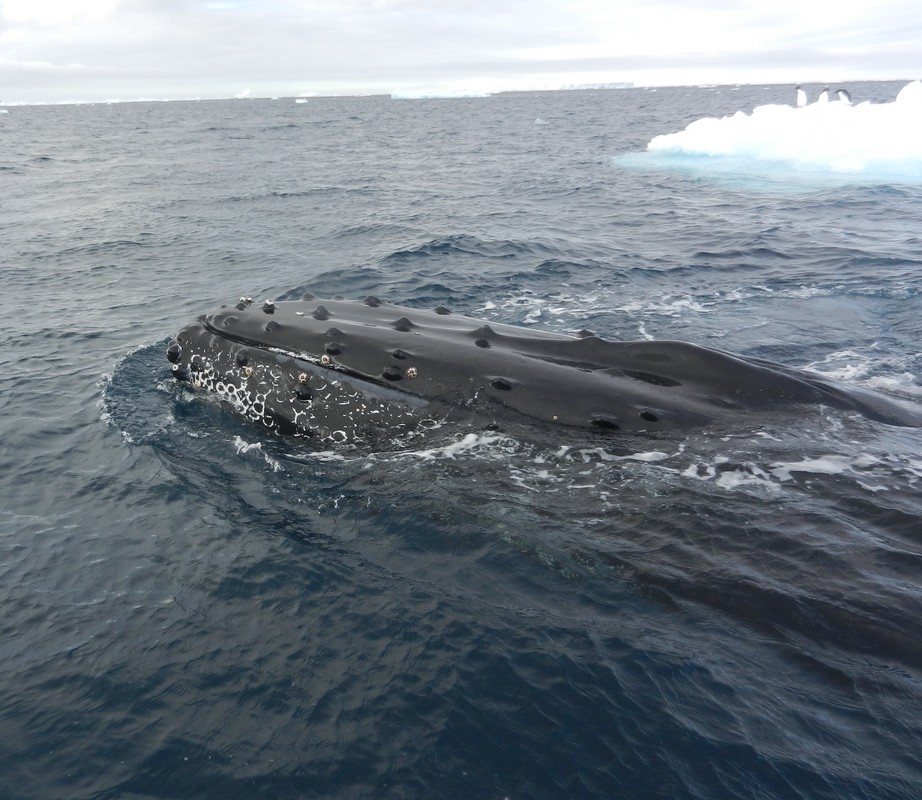
humpback whale in Antarctica
The evolution of the International Whaling Commission – from  whaling quotas to whale conservation
June 10, 2026
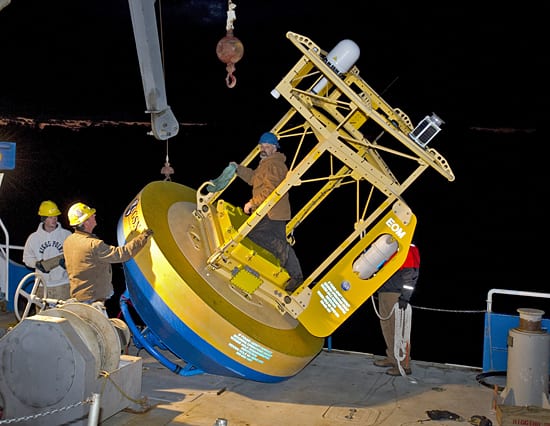
Isn’t ironic, don’t you think: dismantling the Ocean Observatories Initiative on World Oceans Day
June 9, 2026
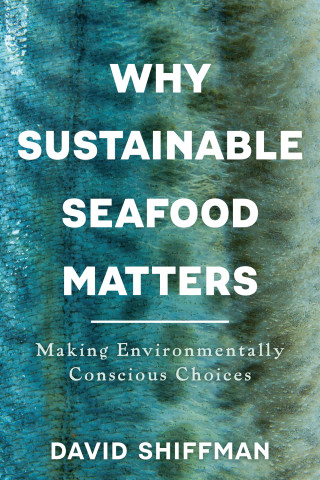
“Why Sustainable Seafood Matters” is now available for preorder! Here’s what it’s about, and why I decided to write it.
June 8, 2026
Here’s how to join my IMCC8 symposium, “Ocean Science Communication: What’s New and What’s Next?”
April 22, 2026
Deep Sea Mining Symposium Announcement
April 21, 2026

Book Review: Five Fundamentals for Fisheries

Posted on April 18, 2011April 19, 2011 By Andrew Thaler 1 Comment on Book Review: Five Fundamentals for Fisheries
Conservation

Daniel Pauly’s research over the last 20 has provided much of the foundational theory in modern fisheries management. In 5 Easy Pieces, Daniel Pauly presents his five most influential papers, with a concise history of both the intellectual and human motivations that led to each study. The papers that were included in this volume are: Primary Production required to Sustain Global Fisheries, Fishing Down Marine Food Webs, Systematic Distortion in World Fisheries Catch Trends, Towards Sustainability in Global Fisheries, and The Future of Fisheries.

Read More “Book Review: Five Fundamentals for Fisheries” »

Beneath the Waves Film Festival: Shifting Gears

Posted on April 18, 2011April 18, 2011 By David Shiffman
Conservation, Science

This 2011 Beneath the Waves Film Festival entry comes from the Pew Charitable Trusts. Shifting Gears tells the story of longlining in the Gulf of Mexico. If you have a question for the filmmakers, please leave it as a comment below and I’ll make sure they get it.  

What Societal Changes need to be Made for a Sustainable Future?

Posted on April 18, 2011April 25, 2011 By Andrew Thaler 3 Comments on What Societal Changes need to be Made for a Sustainable Future?
Uncategorized

So far this month we’ve asked what Sustainability means to you and what you personally are doing to lead a more sustainable life. But not all sustainability goals can be met by individual actions. Our society is collectively on an unsustainable path. For the third week of Science and Sustainability Month, I’d like to know … Read More “What Societal Changes need to be Made for a Sustainable Future?” »

Science and Sustainability Comment of the Week

Posted on April 17, 2011April 16, 2011 By David Shiffman
Uncategorized

As the second week of Science and Sustainability Month comes to a close, I’d like to congratulate Rebecca Nesbit for writing the latest comment of the week. “It makes it so much harder for consumers when there aren’t simple solutions like ‘local is better’. What I would love to see is better labeling. Just as … Read More “Science and Sustainability Comment of the Week” »

Weekly dose of TED – Dee Boersma: Pay attention to penguins

Posted on April 15, 2011April 14, 2011 By Andrew Thaler
Uncategorized


Beneath the Waves Film Festival: Microworlds – What Do Marine Mammals Eat?

Posted on April 14, 2011April 2, 2011 By David Shiffman
Science

This 2011 Beneath the Waves Film Festival entry comes from Paul Hillman at NOAA.  What Do Marine Mammals Eat? is part of the Microworlds series, which focuses on NOAA scientists interacting with public school students.    

Sustainability in Rural Areas

Posted on April 14, 2011April 14, 2011 By Bluegrass Blue Crab 2 Comments on Sustainability in Rural Areas
Uncategorized

Being a “green” person nowadays means that you compost, ride your bike everywhere, eat organic and local, drink tap water, and try to consume less. Visions of this person generally conjure the image of the urbanite, however, sometimes spilling into other aspects of life such as an activist job and vegan diet. Never do we think of the poor rural citizen either as the target of “greening” or as someone who might already be green.

Read More “Sustainability in Rural Areas” »

A rig by any other name, could it be an artificial reef?

Posted on April 14, 2011 By Andrew Thaler 2 Comments on A rig by any other name, could it be an artificial reef?
Conservation, Science

There are currently more than 7,500 offshore oil platforms actively probing the earth’s crust for black gold. Their relatively minimal appearance at the surface belies the shear magnitude of human construction beneath the waves. Oil platforms are among the world’s tallest man-made structures. Compliant tower platforms reach up to 900 meters in depth (in contrast, the tallest building is 828 meters). these rigs are not permanent structures. As the wells run dry and sea water corrodes steel jackets, the wells are capped and rigs decommissioned. At least 6500 offshore platforms are slated for decommission by 2025, which begs the question, what do we do with inactive oil platforms?

Read More “A rig by any other name, could it be an artificial reef?” »

Biodiversity Wednesday: Emerging Habitats

Posted on April 13, 2011April 13, 2011 By Bluegrass Blue Crab
Uncategorized

A growing number of scholars now say that we live in an era known as the Anthropocene. Yes, this means that something fundamental about how the earth and its ecosystems function has shifted because of human activities. A quick history of the term shows that admitting to this shift also means admitting to the blame that humans arguably deserve. However, step away from that finger-pointing blame stance for a minute. If humans have fundamentally changed the earth’s geology, doesn’t that mean we’re looking at all sorts of new habitats and opportunities for evolution to create new critters? Yes, yes it does.

Read More “Biodiversity Wednesday: Emerging Habitats” »

Assumptions on Human Behavior

Posted on April 12, 2011April 12, 2011 By Bluegrass Blue Crab
Uncategorized

Sustainability is as much about personal decisions as it is about broad social movements or top-down government rules. Those personal decisions are rooted deeply in how we behave as human beings, and that is something that science is far from understanding.

Adam Smith once said “we are not ready to suspect any person of being defective in selfishness (Smith 1804). In many neoclassical economics studies, humans are assumed to act rationally – that is, they act in their own self-interest (known as rational choice theory. Self-interest is generally calculated by financial gain, but more progressive economists will include other factors in the formation of their utility curves such as time resources. The idea spreads beyond economics, however, into other disciplines such as evolutionary biology. For example, Richard Dawkins has argued for the “selfish gene”(2006) attributing all animal behavior to propagation of their genes. He goes so far as to say that any observed “altruism” is actually benefitting individuals with shared genes, so is still essentially selfish behavior.


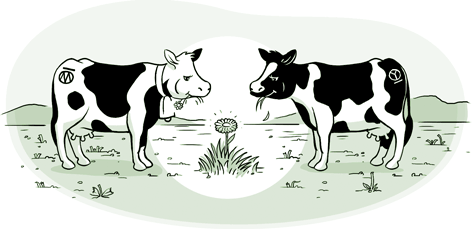
Hardin's original example: cows sharing a field, cred.columbia.edu

Perhaps the most cited example of the rational actor is Garrett Hardin’s “Tragedy of the Commons” (1968). Hardin describes the scenario of a common field in which people have the opportunity to graze their cows. Each person adding an additional cow degrades the field a little more, but the costs are split among all users while the benefits go solely to the owner of the cow. According to the rational choice model of human behavior, people then have the incentive to add more and more cows until the field is no longer useable. He concludes his analysis by implying only two solutions – privatization or strong central governmental control.

Read More “Assumptions on Human Behavior” »

Posts pagination

Previous 1 … 171 172 173 … 273 Next

Popular Posts

Screaming into the void - Why your scientific paper doesn’t matterScreaming into the void - Why your scientific paper doesn’t matterJune 18, 2026Chris Parsons
What Ocean Ramsey does is not shark science or conservation: some brief thoughts on "the Shark Whisperer" documentaryWhat Ocean Ramsey does is not shark science or conservation: some brief thoughts on "the Shark Whisperer" documentaryJuly 2, 2025David Shiffman
Ageism in the conservation job marketAgeism in the conservation job marketJune 19, 2026Chris Parsons
I can serve on your graduate thesis committee. Here’s what you can expect of me, and what I expect in return.I can serve on your graduate thesis committee. Here’s what you can expect of me, and what I expect in return.October 16, 2025David Shiffman
That's not a blobfish: Deep Sea Social Media is Flooded by AI SlopThat's not a blobfish: Deep Sea Social Media is Flooded by AI SlopDecember 19, 2025Andrew Thaler
The next OpenCTD is here!The next OpenCTD is here!June 22, 2026Andrew Thaler
The story of the pride flag made from NASA imagery: Bluesky's most-liked imageThe story of the pride flag made from NASA imagery: Bluesky's most-liked imageSeptember 27, 2024David Shiffman
What is a Sand Shark?What is a Sand Shark?November 12, 2017Chuck Bangley
Our favorite sea monsters – Ningen (#4)Our favorite sea monsters – Ningen (#4)September 7, 2010Andrew Thaler
Shark of Darkness: Wrath of Submarine is a fake documentaryShark of Darkness: Wrath of Submarine is a fake documentaryAugust 10, 2014Michelle Jewell

squishy

Subscribe to our RSS Feed for updates whenever new articles are published.

We recommend Feedly for RSS management. It's like Google Reader, except it still exists.

Southern Fried Science

  • Home
  • About SFS
  • Authors
  • Support SFS


If you enjoy Southern Fried Science, consider contributing to our Patreon campaign.

Copyright © 2026 Southern Fried Science.

Theme: Oceanly Premium by ScriptsTown