
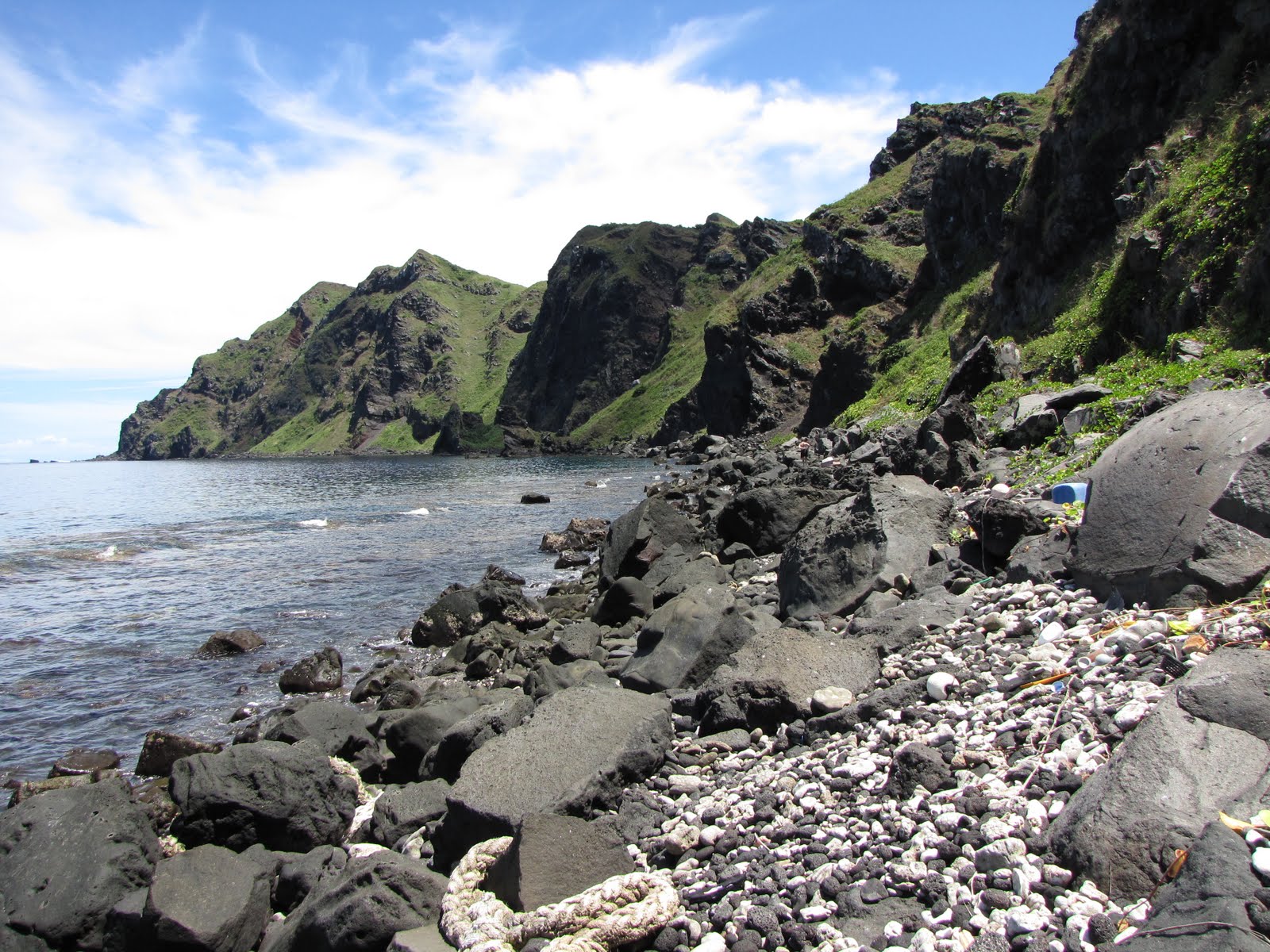
A growing number of scholars now say that we live in an era known as the Anthropocene. Yes, this means that something fundamental about how the earth and its ecosystems function has shifted because of human activities. A quick history of the term shows that admitting to this shift also means admitting to the blame that humans arguably deserve. However, step away from that finger-pointing blame stance for a minute. If humans have fundamentally changed the earth’s geology, doesn’t that mean we’re looking at all sorts of new habitats and opportunities for evolution to create new critters? Yes, yes it does.

Sustainability is as much about personal decisions as it is about broad social movements or top-down government rules. Those personal decisions are rooted deeply in how we behave as human beings, and that is something that science is far from understanding.
Adam Smith once said “we are not ready to suspect any person of being defective in selfishness (Smith 1804). In many neoclassical economics studies, humans are assumed to act rationally – that is, they act in their own self-interest (known as rational choice theory. Self-interest is generally calculated by financial gain, but more progressive economists will include other factors in the formation of their utility curves such as time resources. The idea spreads beyond economics, however, into other disciplines such as evolutionary biology. For example, Richard Dawkins has argued for the “selfish gene”(2006) attributing all animal behavior to propagation of their genes. He goes so far as to say that any observed “altruism” is actually benefitting individuals with shared genes, so is still essentially selfish behavior.

Perhaps the most cited example of the rational actor is Garrett Hardin’s “Tragedy of the Commons” (1968). Hardin describes the scenario of a common field in which people have the opportunity to graze their cows. Each person adding an additional cow degrades the field a little more, but the costs are split among all users while the benefits go solely to the owner of the cow. According to the rational choice model of human behavior, people then have the incentive to add more and more cows until the field is no longer useable. He concludes his analysis by implying only two solutions – privatization or strong central governmental control.
Successfully switching the global economy from oil and coal based energy to clean energy is one of the major goals of the modern environmental movement. No single idea will accomplish this -to succeed, we’re going to need a combination of technologies.
Many proposed solutions involve a trade-off. Reasonable people can disagree over whether the environmental benefits of wind turbines or nuclear power plants outweigh the risks, for example. Every once in a while, however, a completely ridiculous idea comes along.
Read More “How not to save the environment: sharks as biofuel” »
The latest 2011 Beneath the Waves Film Festival entry, Mini-Season, comes from University of Miami graduate student Erica Staaterman. It explains the culture and biological effects of lobster mini-season in the Florida Keys.

A small news article from Science has been taped above my desk for the last few years. I don’t remember who originally gave it to me, or why I even hung it up, but there it is, nestled between a couple XKCD cartoons. The article is titled “The Wine Divide” and it raises many questions about sustainability, inherent biases in conventional wisdom, and what the term “local” means in a global economy. And it’s about wine.
Read More “Spanning the Bordeaux Belt – what does local mean in a global economy” »
It’s the second week of Science and Sustainability month, and this time we want to know what you have done to lead a more sustainable life. Be as specific or as general as you want. Do you reuse items that you’d normally throw away, bike instead of drive, compost your trash? Have you made dramatic … Read More “What steps have you taken to lead a more sustainable life?” »

We launched Science and Sustainability month with an open thread, asking our readers “What does sustainability mean to you?” We received several truly stellar comments, but can, unfortunately, only choose one to be our comment of the week. Congratulations to Mark Gibson, who said:
Read More “Science and Sustainability Comment of the Week” »

The world is rapidly approaching 7 billion people and the challenges of food supply, security, and sustainability will, along with climate change, be the defining issues of the 21st century. While the issues of the wealthiest nations revolve around the quality of our food, the environmental impact or our farming practices, and the value we place on a perceived degree of “naturalness”, the rest of the world is simply concerned with having enough to eat. What we chose to value in our society affects the rest of the world, and perhaps the most visible, and most dramatic difference between the developing and developed world is the ways in which we treat our pets.
Hans Rosling has an important and often overlooked message about how the decisions made by the wealthiest affect the poorest and where we need to focus our goals when we talk about sustainability.
The winner of “Best Conservation Message” at the 2011 Beneath the Waves Film Festival came from Laura Hutchinson, a graduate student at Texas A and M’s Harte Research Institute. Sink Your Shucks explains the ecological importance of oysters and how people can help to restore oyster reefs.