

One of the most prevalent shark myths is “sharks don’t get cancer”. This is associated with the more troubling myth that consuming shark cartilage will cure humans of cancer. Despite the success of books with titles like “Sharks don’t get cancer: How shark cartilage could save your life” and “Sharks still don’t get cancer: The … Read More “Ocean of Pseudoscience Shorty – Sharks and Cancer” »


Wandering through the grocery store the other day, I noticed something strange in the fish bin. Now, in general I’m pretty conscious of where my fish comes from, how it was caught, whether the fishery as a whole or the specific population is sustainable. I pay attention to those details and I can usually tell when a company’s branding is legitimate and when it’s just greenwashing.
Imagine my shock when I found a packet of Orange Roughy, sold by the Full Circle brand, and marketed as sustainable.
Read More “Greenwashing – Is there really a sustainable Orange Roughy fishery?” »

In 1971, a group of people known as the Tasaday were discovered on a remote island of the Phillipines known as Mindanao. They wore leafy loincloths and subsisted off what the forest could provide, possessing no knowledge of tobacco, corn, rice, or domesticated animals. They spoke a new dialect of Malay-Philipino language that included no word for outsiders, war, weapon, or enemy, giving them the title ‘The Gentle Tasaday’. The family unit was nuclear and the community has no formal organization or government outside of some loose food-sharing networks.
Today, Tasaday life is way different and matches more modern tribal life in the Phillipines, as documented on their website. The question is, however, whether this modernization was normal development post-contact or whether there was a hoax involved.

Georg Wilhelm Steller was a highly influential 18th century German naturalist who explored the coasts of Russia and Alaska. During his career, he described many species, including the northern fur seal, sea otter, Steller’s sea lion, Steller’s eider, spectacled cormorant, and the now extinct giant Steller’s sea cow. In addition to his many observed findings, he also described a fat, hairy creature with a dog-like head that he termed Simia marina, the sea ape.
Read More “Our favorite sea monsters – Steller’s Sea Ape (#7)” »
Charlie dons his beret and Julbo mountain goggles as he gets ready to bust some ocean myths
Chapter 6 of the classic Moby Dick by Herman Melville, summarized in verse. Read along with us and discuss this chapter or the book as a whole in the comments. The Street Walking the streets of New Bedford, Ishmael stumbles among the vast sea of seamen, harpooners traveling across the world to hunt the giant, … Read More “Finding Melville’s Whale: Chapter 6 – The Street” »
Pseudoscience. The world is full of it. From acupuncture to cryptozoology to ghosts and homeopathy, sometimes it’s harmless and sometimes it’s not. The major trend that runs through all pseudoscience is that the anecdote trumps data. So what if the data indicate that Bigfoot ain’t real, I saw one! It must be true! The ocean … Read More “It’s an Ocean of Pseudoscience Week!” »
Chapter 5 of the classic Moby Dick by Herman Melville, summarized in verse. Read along with us and discuss this chapter or the book as a whole in the comments. Breakfast In good spirits Ishmael seeks his breakfast. The bar room filled with whalers, tired from their night ashore, cheerful and bountiful. Shore-leave echoes in … Read More “Finding Melville’s Whale: Chapter 5 – Breakfast” »
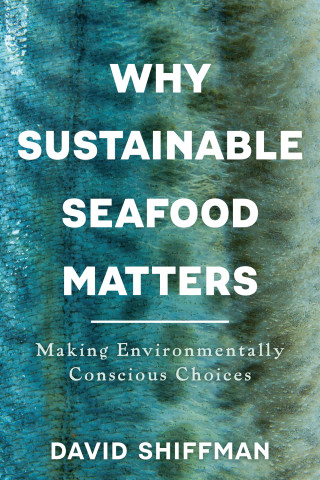
Hmm, I wonder why Charlie is reading that book…
Now he’s cracking into my undergrad logic textbooks. Charlie must be planning something big if he’s warming up his critical thinking lobe.