

Uncategorized
Charlie out in the snow
Over 15 years of ocean science and conservation online
Charlie out in the snow
First they paraded half-naked women around in cities (including Charleston, right across from the building where I teach) holding signs that said “I’d rather be naked than wear fur” (Link NSFW). Then they had the “vegetarians have better sex” commercial that the Super Bowl refused to air (Link also NSFW). Now PETA is at it … Read More “More ineffective advocacy from PETA” »
Charlie hangs out on a serpentinite formation.
Charlie and a Southern Fried Mom in the snow.
Miriam, from over at Deep Sea News was our last submission, in just under the wire CA time.
I recently heard an excellent quote about conservation issues. The source of this quote is, of all people, my new home state’s embattled Governor. Mark Sanford, prior to his “hiking the Appalachian Trail” scandal, was a well-respected small government conservative. During a speech about his views, he stated that “the issue of environmental conservation sits … Read More “A thought provoking quote about conservation” »
Charlie marvels at the lavalavalava lamp.
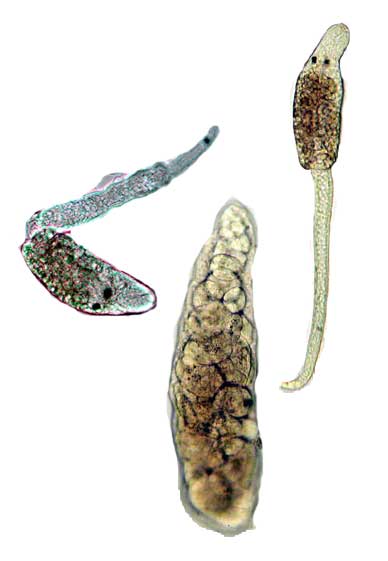
 It takes a team from New Zealand to figure out that the US has its pesticide regulation wrong: toxins don’t act in the wild as they do in the carefully controlled and designed lab dosings. Sounds reasonable, right? Well, a recent article in the Journal of Applied Ecology by Kelly et al. was the first to describe Roundup’s ability to act synergistically with a parasitic worm. Commercial formulations of Roundup, the most commonly used herbicide in the world, were found to increase the production of a parasitic worm’s (Telogaster opisthorchis) while at the same time decreasing a fish’s (Galaxias anomalus) immune system’s ability to fend off the parasite.
Kudos for Kevin for adding a tune: All the rest of you, you have two hours to get your submissions in. Get talkin’!
 Welcome to the latest edition of Carnival of the Blue, a monthly compilation of the best in ocean science blogging from around the internet! This month’s entries are as diverse as ocean life itself, and are almost as awesome as the new logo that Jason Robertshaw was kind enough to make for this month’s carnival. You should all be sure to give each of our excellent submissions a read, but definitely take the time to admire this great logo. It’s the standard Carnival of the Blue logo, but there’s a shark swimming by it! It’s almost as if Jason knew that a shark enthusiast would be hosting this month’s Carnival. And now, on to this month’s submissions.
Read More “Carnival of the Blue #34: Awesome logo edition!” »