
Skip to content

Southern Fried Science

Over 15 years of ocean science and conservation online

  • Home
  • About SFS
  • Authors
  • Support SFS

Recent Posts

Isn’t ironic, don’t you think: dismantling the Ocean Observatories Initiative on World Oceans Day
June 9, 2026
“Why Sustainable Seafood Matters” is now available for preorder! Here’s what it’s about, and why I decided to write it.
June 8, 2026
Here’s how to join my IMCC8 symposium, “Ocean Science Communication: What’s New and What’s Next?”
April 22, 2026
Deep Sea Mining Symposium Announcement
April 21, 2026
Join Me at Upwell: A Wave of Ocean Justice — Our Fourth Year!
March 24, 2026
How close did the world’s first deep-sea mining come to the dredging the world’s largest cold-water coral reef?
March 17, 2026

Fun Science FRIEDay – Life After Death

Posted on October 20, 2017October 20, 2017 By Kersey Sturdivant
Uncategorized

That ominous specter of death. The one certainty in life that we are all careening towards. But how much do we really understand about death? Medically death is defined as the moment the heart stops beating and cuts off blood to the brain. Within seconds after heart failure the brain’s cerebral cortex — the “thinking part” of the brain — slows down instantly and flatlines (meaning no brainwaves are visible on an electric monitor). This initiates a chain reaction of cellular processes that eventually results in the death of brain cells; as a result the brain’s functions also stop and can no longer keep the body alive. The big question is after the heart stops beating, and both heart and brain activity flatlines, how quickly does cognition or awareness fade? A relatively recent study  suggests that consciousness continues even after death.

(Photo credit: Getty)

Read More “Fun Science FRIEDay – Life After Death” »

Long live sharks and rays!

Posted on October 9, 2017 By Guest Writer
Science

Alastair Harry is a fisheries science practitioner based in Perth, Australia. He assists in implementing ecosystem based fisheries management to support the sustainable use of wild-capture fish resources. He is a generalist and works across multiple areas including stock assessment, bycatch, and threatened species. He also holds an adjunct position at James Cook University and has a specific interest in the conservation and sustainable management of sharks and rays. 

In August I published a review paper entitled Evidence for systemic age underestimation in shark and ray ageing studies. In it I suggest that many sharks and rays live considerably longer than is currently recognised. This increased life expectancy isn’t due to medical advancements or a more nutritious diet (or even better fisheries management), but rather the result of ageing error.

Read More “Long live sharks and rays!” »

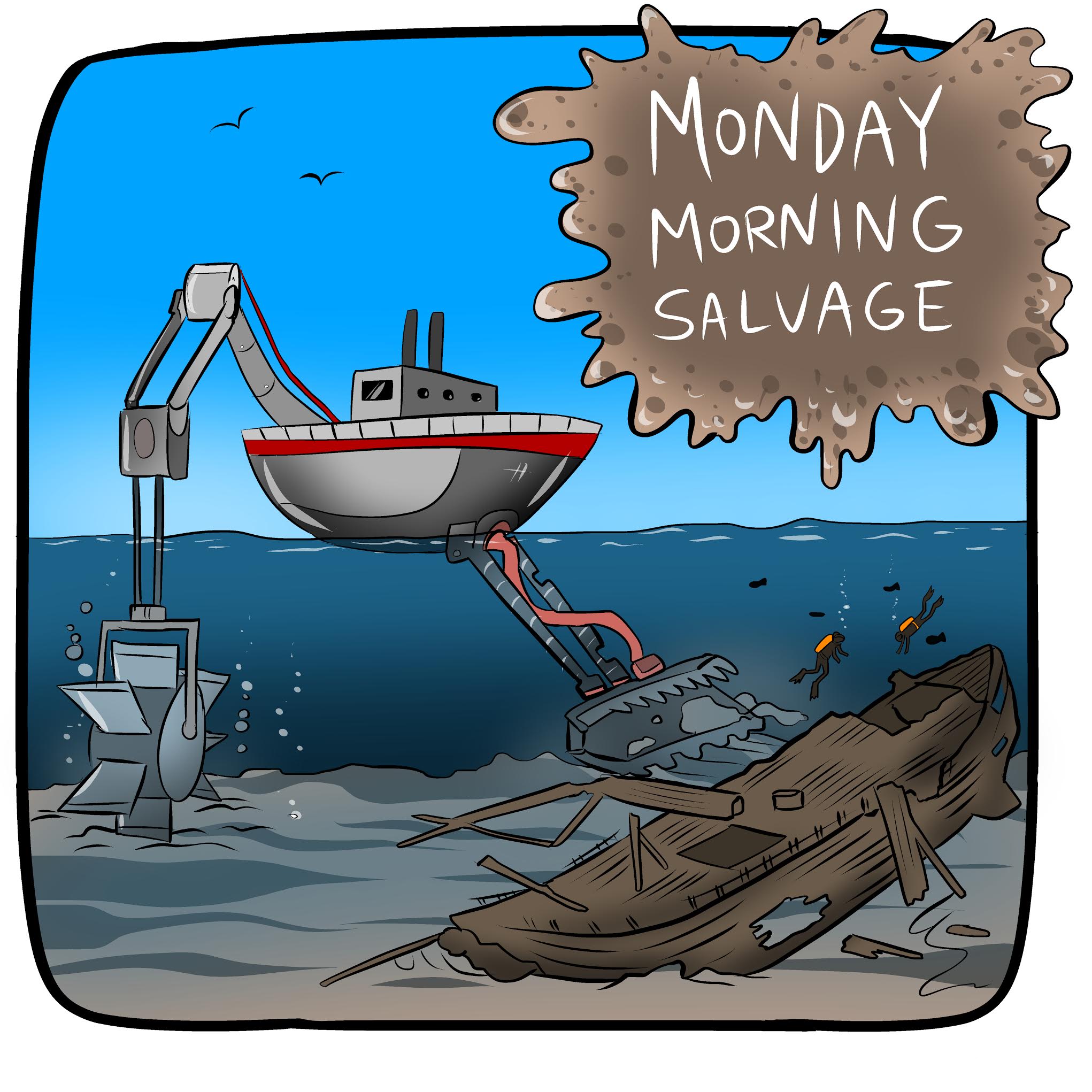
Lessons from Puerto Rico, mutant starfish, pictures of ships, and more! Monday Morning Salvage: October 9, 2017.

Posted on October 9, 2017 By Andrew Thaler
Weekly Salvage

Flotsam (what we’re obsessed with right now)

  • A fish scientist’s 10 tips for surviving a hurricane: Lessons learned from Puerto Rico from our friends at the Fisheries Blog.
  • Commentary: For Hurricane-Hit Puerto Rico, an Insider’s Guide to Disaster Management by gCaptain.

The Military Sealift Command hospital ship USNS Comfort (T-AH 20) arrives in San Juan, Puerto Rico, Oct. 3, 2017. U.S. Navy Photo

Read More “Lessons from Puerto Rico, mutant starfish, pictures of ships, and more! Monday Morning Salvage: October 9, 2017.” »

Documentation is the beating heart of open-science hardware: Help make ours better!

Posted on October 6, 2017 By Andrew Thaler
Oceanography for Everyone

The OpenCTD and Oceanography for Everyone has been a five year journey from inception to first field-ready model and we’re just getting started. Building a community-driven project like this requires not just expertise (that we didn’t have when we started), passion, resources, it requires documentation. Extensive, detailed, thorough documentation. Documentation is what sets an open-science … Read More “Documentation is the beating heart of open-science hardware: Help make ours better!” »

The most shocking, insightful ocean conservation solutions, as presented by a poorly-built Twitter bot.

Posted on October 4, 2017 By Andrew Thaler
Uncategorized

We made a bot. It’s not a very good bot but it does prognosticate on novel ocean conservation solutions. @OceanCon_Bot has been running for almost a month and it’s produced some real gems. Solid, salt-of-the-earth, diamond-in-the-rough, gabbro-in-your-lab, bro, solutions. And these are among my favorites.

We definitely need to stop presenting those condescending academics, but why so down on transparency, @OceanCon_Bot?

Catalyze lionfish and address Caribbean extinction? I guess you can’t really do both.

Ok, it’s possible we created an evil ocean bot.

Read More “The most shocking, insightful ocean conservation solutions, as presented by a poorly-built Twitter bot.” »

Deep-sea mining, octopus cities, a world without ozone, and more! Monday Morning Salvage: October 2, 2017

Posted on October 2, 2017October 1, 2017 By Andrew Thaler
Weekly Salvage

Fog Horn (A Call to Action)

  • Islands and nations across the Caribbean are hurting from multiple hurricanes. We’ve curated a short list of various charities and fundraisers for each island: How to help our island colleagues in the wake of total devastation.

Flotsam (what we’re obsessed with right now)

  • The race to the bottom begins! Japan successfully undertakes large-scale deep-sea mineral extraction and Japan becomes the first nation to mine a deep-sea hydrothermal vent.

The first successful mining tool.

  • Scientists spent a month terrifying guppies to prove that fish have personalities. Worth it just for the headline.

Read More “Deep-sea mining, octopus cities, a world without ozone, and more! Monday Morning Salvage: October 2, 2017” »

Japan becomes the first nation to mine a deep-sea hydrothermal vent

Posted on September 27, 2017 By Andrew Thaler 1 Comment on Japan becomes the first nation to mine a deep-sea hydrothermal vent
Uncategorized

Sixteen hundred meters deep, off the coast of Okinawa, a new kind of mining just cut it’s teeth.

Earlier today, the Japan Times reported that a mining tool has successfully extracted zinc and other metals from a hydrothermal vent on the seafloor. There’s not much to go on yet. We don’t know if these were active or dormant vents (though dormant doesn’t mean biologically dead). We don’t know the specific location of the experimental mine site. And we don’t know the footprint of the ore prospect. But we do know that Japan has identified at least 6 potential mining sites within its exclusive economic zone and that plans are moving forward for a commercial mining venture in mid-2020. I’ve only found one report in English and from the look of things, there’s only a press release circulating right now, but I’m certain we’ll be hearing much more about this in the coming weeks.

Japan Agency for Natural resources and Energy

We’re still watching to see what Nautilus Minerals does at Solwara 1 and how manganese nodule mining proposals in the Clarion Clipperton fracture zone are progressing but Japan’s mining efforts present a sea change in how to anticipate future deep-sea mining efforts. Private commercial ventures are dependent on the whims of the global commodities market and subject to national and international regulation. National efforts are driven by the need for resource independence. I was aware of Japan’s efforts, but didn’t realize that they were as close as they are to being ready for production.

For the last 10 years, we’ve been saying that deep-sea mining of hydrothermal vents is imminent. Well, it’s here.

Read More “Japan becomes the first nation to mine a deep-sea hydrothermal vent” »

How to help our island colleagues in the wake of total devastation.

Posted on September 27, 2017September 27, 2017 By Andrew Thaler 1 Comment on How to help our island colleagues in the wake of total devastation.
Blogging

After three brutal hurricanes, the islands of the Caribbean are hurting. It can be hard, in the wake of catastrophe, to know where your donations can be best spent. We’ve contacted several of our colleagues on the ground to find out who’s doing the work and which aid organizations and groups need help now. Puerto … Read More “How to help our island colleagues in the wake of total devastation.” »

The many, many ways I screwed up my first science crowdfunding campaign.

Posted on September 26, 2017October 1, 2017 By Andrew Thaler
Blogging

Four generations of field hardened OpenCTDs.

It’s been over five years since Kersey Sturdivant and I launched Oceanography for Everyone – The OpenCTD, my first attempt at crowdfunding science. Over the years, that initial effort has grown into Oceanography for Everyone, a community of researchers, educators, and citizen scientists, and has created new open-source tools for open-source, open-science hardware. The OpenCTD is the finest oceanographic instrument that you can build in your own home for less than $300.

The crowdfunding campaign was a total disaster.

Since then, I’ve written several articles on how scientists can launch and managed crowdfunding campaigns:

  • Can Crowdfunding Fill the Science Funding Gap?
  • Setting Up Your Crowdfunding Campaign
  • Managing a Successful Crowdfunding Campaign

…but I’ve never written explicitly about what we did wrong during that campaign and how it impacted our success. Now that the final reward from that campaign has been delivered (yes, five years later, talk about the eternally delayed crowdfunding campaign), it’s the right moment to look back and think about how everything went so wrong.

I went with lesser-known platforms. We launched the OpenCTD on RocketHub. At the time, RocketHub was hosting the #SciFund Challenge, a campaign to encourage scientists to launch science crowdfunding campaigns. Both the #SciFundChallenge and RocketHub were relatively small players in the nascent crowdfunding world. RocketHub doesn’t even appear to do crowdfunding anymore, they’ve pivoted to a “social network for entrepreneurs”. The old OpenCTD campaign page is long deprecated. #SciFund Challenge’s website hasn’t been updated in almost half a year.

Here’s the thing with crowdfunding, and especially crowdfunding in the early days: There are two dominant communities that you can rely on. There’s the community of people who want to support what you’re doing and there’s the community of people enamored with the idea of crowdfunding. Being a crowdfunding “investor” is a hobby in and of itself and many of the biggest donors are people who support dozens of different campaigns. So the larger and more popular the platform, the more crowdfunding enthusiasts you’ll attract. Heck, since backing the very first OpenROV, I’ve backed 23 other projects on Kickstarter, most recently Public Lab’s Balloon Mapping kits.

By going with RocketHub, I committed our campaign to a smaller potential audience. Considering Kickstarter was garnering huge press at the time, this was a near-fatal mistake.

Read More “The many, many ways I screwed up my first science crowdfunding campaign.” »

Jellyfish sleep, shark-sucking bots, mole crab parasites, and more! Monday Morning Salvage: September 25, 2017

Posted on September 25, 2017September 25, 2017 By Andrew Thaler
Weekly Salvage

Fog Horn (A Call to Action)

  • The fight for our Marine National Monuments isn’t over. We now know of the contents of Zincke’s monument review memo, and it is not good. The DOI wants to see commercial fishing return to the Pacific Remote Islands and Rose Atoll Marine National Monuments. Longline fishing in these regions has historically been conducted by foreign fishing fleets which have been documented using slave labor. Many ecologists believe that maintaining these protected zones serve as a refuge that boost populations of many important commercial fish and improve the overall health of the fishery. Any change to monuments created under the Antiquities Act must be approved by congress. You’ve got a lot of reason to call you representatives this week, so why not add “I opposed the reintroduction of ecologically and economically destructive commercial fishing to the Pacific Remote Islands and Rose Atoll Marine National Monument.” to your script?

Flotsam (what we’re obsessed with right now)

  • Jellyfish sleep. Mind. Blown.
  • Our Pacific Monuments are also extremely important scientific sites. Commercial fishing could jeopardize decades of research efforts in the remote Pacific. Scientists pan proposal to open pristine Pacific islands to fishing.

Palmyra Atoll. Erik Oberg/Island Conservation/Flickr

Read More “Jellyfish sleep, shark-sucking bots, mole crab parasites, and more! Monday Morning Salvage: September 25, 2017” »

Posts pagination

Previous 1 … 54 55 56 … 273 Next

Popular Posts

The story of the pride flag made from NASA imagery: Bluesky's most-liked imageThe story of the pride flag made from NASA imagery: Bluesky's most-liked imageSeptember 27, 2024David Shiffman
"Why Sustainable Seafood Matters" is now available for preorder! Here's what it's about, and why I decided to write it."Why Sustainable Seafood Matters" is now available for preorder! Here's what it's about, and why I decided to write it.June 8, 2026David Shiffman
What Ocean Ramsey does is not shark science or conservation: some brief thoughts on "the Shark Whisperer" documentaryWhat Ocean Ramsey does is not shark science or conservation: some brief thoughts on "the Shark Whisperer" documentaryJuly 2, 2025David Shiffman
I just told 850 shark scientists a hard truth: We’re not communicating shark conservation correctly.I just told 850 shark scientists a hard truth: We’re not communicating shark conservation correctly.June 1, 2026David Shiffman
Shark of Darkness: Wrath of Submarine is a fake documentaryShark of Darkness: Wrath of Submarine is a fake documentaryAugust 10, 2014Michelle Jewell
Deep-sea Mining, Domestic Cats, Star Trek, and Ocean Exploration: Andrew's mid-year podcast round-up.Deep-sea Mining, Domestic Cats, Star Trek, and Ocean Exploration: Andrew's mid-year podcast round-up.June 6, 2026Andrew Thaler
Why ocean science is still one of the worst-funded scientific fields worldwideWhy ocean science is still one of the worst-funded scientific fields worldwideJune 3, 2026Chris Parsons
Tackling the least important debate in deep-sea mining: the desultory hyphenTackling the least important debate in deep-sea mining: the desultory hyphenJune 8, 2026Andrew Thaler
What is a Sand Shark?What is a Sand Shark?November 12, 2017Chuck Bangley
That's not a blobfish: Deep Sea Social Media is Flooded by AI SlopThat's not a blobfish: Deep Sea Social Media is Flooded by AI SlopDecember 19, 2025Andrew Thaler

squishy

Subscribe to our RSS Feed for updates whenever new articles are published.

We recommend Feedly for RSS management. It's like Google Reader, except it still exists.

Southern Fried Science

  • Home
  • About SFS
  • Authors
  • Support SFS


If you enjoy Southern Fried Science, consider contributing to our Patreon campaign.

Copyright © 2026 Southern Fried Science.

Theme: Oceanly Premium by ScriptsTown