


- Watch this tiger shark take on an albatross on some of my favorite National Geographic natural history footage

- Follow Dr. Maria Jose Juan-Jorda, a postdoctoral researcher studying sustainable shark and tuna fisheries, on twitter!
- To see a coelocanth. By Steve Midway, for the Fisheries Blog.
- Scientific expedition set to explore British Columbia’s glass sponge reefs. By Larry Pynn, for the Vancouver Sun.

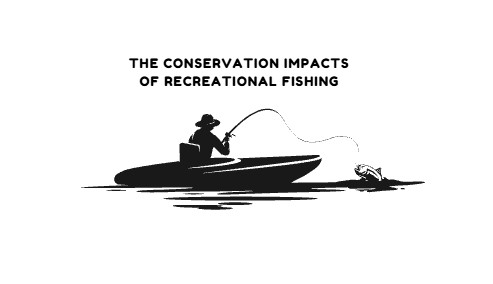
I have a new paper out on the conservation impacts of recreational shark fishing. The paper is called “fishing practices and representations of shark conservation issues among users of a land-based shark angling online forum,” and it is published in the journal Fisheries Research. If you don’t have institutional library access, you can read a copy of the paper here. The goal of this blog post is to provide background information on the study.
Journalists are free to quote or paraphrase information from this blog post. Additionally, I provide some suggested quotes below, and I am available for interviews about this paper (please contact me at WhySharksMatter at gmail).
Read More “Background information on our land-based shark fishing paper” »
Cuttings (short and sweet):
- Watch this sixgill shark swim in the coastal waters near Vancouver, in this clip from the Vancouver Aquarium!
- Follow Al Harry, Australian shark researcher, on twitter! Al has just joined, so welcome him!
- Sea lice feast of fresh meat as teenager left bloodied. Video from the Guardian. My official comment on this story can be found here. Also, here’s a video of some similar creatures skeletonizing a whole pig in a few days. (It is worth noting that some scientists are skeptical of this explanation of what happened to this Australian teenager.)
- Learn about whalefalls, an important underwater habitat made up of dead whales. Video and story by Julie Takahashi, for the Houston Chronicle
- How do you tag a jellyfish? By Diane Richards, for the Monterrey Bay Aquarium’s Conservation and Science Blog.
One-eyed sea eagles, deep reefs, crispy jellyfish, and more! Monday Morning Salvage: August 7, 2017.

Fog Horn (A Call to Action)
- One week left! The deadline for comments on Marine National Monuments and National Marine Sanctuaries has been extended due to overwhelming responses. You now have until August 14, 2017 to leave a comment. Scientists, researchers, explorers, and conservationists with particular ties to the Mariana Trench Marine National Monument can sign on the this letter co-authored by me, James Cameron, and numerous researchers who’s worked has benefited from the Mariana Trench.
- Chasing Genius: Andrew has applied for a National Geographic Chasing Genius Award to fund more development for the OpenCTD and Oceangraphy for Everyone. Please share and like the video over at NatGeo!
Flotsam (what we’re obsessed with right now)
In the UK, there is a famous and long-running radio show called Desert Island Discs. On this show celebrities are asked to imagine that they are marooned on a desert island, but they have rescued 10 discs (mp3s I suppose these days…) of songs that they have rescued from their sinking ship to keep them company on the desert island.
clipart credit: istock.com
My chum – marine mammal scientist and general ocean hero – Asha De Vos recently asked for a list of key papers in marine conservation that she could pass onto students working on marine conservation issues in Sri Lanka. So I decided to write up my top ten “desert island” marine conservation papers that I think have been influential, and that all marine conservation students should read.
So after much pondering, this is my list:
Read More “Desert island discs – the marine conservation edition” »
We’re back after a 3 week conference attendance break!

Cuttings (short and sweet):
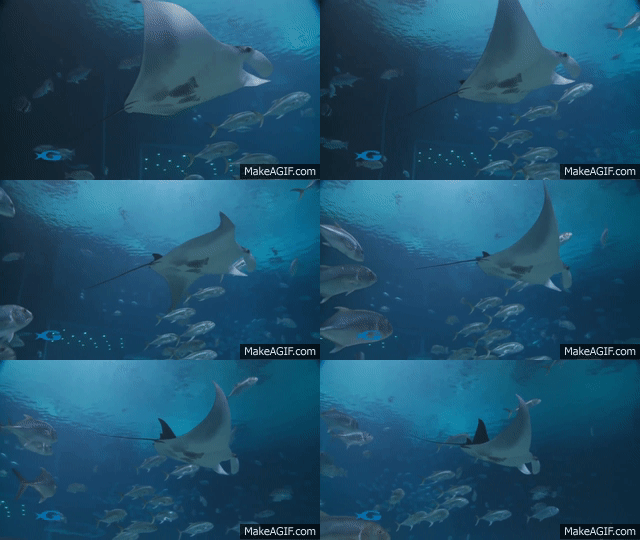
- Watch this blue-spotted stingray swim around an Oregon aquarium!

- Follow Dr. Kyle Newton, shark sensory ecologist, on twitter!
- Screams heard round the world: humans can easily recognize alarm calls of other animals. By Karen Hopkin, for Scientific American.
- Seals return to the Thames estuary is going swimmingly. By Damian Carrington, for the Guardian.
- AUTHOR’S NOTE: One link (to a twitter thread on scientist lab superstitions) has been removed due to some culturally insensitive comments in the thread.
The Hogwarts Sorting Hat divides students into their respective houses in their first year at the school of witchcraft and wizardry. Each house is known for having its own “personality.” In addition to potential wizards/witches, one can also sort those involved in conservation into the four Hogwarts houses.
- Hufflepuff – This house stands for dedication and hard work, but also patience, tolerance, fair play and kindness. Most conservationists working in NGOs, especially those related to protection of megafauna species, are Hufflepuffs. One famous Hufflepuff was Newton Scamander, a socially awkward wizard who took it upon himself to try to save endangered magical creatures, when others just saw them as pests. Most of the herbology teachers at Hogwarts were Hufflepuffs (Neville Longbottom being a notable exception).
“I trust the eyes of an honest man more than ‘what everybody knows’ “
– Tyrion Lannister to Jon Snow, as Jon tries to convince everyone that he has seen the Army of the Dead coming.
In the current season of Game of Thrones, Cersei Lannister is unexpectedly sitting on the Iron Throne of Westeros after immolating most of the existing peerage in King’s Landing. Because of this purge, most of the seats in the Privy Council are empty (assuming she even means to establish one), and her inner circle consists of: the Hand of the Queen, a clever ex-Maester with no morals or ethics; the commander of the Queen’s Guard, a conscience-less zombie; and two military commanders, one a troubled brother/lover and one an ambitious wily psychopath, of uncertain loyalty.
Read More “The Game of Thrones – is this real life, or is this just fantasy…?” »

Fog Horn (A Call to Action)
- The deadline for comments on Marine National Monuments and National Marine Sanctuaries has been extended due to overwhelming responses. You now have until August 14, 2017 to leave a comment.
- Scientists, researchers, explorers, and conservationists with particular ties to the Mariana Trench Marine National Monument can sign on the this letter co-authored by me, James Cameron, and numerous researchers who’s worked has benefited from the Mariana Trench.
Flotsam (what we’re obsessed with right now)
- A new generation of robots is set to explore marine mysteries around the world. 5 Ways Underwater Drones Are Helping Citizens Save the Ocean. And check out this very short Wired piece on OpenROV Trident!
- Earlier this week, Snooty, the world’s oldest living captive manatee died tragically. Now residents of Manatee County want to replace a Confederate statue with a statue of their beloved manatee. How can you say no to this face?

A shortened – and less ribald – version of this post was published 24-07-2017 in the International Business Times.
Ah, the transition from middle school to high school… the one part of adolescence no one reminisces about fondly. It’s the time in our lives where mental and physical changes happen at pace without any apparent continuity, and we feel compelled to blend in. This is the same time when most young girls’ interest in STEM stops, and in my educator/zoologist opinion, these events are related.
What does our culture gear teenage girls to prioritize? Making varsity teams, growing boobs to the correct size and at the correct time, and completing enough social jostling to earn the superhuman prom date. Most of the STEM-geared young girls I have worked with couldn’t care less about the above – but the attitude of their peers changes by the end of 8th grade.
Students of both sexes in 6th grade will happily discuss how rainbows are made and share their mutual wonder if the natural world, but those conversations quickly become “immature” when the puberty plague takes hold. It’s also in 8th grade when boys enter a race to the bottom of inappropriate jokes fueled by mutual insecurities. Suddenly, STEM-interested pupils find that their friends are segregating, fashion forward girls to one side and crude boys to the other, leaving a handful who want to discuss the space/time continuum floundering somewhere in the middle.
Then, regardless of where you sit on the social divide, hormones kick in. This critical time is when young people figure out how to create partnerships, what constitutes a good or bad relationship, and the physics of copulation. In addition to this, obtaining a socially higher-ranking partner becomes an unconscious priority. Guess what most young men think is unattractive in women? Intelligence (unless you’re beautiful enough to compensate). YOU READ THAT CORRECTLY.
Read More “What makes high school girls love sharks but avoid science” »