Skip to content

Southern Fried Science

Over 15 years of ocean science and conservation online

  • Home
  • About SFS
  • Authors
  • Support SFS

Recent Posts

humpback whale in Antarctica
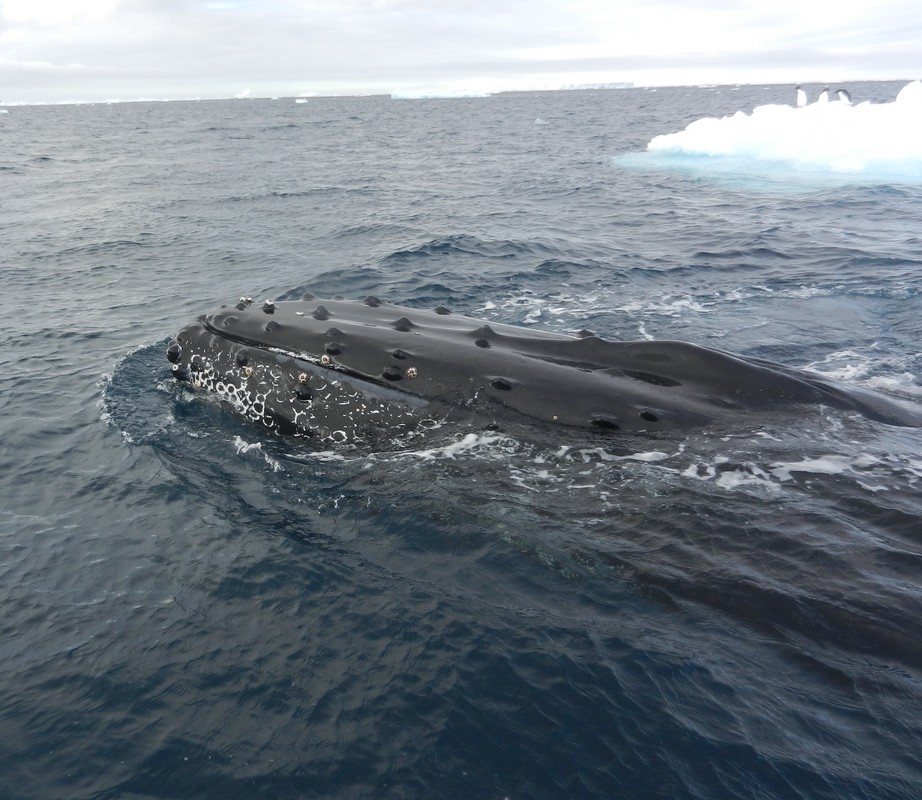
The evolution of the International Whaling Commission – from  whaling quotas to whale conservation
June 10, 2026
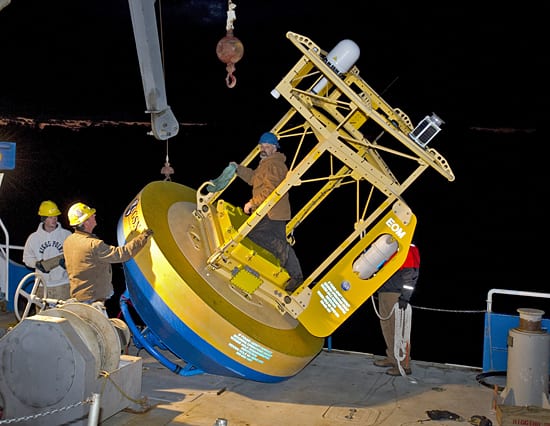
Isn’t ironic, don’t you think: dismantling the Ocean Observatories Initiative on World Oceans Day
June 9, 2026
“Why Sustainable Seafood Matters” is now available for preorder! Here’s what it’s about, and why I decided to write it.
June 8, 2026
Here’s how to join my IMCC8 symposium, “Ocean Science Communication: What’s New and What’s Next?”
April 22, 2026
Deep Sea Mining Symposium Announcement
April 21, 2026
Join Me at Upwell: A Wave of Ocean Justice — Our Fourth Year!
March 24, 2026

Fun Science FRIEDay – Water to Wine? Close, CO2 to Alcohol (ethanol)

Posted on December 2, 2016 By Kersey Sturdivant
Open Science, Science

Science brings us many wonderful things (honestly if you enjoy the benefits of the modern era, go out and hug a scientist). One of humanities age old desires is the ability to convert something invaluable, or a nuisance, into something desirable. The old midas touch if you will. Recently some scientist stumbled onto the process of converting CO2, a primary culprit of anthropogenic climate change, into alcohol… though not the kind you drink, the kind that humanity could use as fuel.

(Photo credit: Getty + Space Images)

Producing fuel from CO2 is huge because it lets us take a nuisance compound, and converts it into a productive one. This was accomplished by scientists at Oak Ridge National Laboratory in Tennessee by using common materials (copper and carbon), but arranging them with nanotechnology. The researchers were attempting to find a series of chemical reactions that could turn CO2 into a useful fuel, such as ethanol. They figured they would go from CO2 to methanol, and then work out the logistics of going from methanol to ethanol, when they realized the first step in their process managed to do it all by itself. Science for the win!

Read More “Fun Science FRIEDay – Water to Wine? Close, CO2 to Alcohol (ethanol)” »
Thursday Afternoon Dredging: December 1, 2016

Posted on December 1, 2016December 1, 2016 By David Shiffman
Uncategorized

Cuttings (short and sweet):

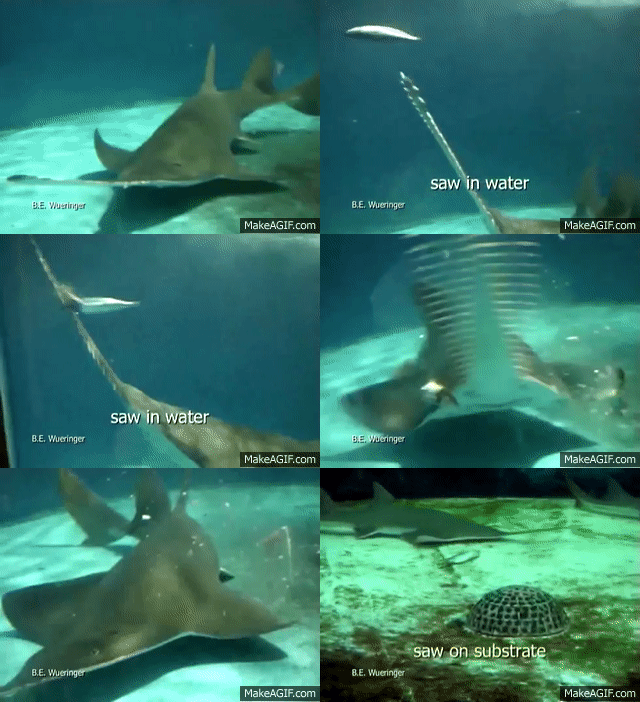
  •  How a sawfish uses its saw, from this paper by Wueringer and friends.

How a sawfish uses its saw, from Wueringer and friends (2012), the function of the sawfish saw, Current Biology

  • Follow Kim Bassos-Hull @MsHullRay , a spotted eagle ray researcher at Mote Marine Laboratory, on twitter! Follow her for news (and awesome pictures) of her spotted study subjects.
  • A call for more scientists and engineers to run for public office (by Sheril Kirshenbaum). Would you consider running for public office?

Read More “Thursday Afternoon Dredging: December 1, 2016” »

Do you see the deep sea?

Posted on November 29, 2016November 27, 2016 By Andrew Thaler
Science

Like this? Support me on Patreon!

Monday Morning Salvage: November 28, 2016

Posted on November 28, 2016November 28, 2016 By Andrew Thaler
Weekly Salvage

Flotsam (what we’re obsessed with right now)

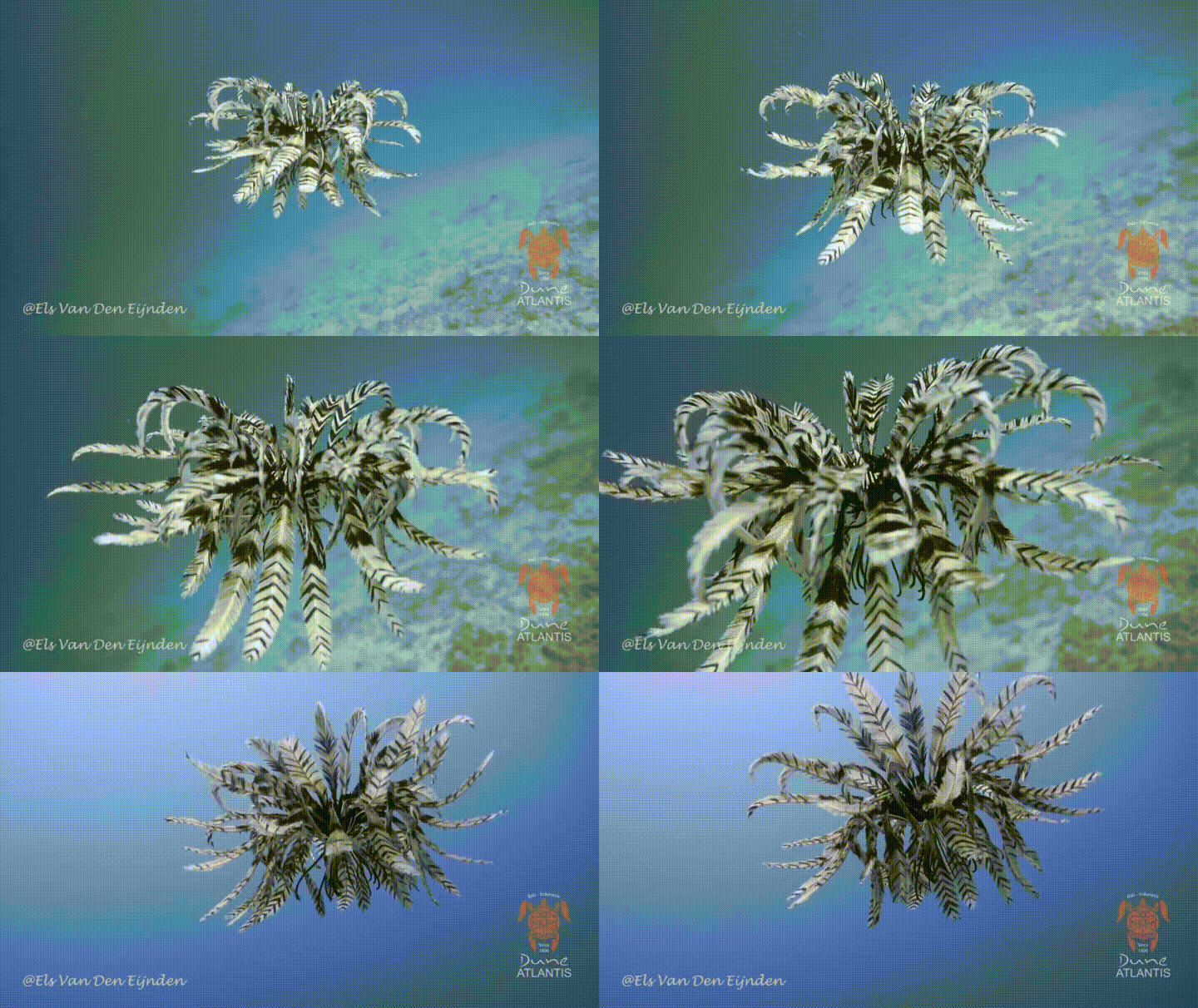
  • This GIF of a swimming crinoid: crinoid
  • The original video by Els Van Den Eijnden can be found here: Dive in Bali by Els Van Den Eijnden

Read More “Monday Morning Salvage: November 28, 2016” »

Now, More Than Ever, America Needs an Ambassador for the Deep Sea.

Posted on November 25, 2016 By Andrew Thaler
Conservation, Education

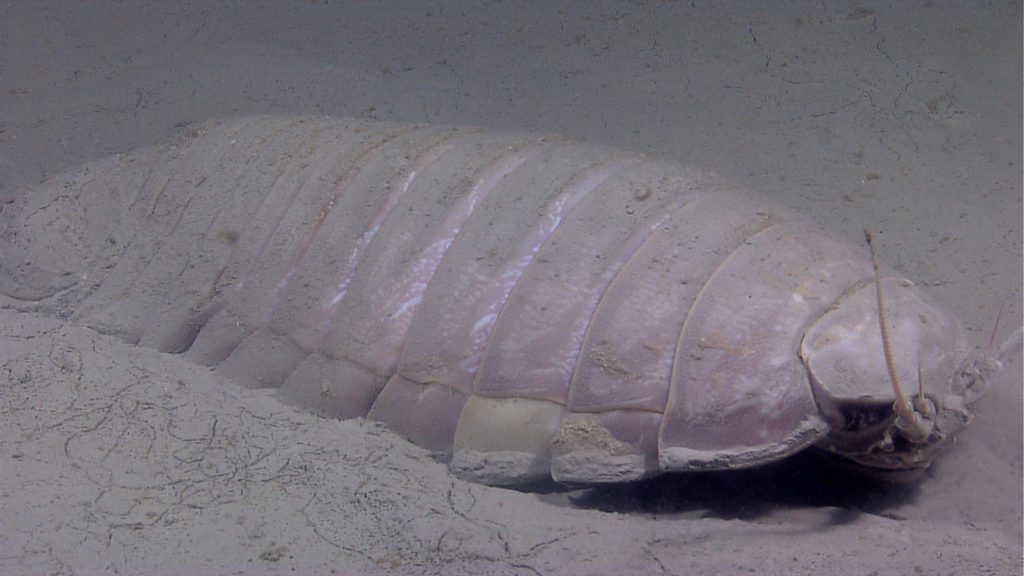
That ambassador is Bathynomus giganteus, the giant, deep-sea isopod.

A giant deep sea isopod on the sea floor. Photo via NOAA Photobank.

Conservation has long had the concept of Flagship Species—popular, charismatic species that serve as rallying points for conservation awareness and action. Formalized within the framework of conservation marketing, flagship species are focused around particular goals and audiences. Think of the WWF’s Giant Panda, Polar Bears and a thousand different arctic or climate change campaigns, or even the American Bald Eagle, whose decline galvanized the country into action. These animals are iconic. They connect people to species and ecosystems in crisis. They are Flagship Species.

The Giant Deep-sea Isopod is not a flagship species. The Giant Deep-sea Isopod addresses a much more fundamental issue: despite being the largest, most diverse ecosystem on the planet, most people have no direct connection, no frame of reference, for the deep sea.

Read More “Now, More Than Ever, America Needs an Ambassador for the Deep Sea.” »

Secrets of the Deep Sea

Posted on November 22, 2016 By Andrew Thaler
Science

Protecting the freshwater riches of the Southeastern US

Posted on November 16, 2016 By Guest Writer
Uncategorized

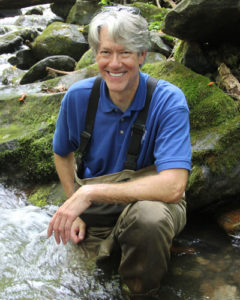
bernie-kuhajdaDr. Bernie Kuhajda joined the Tennessee Aquarium Conservation Institute staff in May 2012 after 25 years at the University of Alabama, where he managed a museum collection of one million specimens of preserved fishes from all around the world. Though his studies of fishes and other aquatic organisms have taken him around the United States, Mexico, and Central Asia, his particular expertise is surveying and monitoring threatened and endangered species from aquatic systems in the Southeast, in part to help evaluate the effectiveness of conservation programs. He currently teaches weekend courses at the University of Alabama Gadsden Campus and on the main campus in Tuscaloosa every summer. He serves on multiple USFWS Recovery Teams/Groups for endangered and threatened species.

Imagine possessing untold wealth but lacking the means to keep it safe. That is the broad-strokes reality faced by those of us who work to protect the Southeast’s rich aquatic biodiversity.

Our waterways are home to an incredible natural profusion, one that is unrivaled in the temperate world. More than 1,400 aquatic species reside in waterways within a 500-mile radius of the Tennessee Aquarium’s home in Chattanooga, including about three-quarters (73.1 percent) of all native fish species in the United States. More than 90 percent of all American mussels and crayfish species live within that same area, as do 80 percent of North America’s salamander species and half of its turtle species.

Read More “Protecting the freshwater riches of the Southeastern US” »

Sifting the fact from the false in an internet full of fake ‘news’

Posted on November 15, 2016November 16, 2016 By Chris Parsons
Uncategorized

Southern Fried Science has at the forefront of trying to debunk fake news, such as faux documentaries about mermaids or giant sharks. In their article “Fish tales: combating fake science in the popular media” Andrew Thaler and David Shiffman asked that:

“scientists familiarize themselves with common sources of misinformation within their field, so that they can be better able to respond quickly when factually inaccurate content begins to spread”

morpheus

Read More “Sifting the fact from the false in an internet full of fake ‘news’” »

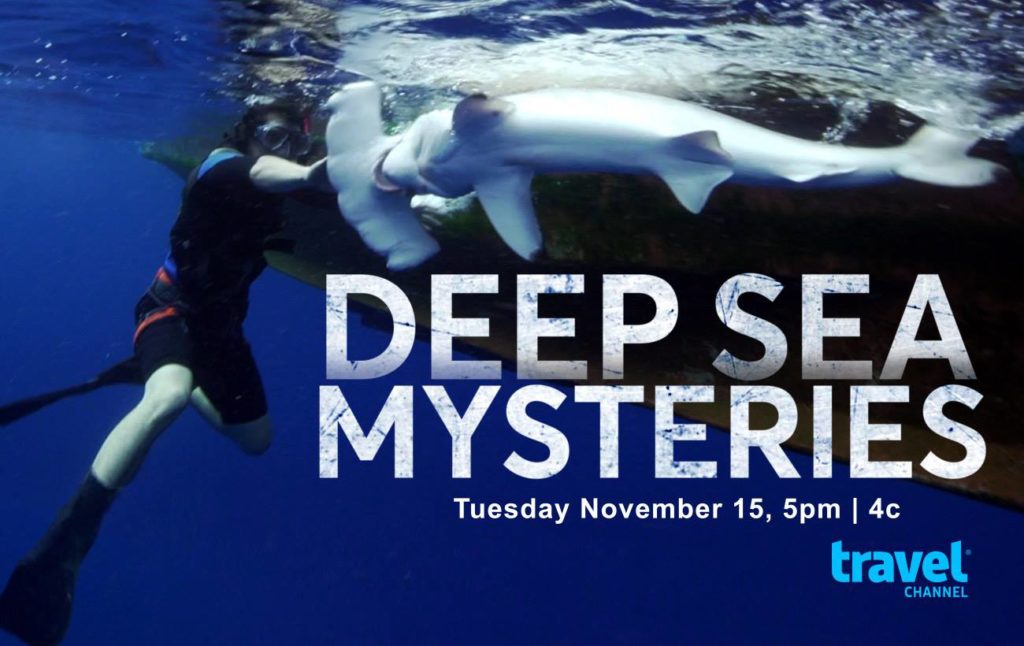
New TV show: Deep Sea Mysteries with Paul Clerkin premieres tonight!

Posted on November 15, 2016November 15, 2016 By Guest Writer
Science

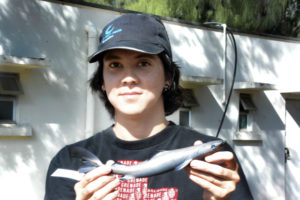
dsc_5896-for-print-twoPaul J. Clerkin is a graduate researcher at the Pacific Shark Research Center of Moss Landing Marine Laboratories in Moss Landing, California. Clerkin specializes in rare and deep-sea chondrichthyans and is focusing on new species descriptions and life histories of poorly understood sharks species. His thesis work is with Dr. David A. Ebert studying sharks encountered during two surveys in the Southern Indian Ocean in 2012 and 2014, a total of 126 days at sea. He has also conducted research for other projects aboard ships in the Bering Sea, South East Atlantic, Philippine Sea, and across the Pacific. He was featured in the “Alien Sharks” series on Shark Week.

This week, Travel Channel is airing a pilot for my new series, Deep Sea Mysteries (“like” our page on Facebook!). In the course of research, I visit extraordinary fishing communities to find and study rare, poorly known and even undescribed species. This show is the first of its kind, different from the Shark Week programs I’ve done in the past. It continues a focus on sharks and other deep-sea animals, but is notably (and pleasantly) more educational. There are more species, more facts, more science, and an emphasis on conservation effort.

dsm_hh

Also, as a travel show, the series combs through the beautiful regions, interesting people and unique stories behind each expedition.

Read More “New TV show: Deep Sea Mysteries with Paul Clerkin premieres tonight!” »

Diversity is Resilience

Posted on November 14, 2016November 16, 2016 By Andrew Thaler 3 Comments on Diversity is Resilience
Blogging

We stand at a crossroads.

Southern Fried Science has occupied a unique niche in the online ocean community. We have defended commercial and recreational fishers as often as we have opposed them. We have at times stood behind ocean conservation policy and at times pushed back against excessive legislation. We have criticised those within our community and those without. We have been radically libertarian and radically socialist and every label in between.

We are comfortable joining the long call, the great song that booms from the belly of a blue whale, and circles the world as it echoes through the community.

We are comfortable being the lone cry of dissent, pushing back against the onslaught of righteous exuberance.

We have never sought consensus, only common ground.

For almost a year now a phrase has been rattling around inside my head. At first it was just  catchy cadence, something to use on the next article. But the more I thought about it, the more I came to understand what it really means; how deeply it permeates almost every aspect of life on this planet.

Diversity is resilience.

Read More “Diversity is Resilience” »

Posts pagination

Previous 1 … 69 70 71 … 273 Next

Popular Posts

The story of the pride flag made from NASA imagery: Bluesky's most-liked imageThe story of the pride flag made from NASA imagery: Bluesky's most-liked imageSeptember 27, 2024David Shiffman
"Why Sustainable Seafood Matters" is now available for preorder! Here's what it's about, and why I decided to write it."Why Sustainable Seafood Matters" is now available for preorder! Here's what it's about, and why I decided to write it.June 8, 2026David Shiffman
Tackling the least important debate in deep-sea mining: the desultory hyphenTackling the least important debate in deep-sea mining: the desultory hyphenJune 8, 2026Andrew Thaler
The evolution of the International Whaling Commission – from  whaling quotas to whale conservationThe evolution of the International Whaling Commission – from  whaling quotas to whale conservationJune 10, 2026Chris Parsons
What Ocean Ramsey does is not shark science or conservation: some brief thoughts on "the Shark Whisperer" documentaryWhat Ocean Ramsey does is not shark science or conservation: some brief thoughts on "the Shark Whisperer" documentaryJuly 2, 2025David Shiffman
Deep-sea Mining, Domestic Cats, Star Trek, and Ocean Exploration: Andrew's mid-year podcast round-up.Deep-sea Mining, Domestic Cats, Star Trek, and Ocean Exploration: Andrew's mid-year podcast round-up.June 6, 2026Andrew Thaler
Shark of Darkness: Wrath of Submarine is a fake documentaryShark of Darkness: Wrath of Submarine is a fake documentaryAugust 10, 2014Michelle Jewell
Isn’t ironic, don’t you think: dismantling the Ocean Observatories Initiative on World Oceans DayIsn’t ironic, don’t you think: dismantling the Ocean Observatories Initiative on World Oceans DayJune 9, 2026Southern Fried Science
What is a Sand Shark?What is a Sand Shark?November 12, 2017Chuck Bangley
That's not a blobfish: Deep Sea Social Media is Flooded by AI SlopThat's not a blobfish: Deep Sea Social Media is Flooded by AI SlopDecember 19, 2025Andrew Thaler

squishy

Subscribe to our RSS Feed for updates whenever new articles are published.

We recommend Feedly for RSS management. It's like Google Reader, except it still exists.

Southern Fried Science

  • Home
  • About SFS
  • Authors
  • Support SFS


If you enjoy Southern Fried Science, consider contributing to our Patreon campaign.

Copyright © 2026 Southern Fried Science.

Theme: Oceanly Premium by ScriptsTown