
Skip to content

Southern Fried Science

Over 15 years of ocean science and conservation online

  • Home
  • About SFS
  • Authors
  • Support SFS

Recent Posts

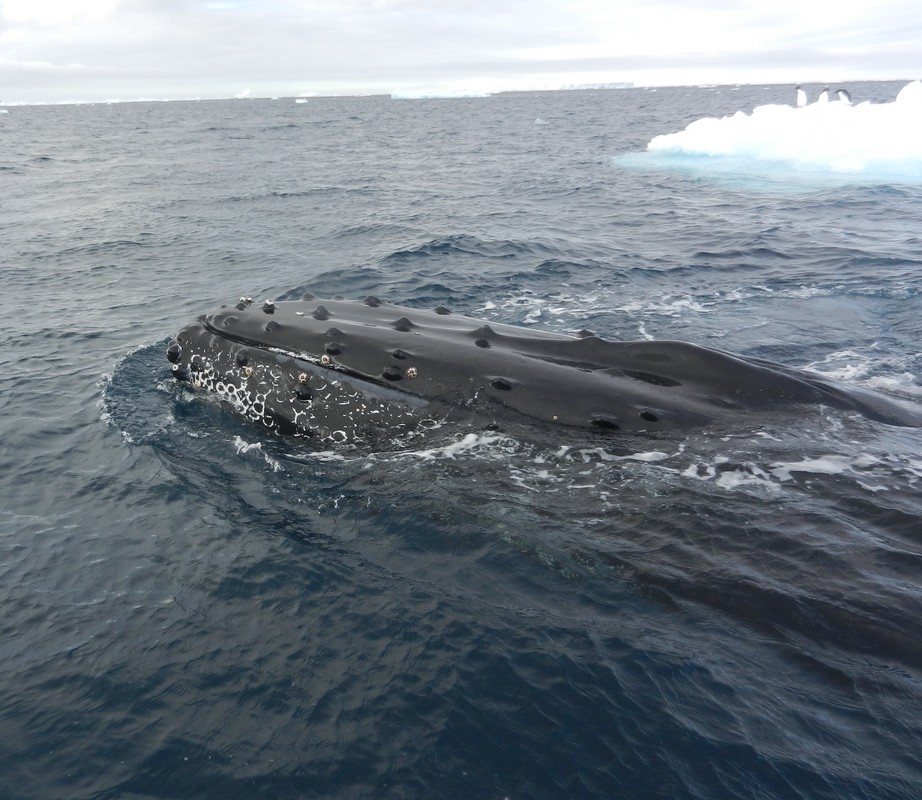
humpback whale in Antarctica
The evolution of the International Whaling Commission – from  whaling quotas to whale conservation
June 10, 2026
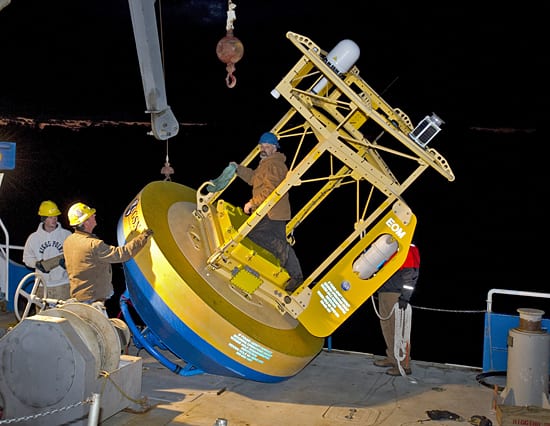
Isn’t ironic, don’t you think: dismantling the Ocean Observatories Initiative on World Oceans Day
June 9, 2026
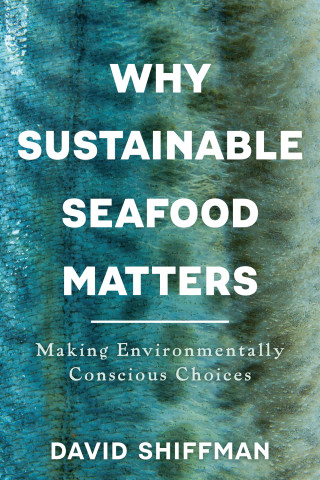
“Why Sustainable Seafood Matters” is now available for preorder! Here’s what it’s about, and why I decided to write it.
June 8, 2026
Here’s how to join my IMCC8 symposium, “Ocean Science Communication: What’s New and What’s Next?”
April 22, 2026
Deep Sea Mining Symposium Announcement
April 21, 2026
Join Me at Upwell: A Wave of Ocean Justice — Our Fourth Year!
March 24, 2026

Everything you need to know about working in conservation you can learn from Game of Thrones

Posted on August 9, 2016August 9, 2016 By Guest Writer 1 Comment on Everything you need to know about working in conservation you can learn from Game of Thrones
Academic life, Conservation

Learned scholars and respected leaders of society warn that a major environmental change is coming and everyone should prepare. However, heads of state, politicians and wealthy oligarchs argue and bicker, more interested in riches and power than the imminent threat. Some realize that the oncoming change will be accompanied by a host of problems, to which no one has given the necessary consideration. Those who understand the situation try to set up systems to protect against this threat but are constantly having to argue with, and even fight, their own allies. In the end, just as some progress is being made, one of the champions of these vital preparations is stabbed through the heart by his closest colleagues, who stage a coup instead of dealing with the oncoming threat.

Sound familiar? It is of course the plot of Game of Thrones, but could also be a history of most conservation issues, whether it be the threat of DDT, ozone depletion, biodiversity loss or climate change.

Read More “Everything you need to know about working in conservation you can learn from Game of Thrones” »

Fun Science FRIEDay – Glaciers Lost in Time

Posted on July 29, 2016July 29, 2016 By Kersey Sturdivant
Uncategorized

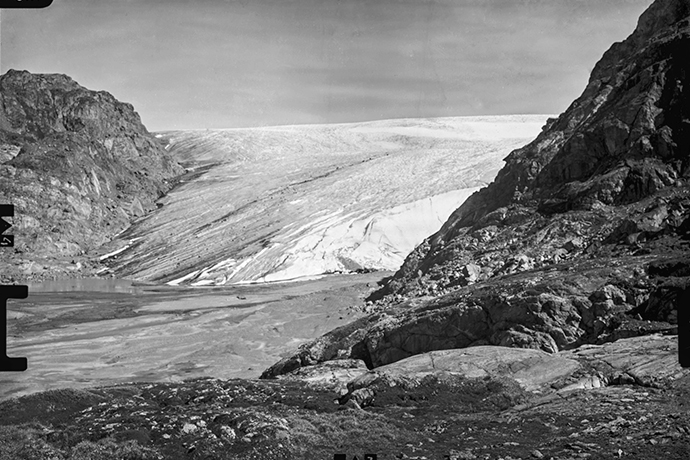
Human induced climate change is real. It feels weird that I have to say that, but the overwhelming body of evidence suggest human activity post the industrial revolution is having irrevocable damage on our environment. One of the major implications of climate change is the loss of the polar glaciers (and subsequent sea level rise).

Danish researchers from the University of Copenhagen and Aarhus University photographed glaciers in east Greenland in 2010 from the same vantage point used by scientists in 1933. Below you can contrast the images from the Mittivakkat and Tunu glaciers to see how much the two glaciers have retreated due to the warming climate (Photo Credit: Natural History Museum of Denmark; Hans Henrik Tholstrup/Natural History Museum of Denmark).

The Mittivakkat Glacier

The Mittivakkat Glacier in 1933.

The Mittivakkat Glacier in 1933.

Read More “Fun Science FRIEDay – Glaciers Lost in Time” »

Join us at the International Marine Conservation Congress!

Posted on July 27, 2016August 8, 2016 By Andrew Thaler
Uncategorized

A plurality of Southern Fried Science writers will be attending the 2016 International Marine Conservation Congress in St. John’s, Newfoundland. Expect updates to be infrequent here through early August. Follow along at the conference hashtag #IMCC4 or follow me, Amy, David, and Chris on twitter on this adventure.

An environmental educator’s field guide to Pokémon Go.

Posted on July 19, 2016 By Andrew Thaler 1 Comment on An environmental educator’s field guide to Pokémon Go.
Education

Pokémon Go is officially a thing.

In the last week, this game has outpaced even Google Maps in number of downloads. It has more daily active users than Twitter. Its user retention rate is astronomical. It is either a herald of the end of western capitalism or a huge boom for small businesses. People are going outside, exploring their neighborhoods, finding dead bodies, walking off cliffs, experiencing nature, getting robbed, making new friends, and getting shot at.

It is the best of tech. It is the worst of tech. Or maybe, it’s just tech, and people can interact with technology in as many ways as there are Pokémon to be found.

Last week, I wrote a brief introduction to this phenomenon, which I won’t rehash here.

But of course, the big question emerging within the sphere of environmental educators is “how can we capitalize on Pokémon Go to engage with the public on environmental issues?”

After spending more time with the app, and focusing on specific features that can facilitate environmental education, I have five suggestions. 

Read More “An environmental educator’s field guide to Pokémon Go.” »

Fun Science FRIEDay – Open-Acess Science for the Masses

Posted on July 15, 2016 By Kersey Sturdivant
Oceanography for Everyone, Open Science, Uncategorized

The oceans belong to all of us. With this simple statement in mind, the Oceanography for Everyone (OfE) project was launched with the goal of making ocean science more accessible. One of the biggest hurdles in conducting ocean science is instrumentation costs, and 4 years ago the OfE team began trying to make one of the most basic ocean science tools, the CTD (a water quality sensor that measures Conductivity-Temperature-Depth), cheaper… much, much cheaper!

Read More “Fun Science FRIEDay – Open-Acess Science for the Masses” »

Bill that would ban SCUBA divers from feeding sharks in U.S. waters introduced in Congress

Posted on July 15, 2016July 15, 2016 By David Shiffman 3 Comments on Bill that would ban SCUBA divers from feeding sharks in U.S. waters introduced in Congress
Blogging, Science

Some SCUBA diving operators use bait or chum to attract sharks so that their customers can get an up close and personal encounter. A new bill that would make this practice illegal in all U.S. waters has just been introduced into Congress. Section 3 of S. 3099, the “Access for Sportfishing Act of 2016,” contains the following provision:

Read More “Bill that would ban SCUBA divers from feeding sharks in U.S. waters introduced in Congress” »

Tweets from Shark Week 2016

Posted on July 3, 2016 By David Shiffman 1 Comment on Tweets from Shark Week 2016
Uncategorized

Below is a Storify of curated tweets from Shark Week 2016 shows, including fact-checking, commentary, praise, and criticism. Enjoy!

Read More “Tweets from Shark Week 2016” »

Shark Week 2016 episode reviews

Posted on July 3, 2016July 26, 2016 By David Shiffman 2 Comments on Shark Week 2016 episode reviews
Uncategorized

Below are all of my Shark Week 2016 episode reviews from my Facebook page.

Read More “Shark Week 2016 episode reviews” »

Help crowdfund shark research: understanding the yo-yo dives of a top predator

Posted on June 30, 2016June 30, 2016 By Guest Writer
Science

Photo by Zoe Gillam
Photo by Zoe Gillam

Sammy Andrzejaczek grew up ocean obsessed in Western Australia and knew from an early age she wanted to be a marine biologist. She completed her Bachelor of Science Degree in Queensland and developed a fascination with all things shark. Her Honours thesis on whale sharks fed that fascination and she has now moved onto a PhD where she is looking at the vertical movements of sharks and other pelagic predatory fishes. She hopes her project on tiger sharks will become the cornerstone of her thesis and enable her to compare findings with other species of shark around the world. In her (limited) spare time she can be found outside – surfing, diving, camping and hiking. She also loves martial arts and is a black belt in Zen Do Kai.  

We live in the age of computers and information. While technology advances, the devices we use are getting smaller and more compact, and we are able to carry a world of information in our pockets. The same can be said for animal-borne tagging devices. Tags no longer just record where an animal is going; rather they are capable of telling us how an animal is moving, measure the physical environment that the animal passes through and record the physiological state of the animal as it undergoes movement.  Some tags even have embedded video cameras that effectively carry us along for the ride as animals go about their daily behaviours. These advances in tagging technology offer a huge potential for researchers to gain an understanding of drivers behind movement patterns, i.e. not just where an animal goes, but how it moves and why it moves to get to a particular destination. For sharks – my study species – most movement research to date has largely focused on horizontal scales i.e. movements across ocean basins or along coastlines. However, marine animals live in a three dimensional environment, moving up and down through the water column as well as across it. It is fair to say that unless we understand how and why animals move in these three dimensions, then we have little chance of getting a real insight into their ecology.

Read More “Help crowdfund shark research: understanding the yo-yo dives of a top predator” »

#JacquesWeek Debrief: The Silent World

Posted on June 28, 2016 By Andrew Thaler
Uncategorized

Last night, as part of #JacquesWeek, we watched The Silent World. The Silent World was Cousteau’s first feature film, was released to wide critical acclaim in 1954, and quickly vanished in a puff of weird copyright shenanigans. Most USians, even die-hard Cousteau fans, have never seen the Silent World. It’s a tough watch. In order … Read More “#JacquesWeek Debrief: The Silent World” »

Posts pagination

Previous 1 … 73 74 75 … 273 Next

Popular Posts

The story of the pride flag made from NASA imagery: Bluesky's most-liked imageThe story of the pride flag made from NASA imagery: Bluesky's most-liked imageSeptember 27, 2024David Shiffman
"Why Sustainable Seafood Matters" is now available for preorder! Here's what it's about, and why I decided to write it."Why Sustainable Seafood Matters" is now available for preorder! Here's what it's about, and why I decided to write it.June 8, 2026David Shiffman
Tackling the least important debate in deep-sea mining: the desultory hyphenTackling the least important debate in deep-sea mining: the desultory hyphenJune 8, 2026Andrew Thaler
The evolution of the International Whaling Commission – from  whaling quotas to whale conservationThe evolution of the International Whaling Commission – from  whaling quotas to whale conservationJune 10, 2026Chris Parsons
What Ocean Ramsey does is not shark science or conservation: some brief thoughts on "the Shark Whisperer" documentaryWhat Ocean Ramsey does is not shark science or conservation: some brief thoughts on "the Shark Whisperer" documentaryJuly 2, 2025David Shiffman
Deep-sea Mining, Domestic Cats, Star Trek, and Ocean Exploration: Andrew's mid-year podcast round-up.Deep-sea Mining, Domestic Cats, Star Trek, and Ocean Exploration: Andrew's mid-year podcast round-up.June 6, 2026Andrew Thaler
Shark of Darkness: Wrath of Submarine is a fake documentaryShark of Darkness: Wrath of Submarine is a fake documentaryAugust 10, 2014Michelle Jewell
Isn’t ironic, don’t you think: dismantling the Ocean Observatories Initiative on World Oceans DayIsn’t ironic, don’t you think: dismantling the Ocean Observatories Initiative on World Oceans DayJune 9, 2026Southern Fried Science
What is a Sand Shark?What is a Sand Shark?November 12, 2017Chuck Bangley
That's not a blobfish: Deep Sea Social Media is Flooded by AI SlopThat's not a blobfish: Deep Sea Social Media is Flooded by AI SlopDecember 19, 2025Andrew Thaler

squishy

Subscribe to our RSS Feed for updates whenever new articles are published.

We recommend Feedly for RSS management. It's like Google Reader, except it still exists.

Southern Fried Science

  • Home
  • About SFS
  • Authors
  • Support SFS


If you enjoy Southern Fried Science, consider contributing to our Patreon campaign.

Copyright © 2026 Southern Fried Science.

Theme: Oceanly Premium by ScriptsTown