

Skip to content

Southern Fried Science

Over 15 years of ocean science and conservation online

  • Home
  • About SFS
  • Authors
  • Support SFS

Recent Posts

5 things I learned helping to reassess the global conservation status of every species of tuna and billfish
September 15, 2026
Key takeaways from my Convention on Migratory Species report on fish aggregating devices in the Mediterranean Sea
September 3, 2026
Jabberwocks and Snallygasters: teaching environmental education with monsters, mayhem, and dice.
August 31, 2026
The conservation impacts of recreational fishing
August 25, 2026
How to help protect the deep sea in the Marianas and American Samoa today
August 20, 2026
Trump Administration Advances Mariana Trench Offshore Mineral Leasing Process
August 19, 2026

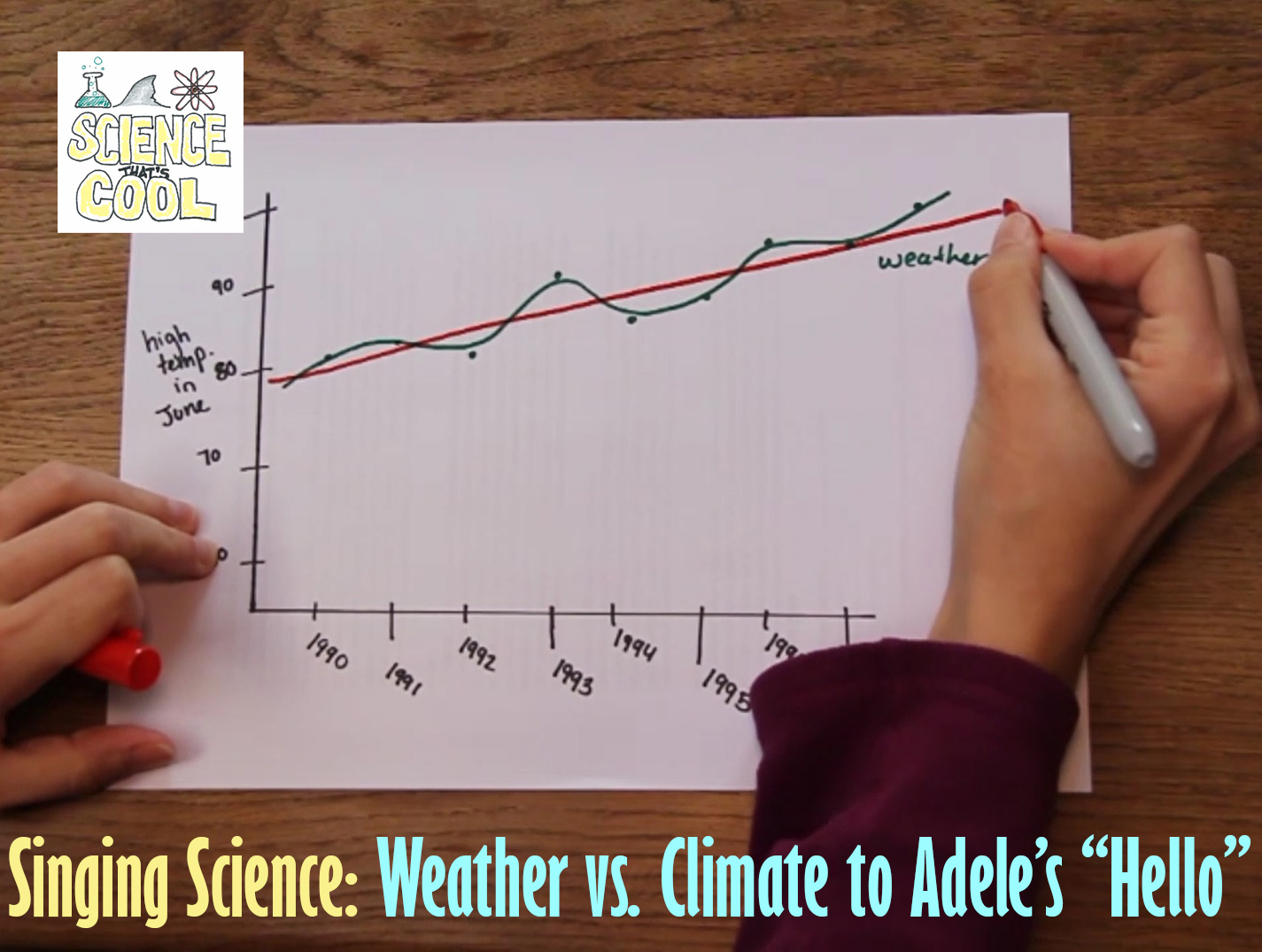
Singing Science: Weather vs. Climate with lyrics for teachers

Posted on March 14, 2016 By Michelle Jewell
Singing Science: Weather vs. Climate with lyrics for teachers
Uncategorized

The month of February 2016 just broke a global temperature record, previously held by… January…2016.

While the Trubama climate plans are being praised, the comments section of this Guardian article was still inundated with “Well, it’s cold where I am” posts.  Perhaps we need to create more awareness about the difference between weather and climate…

I know, I’m not supposed to talk about this, but I love to sing.  Every neighbor, flat mate, and unwilling car passenger knows this.  In fact, the only thing I love as much as singing is teaching science, but the metaphorical light bulb didn’t come on until I attended a SciComm workshop in Portugal.  Why not sing about science like many others?  Maybe even weather and climate??

Adele songs were the obvious choice, both for singability and availability of karaoke versions on YouTube, so I began my research.  I asked facebook if this would be a valuable addition to the internets, or best not to talk about it ever again, and the response was significantly positive.  Thus, #SingingScience was born and with it a commitment to do more of these when I have free time.

Enjoy, Weather vs. Climate set to Adele’s “Hello”

**Note (because evidently it’s not obvious):  This is not real meteorological data.

Here are the lyrics for any science teachers who would like them:

Read More “Singing Science: Weather vs. Climate with lyrics for teachers” »
This Paper Should Not Have Been Retracted: #HandofGod highlights the worst aspects of science twitter

Posted on March 5, 2016March 5, 2016 By Andrew Thaler 6 Comments on This Paper Should Not Have Been Retracted: #HandofGod highlights the worst aspects of science twitter
Academic life

I really didn’t want to care about this paper, at all.

When news broke Wednesday afternoon that a paper in PLOS One referenced the “Creator” in the abstract, introduction, and discussion, I took a look, read through the methodology and results, asked a few colleagues in that field if there were any methodological problems that would indicate that the actual science was unsound, and concluded it was… fine. Not phenomenal, earth-shattering, or paradigm shifting, but methodologically sound.

Incidentally, publishing based on the soundness of the methodology rather than the ground-breakingness of the research, is one of PLOS ONE’s mandates.

But the paper was awkwardly framed around a few phrases referencing the role of the Creator. This framework didn’t bleed into the methods or results but it was there, and the scientific community noticed. I noted, under the assumption that the authors were inserting creationist language into their paper, that there are numerous papers that try to hang their studies on tenuous frameworks and draw not entirely supportable conclusions, and not just in PLOS. Then I chatted with a few colleagues about it and called it a day.

Here’s the weird thing about Twitter: sometimes even your apathy is newsworthy.

Read More “This Paper Should Not Have Been Retracted: #HandofGod highlights the worst aspects of science twitter” »

A year of 3D printing in the home: does it live up to the hype?

Posted on March 2, 2016March 18, 2016 By Andrew Thaler
Blogging

3D Printing. No new technology in the last decade has been heralded with as much hope and hyperbole as the promise of desktop replicators fabricating whatever object you need at the push of a button. 3D printing has made huge steps forward, with more sophisticated machines at lower prices, new materials that vastly expand the printer’s capabilities, and the breathless optimism that foresees a printer in every home, as mundane and easy to operate as a conventional printer*.

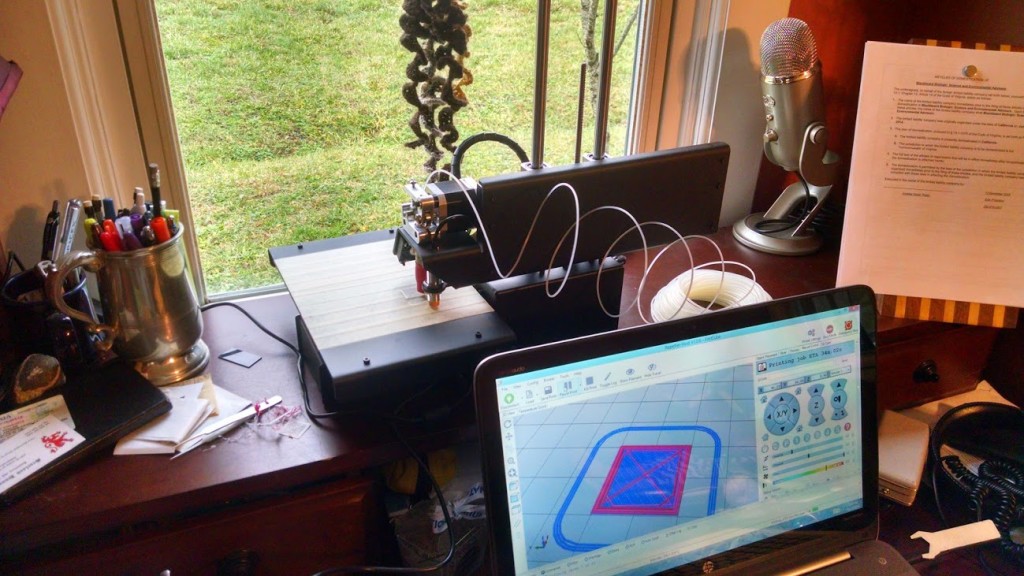
A Printrbot in the home.

And yet, for all the hype, most personal 3D printers are pressed into service fabricating plastic tschotskes — low quality, low function items of little to no utility. While the raw potential of 3D printing continues to expand, the promise of personal printers seems mired in the sandbox: an expensive toy for grownups. A toy that produces heaps of plastic detritus that will eventually find it’s way into the environment.

I posit here that, while it is true the the vast majority of people currently have no practical need for a 3D printer, under the right circumstances, a personal 3D printer can be an incredibly useful tool in the modern home.

A little over a year ago, we bought a personal 3D printer. It’s a Printrbot Simple Metal, a tough, no nonsense machine that works as well in my home office as it does at sea. Its footprint is small, and it can handle object up to 150 mm by 150 mm by 150 mm. Not huge, but big enough to be useful. And yes, this printer has primarily been used to fabricate parts for Oceanography for Everyone and other scientific endeavors. You can read more about that here: A 3D-printable, drone and ROV-mountable, water sampler and Oceanography for Everyone: Empowering researchers, educators, and citizen scientists through open-source hardware. I’m not talking about the scientific utility of the printer, but rather, how it fits into our homestead.

Read More “A year of 3D printing in the home: does it live up to the hype?” »

What the Farm?! Six months of farming podcasts

Posted on February 27, 2016 By Andrew Thaler
Conservation

Six months ago, my buddy Andrew Middleton and I launched What the Farm?! a podcast about small scale farming, by two people at the very beginning of their exploration in self-sufficiency. Small-scale and backyard farming has been one of the subtle themes of Southern Fried Science for years. While on the surface it may seem like practical farming articles have nothing to do with marine science and conservation, the reality is that how we produce food is inextricably linked to the future of our oceans.

As environmentalists, becoming self-sufficient on our own land, with both meat and produce that we have complete control over the chain of custody, from dirt to dishwasher is the ultimate expression of walking the walk. We’re not there yet, but through What the Farm?! we invite you to follow us on our journey.

Read More “What the Farm?! Six months of farming podcasts” »

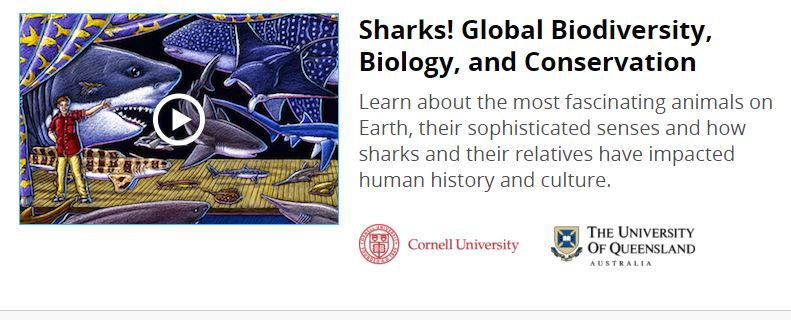
Shark MOOC: There’s a big shark party, and you’re invited!

Posted on February 26, 2016February 26, 2016 By Guest Writer
Education, Science

BemisWilliam E Bemis is Professor of Ecology and Evolutionary Biology at Cornell and lead faculty member for the edX MOOC Sharks! Global Biodiversity, Biology, and Conservation. He studied at Cornell University, the University of Michigan, the University of California Berkeley, and the University of Chicago before serving 20 years as Professor of Biology at the University of Massachusetts Amherst. From 2005 to 2013, he served as Kingsbury Director of Shoals Marine Laboratory at Cornell. Bemis conducts research in comparative vertebrate anatomy, trains research students, and teaches courses in vertebrate anatomy and evolution.

A

How do you get thousands of people interested in basic biological concepts? By teaching a course on some of the most fascinating animals on Earth – sharks and their relatives.
This is a particularly exciting time to be a shark scientist. An explosion of new research methods and technologies are leading to a surprising world of discovery. Our new course, free and open to anyone in the world, explores discoveries in many areas, including:

Read More “Shark MOOC: There’s a big shark party, and you’re invited!” »

Pushing back against technological puritanism in ocean conservation.

Posted on February 22, 2016February 22, 2016 By Andrew Thaler
Conservation

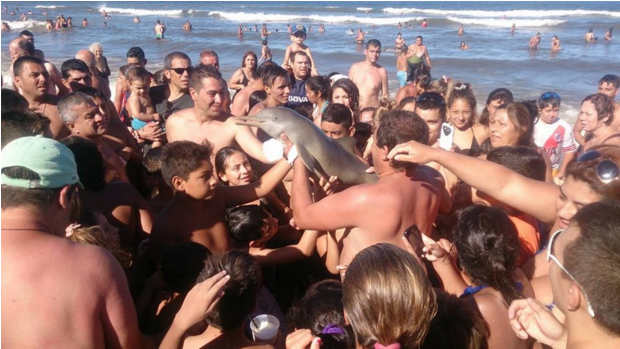
By now, you’ve almost certainly seen this photograph, making the viral rounds, of a Franciscana dolphin in South America, attached to headlines like the following: Endangered baby dolphin dies after swimmers pass it around for selfies, A Baby Dolphin Died Because Tourists Wanted Selfies With Her, A selfie mob in Argentina may have killed a dolphin.

seflie

I hate these news stories, but not for the reasons you might think.

These stories represent a kind of technological puritanism in ocean outreach, where we draw weirdly unfounded conclusions about the way humans relate to their tools to somehow absolve us of social responsibility. It’s not people mistreating a dolphin, it’s a selfie-crazed mob. We chuckle and move on, because we don’t take aggressive selfies. We’re better than that.

This is not correct.

Read More “Pushing back against technological puritanism in ocean conservation.” »

New book by Doc Gruber raises money for shark research

Posted on February 16, 2016February 16, 2016 By David Shiffman
Blogging

After a week of teasers, the Bimini Biological Field Station (“Shark Lab”) has finally unveiled the secret of #SharkDocSharkLab. It’s a book written by Sonny “Doc” Gruber, the founder of Shark Lab (and the first President of the American Elasmobranch Society, and an overall legendary figure in the world of shark research)! “Shark Doc, Shark Lab” … Read More “New book by Doc Gruber raises money for shark research” »

Six ways the new Old Spice ad violates the Marine Mammal Protection Act

Posted on February 15, 2016February 16, 2016 By Andrew Thaler 9 Comments on Six ways the new Old Spice ad violates the Marine Mammal Protection Act
Education

This is art. Maybe. Probably. Old Spice has taken it upon themselves to ask the all-important question: How many different violations of the Marine Mammal Protection act can we demonstrate in a single minute and fifteen second commercial? As it turns out, quite a few.

https://www.youtube.com/watch?v=5hteeecX1oQ

The Marine Mammal Protection Act expressly forbids the “taking” of marine mammals, a “take” being defined as:

“To harass, hunt, capture, collect, or kill, or attempt to harass, hunt, capture, collect, or kill any marine mammal. This includes, without limitation, any of the following:

  • the collection of dead animals, or parts thereof
  • the restraint or detention of a marine mammal, no matter how temporary
  • tagging a marine mammal
  • the negligent or intentional operation of an aircraft or vessel
  • the doing of any other negligent or intentional act which results in disturbing or molesting a marine mammal
  • feeding or attempting to feed a marine mammal in the wild.” 

Source.

Broadly, this include any actions that may interfere with a marine mammal’s behavior or cause it undue stress. Fines can be… severe.

Read More “Six ways the new Old Spice ad violates the Marine Mammal Protection Act” »

Fun Science FRIEDay – The Universe Sings a Song, and Humans Can Finally Listen

Posted on February 12, 2016February 12, 2016 By Kersey Sturdivant
Science

(Photo Credit: Underwood & Underwood / Corbis / Kara Gordon / The Atlantic)

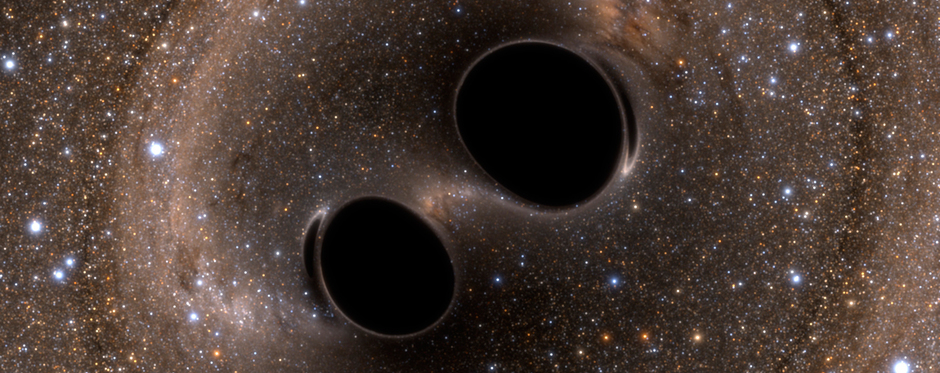
The  interwebs have been going crazy the past few days with the recent announcement that scientists have for the first time detected gravitational waves, the ripples in the fabric of space-time that Einstein predicted a century ago. In terms of scientific advancement, to quote Joe Biden, “This is a big fucking deal!” Bigger than the discovery of the subatomic Higgs boson particle (i.e., the god particle), and it has been suggested this discovery is comparable only to “Galileo taking up the telescope and looking at the planets.” – Penn State physics theorist Abhay Ashtekar

Photo credit: The Laser Interferometer Gravitational-Wave Observatory

Read More “Fun Science FRIEDay – The Universe Sings a Song, and Humans Can Finally Listen” »

How I prepare a peer review

Posted on February 11, 2016February 10, 2016 By Andrew Thaler
Academic life

Over the last couple of months the question of how to write a peer review came up quite a few times, and a couple of my colleagues even asked me directly to help them prepare for their first  peer reviews. Preparing solid, critical peer review is an essential component of being a good citizen in the scientific community. I generally do about two for every paper I submit. I thought it might be helpful to provide a brief overview of how I personally prepare a peer review, primarily for marine science and conservation journals geared towards population genetic studies. I’d like to think that this advice is broadly applicable to any scientific peer review.

Step 1.  Read the paper. It might seem silly to start with this but a lot of people dive into their peer reviews before they’ve even read the submitted paper in its entirety. You start thinking about how you’ll review it as soon as you get a request from the editor with the title and authors. When you get a paper to review, you immediately start reading it with a critical eye. Think about when you  read a paper for pleasure or because you are interested in the content. You’re generally not looking for the fine details or nitpicking word choice, you’re looking for the ideas in the paper. You’re trying to understand what the paper is about and you’re trying to understand what the authors concluded with paper. So before you even begin with your peer review just read the paper as if it were any of a dozen other scientific papers that slide across your desk every week..

Step 2. Write down what you think the paper is about. Do this in broad terms, not so much focused on the methodology but rather the ideas behind the methodology, the motivation for the study, the questions the authors want to answer. Use this as a framework to hang the rest of your review on because you’re not just looking for technical precision but to make sure that the study itself is relevant to the broader themes of the paper.

Read More “How I prepare a peer review” »

Posts pagination

Previous 1 … 82 83 84 … 276 Next

Popular Posts

At least 74 practicing shark researchers: How a silly thing I said online raised thousands for conservationAt least 74 practicing shark researchers: How a silly thing I said online raised thousands for conservationFebruary 26, 2025David Shiffman
Why the new Trump order to shoot wolves is both illegal and a dreadful precedent for endangered speciesWhy the new Trump order to shoot wolves is both illegal and a dreadful precedent for endangered speciesSeptember 5, 2026Ali Gaster
Severely injured great white shark found, are scientists responsible?Severely injured great white shark found, are scientists responsible?March 29, 2011David Shiffman
5 things I learned helping to reassess the global conservation status of every species of tuna and billfish5 things I learned helping to reassess the global conservation status of every species of tuna and billfishSeptember 15, 2026David Shiffman
Getting a sense of porpoiseJanuary 20, 2009Andrew Thaler
That's not a blobfish: Deep Sea Social Media is Flooded by AI SlopThat's not a blobfish: Deep Sea Social Media is Flooded by AI SlopDecember 19, 2025Andrew Thaler
How to build a canoe from scratch on a graduate student stipendHow to build a canoe from scratch on a graduate student stipendApril 17, 2010Andrew Thaler
The Trump Administration’s latest attack on endangered speciesThe Trump Administration’s latest attack on endangered speciesSeptember 17, 2026Ali Gaster
What is a Sand Shark?What is a Sand Shark?November 12, 2017Chuck Bangley
What Ocean Ramsey does is not shark science or conservation: some brief thoughts on "the Shark Whisperer" documentaryWhat Ocean Ramsey does is not shark science or conservation: some brief thoughts on "the Shark Whisperer" documentaryJuly 2, 2025David Shiffman

squishy

Subscribe to our RSS Feed for updates whenever new articles are published.

We recommend Feedly for RSS management. It's like Google Reader, except it still exists.

Southern Fried Science

  • Home
  • About SFS
  • Authors
  • Support SFS


If you enjoy Southern Fried Science, consider contributing to our Patreon campaign.

Copyright © 2026 Southern Fried Science.

Theme: Oceanly Premium by ScriptsTown