Skip to content

Southern Fried Science

Over 15 years of ocean science and conservation online

  • Home
  • About SFS
  • Authors
  • Support SFS

Recent Posts

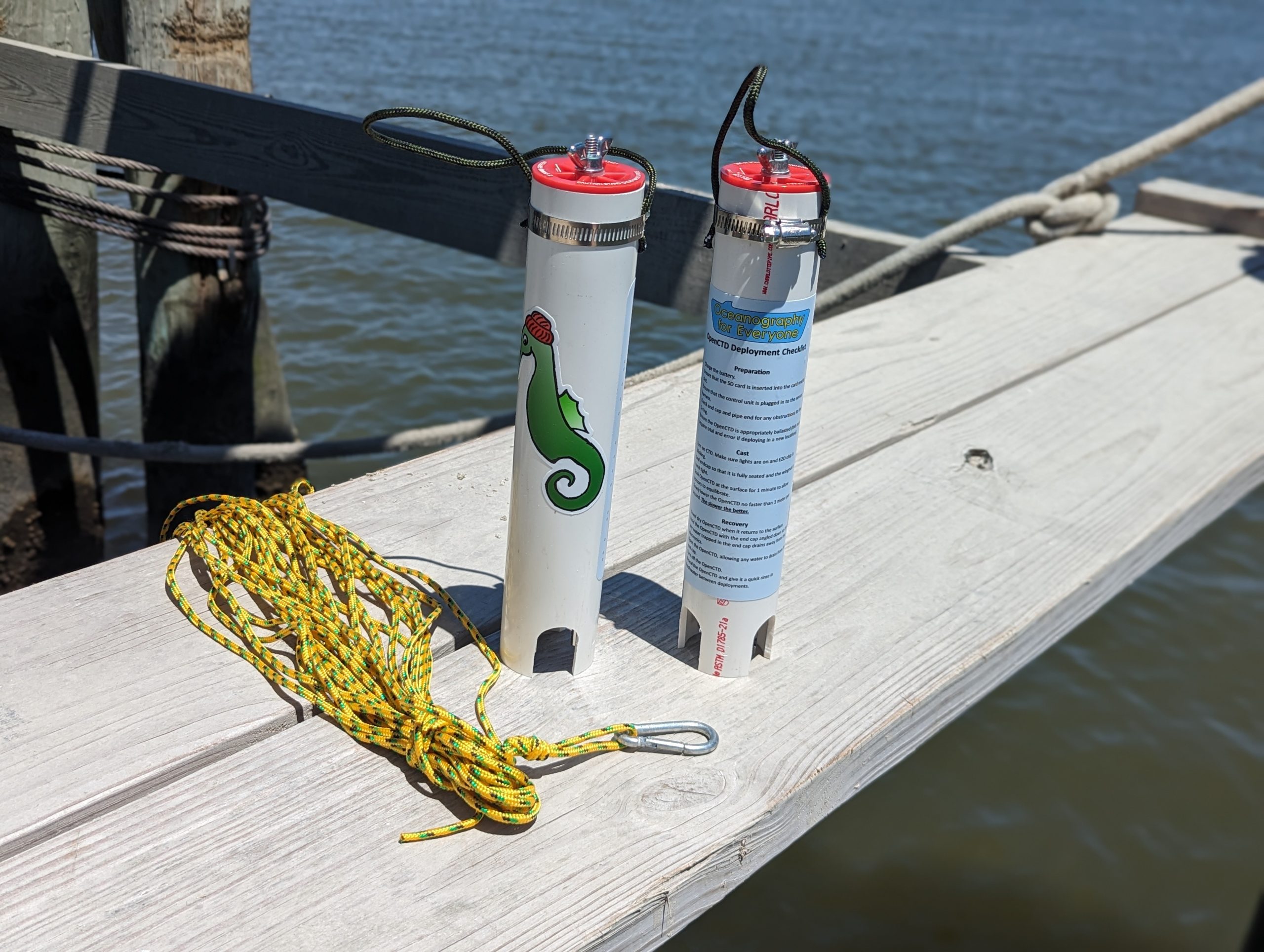
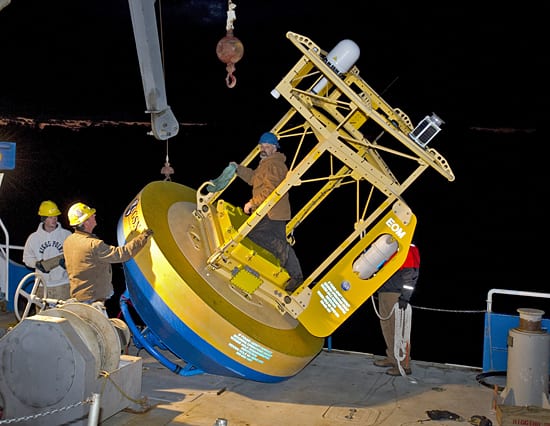
The next OpenCTD is here!
June 22, 2026
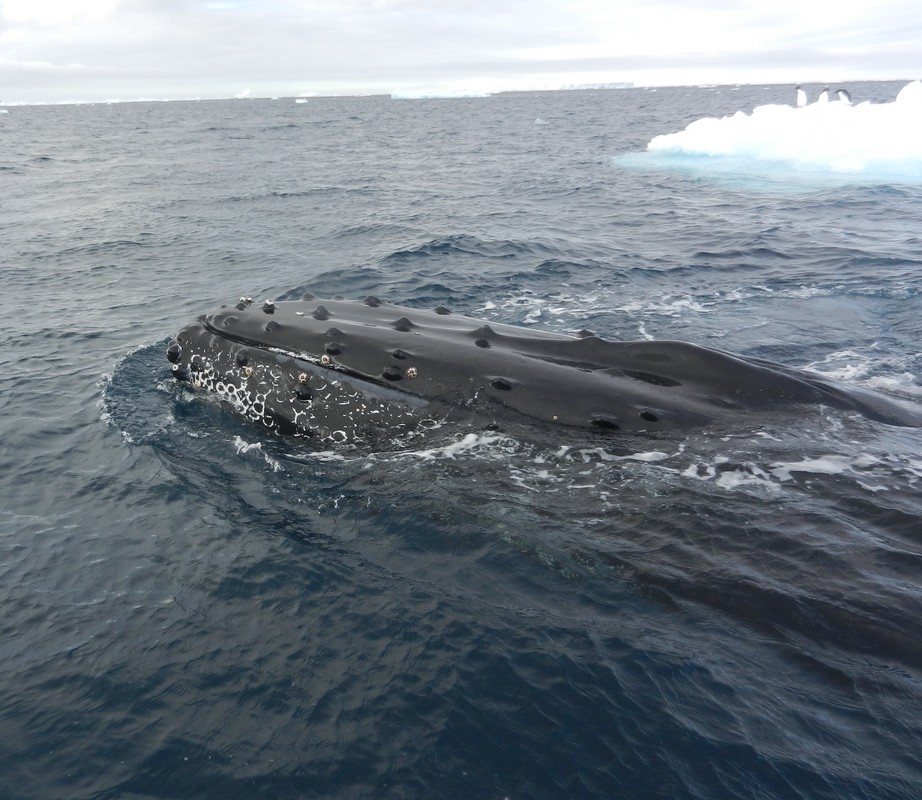
humpback whale in Antarctica
The evolution of the International Whaling Commission – from  whaling quotas to whale conservation
June 10, 2026
Isn’t ironic, don’t you think: dismantling the Ocean Observatories Initiative on World Oceans Day
June 9, 2026
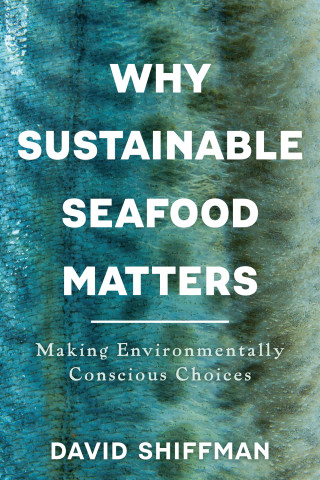
“Why Sustainable Seafood Matters” is now available for preorder! Here’s what it’s about, and why I decided to write it.
June 8, 2026
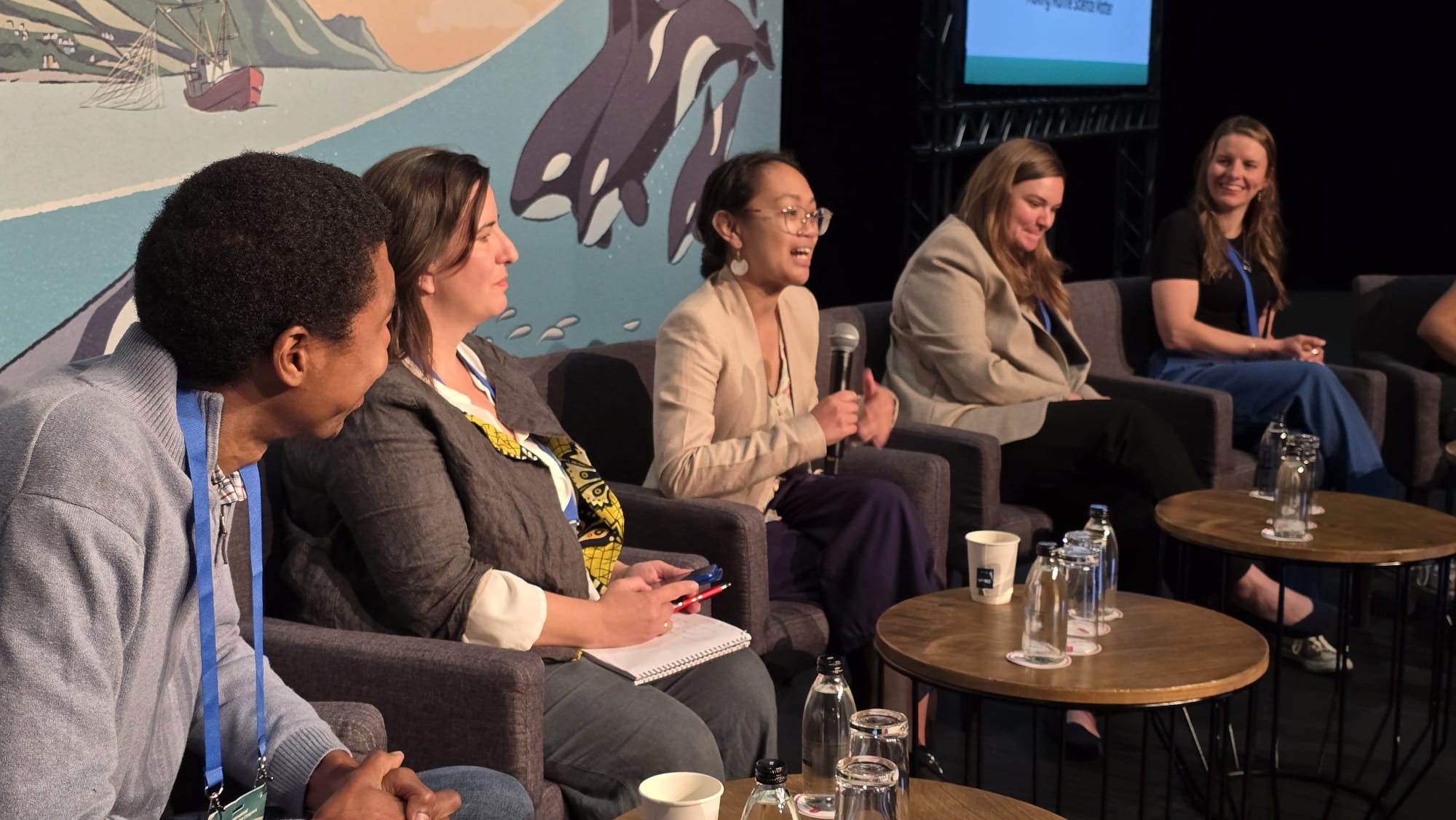
Here’s how to join my IMCC8 symposium, “Ocean Science Communication: What’s New and What’s Next?”
April 22, 2026
Deep Sea Mining Symposium Announcement
April 21, 2026

Shark fin soup, conservation, and racism: A Storify of yesterday’s twitter discussion

Posted on July 19, 2012 By David Shiffman 3 Comments on Shark fin soup, conservation, and racism: A Storify of yesterday’s twitter discussion
Uncategorized

Accusations of racism and cultural imperialism have long plagued the shark conservation movement. Earlier this week, a second lawsuit was filed in California opposing their shark fin ban. One of the reasons given for the Chinatown Neighborhood Association’s lawsuit was discrimination against citizens of Chinese descent. According to the San Francisco Examiner:

“[Chinatown Neighborhood Association Member Marcus] Lee noted that the law allows consumers to eat shark meat steaks, but not shark fin soup, leading to racial tensions. “How can you save the shark if you ban eating only the fins, but not the shark meat?” Lee asked. “This ruling is not the solution to the problem. In order to save the sharks, you might as well ban the whole shark entirely.” “

An earlier lawsuit against California’s fin ban, filed by the Asian-American Rights Committee of California, also pointed out the cultural significance of shark fin soup. According to the Huffington Post:

 ” “Shark fin soup is an Asian cultural delicacy with origins in the Ming Dynasty. It is a ceremonial centerpiece of traditional Chinese banquets, as well as celebrations of weddings and birthdays of one’s elders,” the committee wrote in its complaint. “

My personal views on this issue are complex. Populations of many species of sharks are declining at alarming rates (which has numerous negative ecological consequences), the single largest driver for these declines is demand for shark fin soup, and this demand primarily comes from Asian cultures. With very few exceptions, conservationists are not racist, and there are very good reasons to campaign for reducing shark fin soup consumption (and reducing shark fishing in general) . There’s a big difference between criticizing something because it’s different from your own culture and criticizing something because it creates negative ecological and economic ripple effects worldwide. However, when conservationists who are primarily Westerners criticize something that is done primarily by non-Westerners, it undeniably creates what politicians call troubling “optics”. In short, I don’t think campaigning to reduce shark fin consumption is racist, but I can understand how some people might.

I asked my twitter followers what they thought of the claim that criticizing shark fin soup is racist, and added some of the best contributions to the excellent discussion that resulted to a Storify. Check it out below, and feel free to continue the discussion in the comments below.

Read More “Shark fin soup, conservation, and racism: A Storify of yesterday’s twitter discussion” »

The Beneath the Waves Film Festival is touring the U.S. West Coast

Posted on July 18, 2012 By David Shiffman 3 Comments on The Beneath the Waves Film Festival is touring the U.S. West Coast
Uncategorized

Regular readers know that we are big fans of the Beneath the Waves Film Festival, which shows marine science and conservation movies (I’m actually a co-organizer). If you’ve been excited to attend the festival after reading about it on Southern Fried Science but haven’t been able to attend, this could be your chance. The flagship event takes place each March as part of the Benthic Ecology conference, but this year the festival has expanded to include a variety of public screenings throughout the country.

Read More “The Beneath the Waves Film Festival is touring the U.S. West Coast” »

The horrifying physiological and psychological consequences of being Aquaman

Posted on July 18, 2012December 27, 2012 By Andrew Thaler 20 Comments on The horrifying physiological and psychological consequences of being Aquaman
Popular Culture

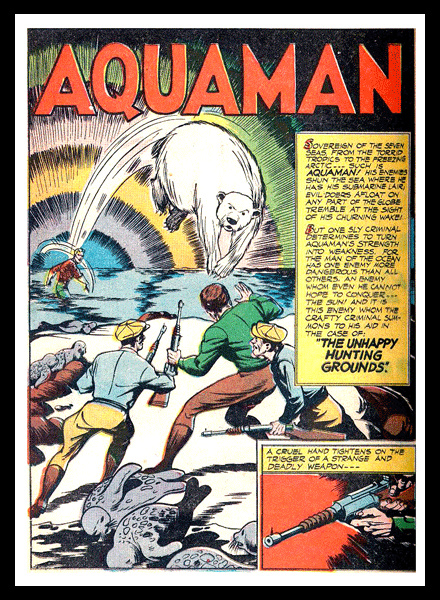
Aquaman. DC Comics.
Aquaman. DC Comics. A rational response to seal poaching is to lob a polar bear at the aggressors.

Aquaman may not be everybody’s favorite superhero, but since his creation in 1941, he has been among DC’s most enduring icons. During the Golden Age of comic books, he held his own against Superman, Batman, and Wonder Woman. Silver Age Aquaman was a founding member of the Justice League. His powers, tied to the ocean, forced writers to create a compelling, complex hero with explicit limitations. In the early days, when Superman’s strength was practically infinite, and Batman’s brilliance was unmatched, Aquaman had to become more than just a superhero, he had to be a person.

If Superman existed to show us how high the human spirit could fly, and Batman to show us the darkness within even our most noble, Aquaman is here to show us the world that triumphs in our absence. The ocean is not ours, and no matter how great our technology, we will never master it as we have mastered land, but Aquaman has. Through this lonely ocean wanderer, we can experience a world that we can never truly command. In many ways, Aquaman was stronger than the Man of Steel and darker than the Dark Knight. He knew loneliness that the orphan and the alien exile never could.

Roll on, thou deep and dark blue Ocean – roll!
Ten thousand fleets sweep over thee in vain;
Man marks the earth with ruin – his control
Stops with the shore; — upon the watery plain
The wrecks are all thy deed, not does remain
A shadow of man’s ravage, save his own,
When for a moment, like a drop of rain,
He sinks into thy depths with bubbling groan,
Without a grave, unknell’d, uncoffin’d, and unknown.

Byron

Even though Aquaman had to fight harder, endure the jokes of other, less limited heroes, and find relevance in an ecosystem hostile to the humans that had to empathize with him, Aquaman was never forced to confront the truly horrifying consequences of life in the ocean.

Read More “The horrifying physiological and psychological consequences of being Aquaman” »

Watch Episode 4 of Blue Pints: Sea Grant and Sea Monsters

Posted on July 13, 2012October 27, 2013 By Andrew Thaler 2 Comments on Watch Episode 4 of Blue Pints: Sea Grant and Sea Monsters
Uncategorized

httpv://www.youtube.com/watch?v=RIfiPiQJ3pU

Read More “Watch Episode 4 of Blue Pints: Sea Grant and Sea Monsters” »

South Carolina Governor Nikki Haley slashes funding for coastal science and sustainable development

Posted on July 12, 2012January 9, 2024 By David Shiffman 4 Comments on South Carolina Governor Nikki Haley slashes funding for coastal science and sustainable development
South Carolina Governor Nikki Haley slashes funding for coastal science and sustainable development
Science

Earlier this week, South Carolina governor and rising tea party star Nikki Haley cut all state funding for the South Carolina Sea Grant Consortium. Sea Grant programs are a critical part of the United States’ marine and coastal research network. In addition to providing millions of dollars in scientific grants, the  national Sea Grant college program (of which the South Carolina consortium is a member) connects scientists, educators, and citizens with the goal of “helping citizens utilize scientific information to support a vibrant economy while ensuring ecological sustainability” (source). In total, there are 32 Sea Grant programs throughout the country, which help coordinate research and strategic goals with experts in every state that borders an ocean or one of the Great Lakes.

Despite Governor Haley’s claims, the Sea Grant Consortium is basically the opposite of big government and wasteful government spending. Though they are administered centrally by the National Oceanic and Atmospheric Administration, each Sea Grant program is independently run. According to Executive Director Rick DeVoe,

“It is important to note that the programs we undertake are developed as a result of the input we solicit from our stakeholders along the coast and inland – businesses and organizations, NGOs, and people who depend on coastal and marine resources for their livelihoods, their pleasure and their quality of life….The S.C. Sea Grant Consortium generates and applies science-based information on issues and opportunities to enhance the practical use and conservation of coastal and marine resources to foster a sustainable economy and environment in the state and region.”

The state contribution pays mostly for local staff and facilities that are used to apply for and distribute grants. Since much of the funding for grants they distribute comes from the Federal government, the entire state-contributed budget for the South Carolina Sea Grant Consortium is a little over $428, 000 out of a total state budget of around $21,000,000,000, less than the total salaries of the Governor’s personal staff. Cutting this critical program thus results in a 0.002% reduction in state government spending, right after the state of South Carolina got more than $1.4 billion in increased tax revenue as a result of the economy improving.

Read More “South Carolina Governor Nikki Haley slashes funding for coastal science and sustainable development” »

Candidate Mitt Romney on Ocean Policy

Posted on July 10, 2012 By Andrew Thaler 2 Comments on Candidate Mitt Romney on Ocean Policy
Popular Culture

[View the story “Romney on Ocean Policy” on Storify]

Potential in Small-Scale Kombu Fishing in Samani Town, Hokkaido, Japan

Posted on July 9, 2012July 9, 2012 By Bluegrass Blue Crab
Uncategorized

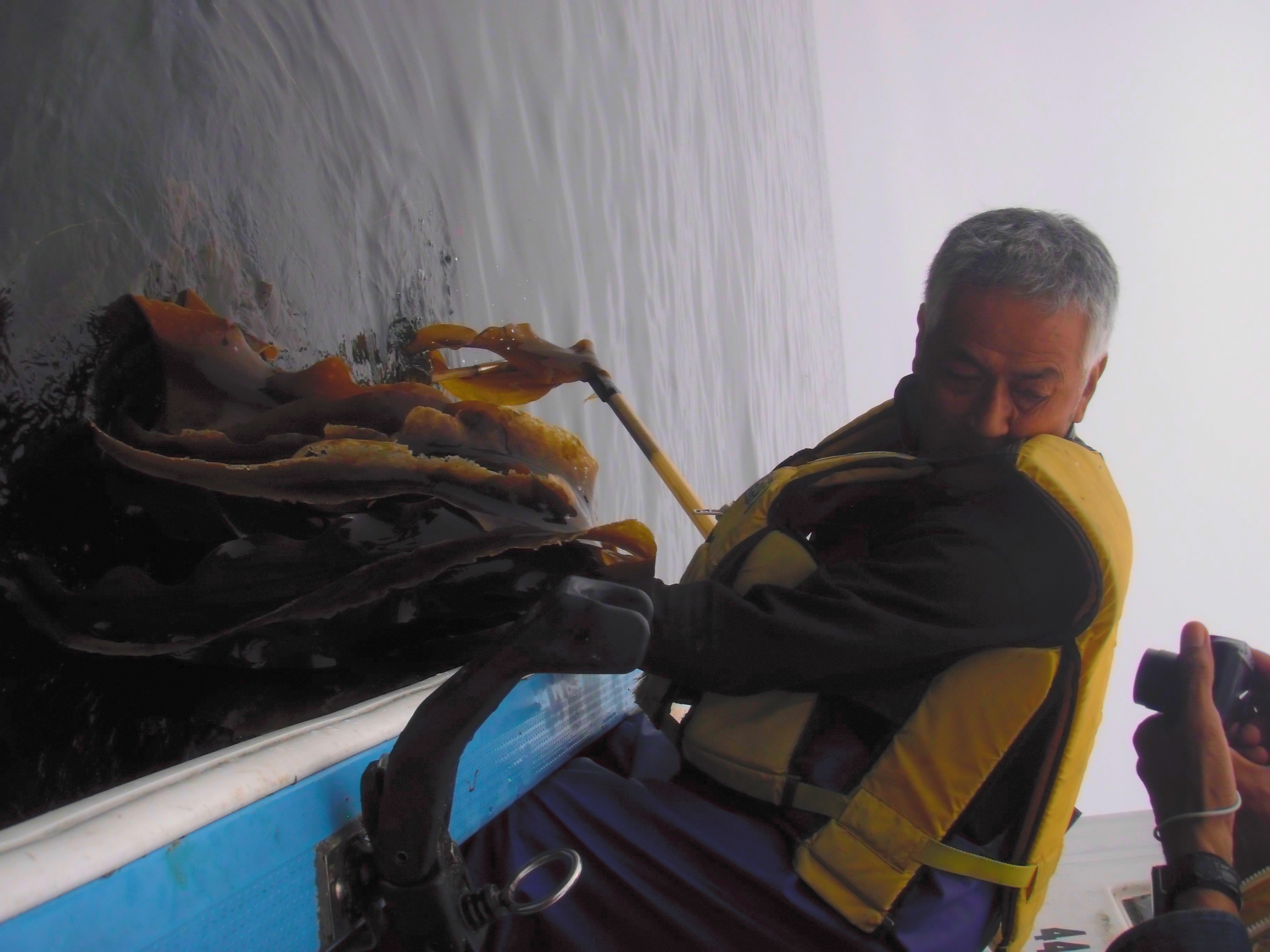
As part of the GCOE-INeT Summer School at Hokkaido University this year I have had the opportunity to use Samani Town as a case study of “the sustainability of coupled human and natural systems”. The small coastal town of roughly 5,500 people is dependent on farming, fishing, forestry, mining, and increasingly tourism. Samani town is one of the oldest towns in Hokkaido Island and kelp fishing just offshore traces its roots back to the Ainu people who first populated the area. While other industries are important to life and economy in Samani, fishing deserves special note both because of the history and the successful local management.

Read More “Potential in Small-Scale Kombu Fishing in Samani Town, Hokkaido, Japan” »

Watch Blue Pints Episode 3: Japanese Kelp Fishing and Cryptic Species

Posted on July 5, 2012October 27, 2013 By Andrew Thaler
Uncategorized

httpv://youtu.be/hNEoyUdXgHc

Read More “Watch Blue Pints Episode 3: Japanese Kelp Fishing and Cryptic Species” »

North Carolina Speaker of the House, Thom Tillis, Celebrates Independence Day by saying “Frack You” to Democracy

Posted on July 3, 2012March 10, 2015 By Andrew Thaler 4 Comments on North Carolina Speaker of the House, Thom Tillis, Celebrates Independence Day by saying “Frack You” to Democracy
Uncategorized

I know, I know, we’ve been talking politics too much around here, but I couldn’t sit on this one. Earlier this week, the NC House overturned Governor Bev Perdue’s veto of a bill to allow natural gas exploration (hydraulic fracturing, or, colloquially, “fracking”) in North Carolina. The only problem, the veto wasn’t overruled. The News and … Read More “North Carolina Speaker of the House, Thom Tillis, Celebrates Independence Day by saying “Frack You” to Democracy” »

Genetics study reveals 79 potentially new species of sharks and rays: what does it mean for science and conservation?

Posted on July 3, 2012July 3, 2012 By David Shiffman 3 Comments on Genetics study reveals 79 potentially new species of sharks and rays: what does it mean for science and conservation?
Conservation, Science

When Dr. Gavin Naylor and his team started a genetic survey of existing shark and ray species, they didn’t expect the results of their project to make international news.  Their recent paper (which, at over 250 pages and complete with more than 100 figures, is nothing short of epic), however, is too striking to ignore. The results indicate that there may be as many as 79 previously unrecognized cryptic species of sharks and rays.

A cryptic species is defined as a group that looks almost exactly like another, and may even live in the same region, but is genetically distinct. We’ve known that cryptic species of sharks and rays exist for some time, such as manta rays and scalloped hammerhead sharks, but 79 is a lot; as of the paper’s publication, only 1,221 species of sharks and rays were recognized.

According to Dr. Naylor,

“Organisms become genetically differentiated over time through the cumulative effects of mutation and recombination mediated via drift and selection. When they differentiate in isolation they eventually become so different from the parental stock from which they were derived that they can no longer produce fertile offspring when crossed with them.  Some biologists use the point of reproductive inviability as the point at which new species should be recognized…..  For practical purposes we recognize “new species” as being genetically or morphologically distinctive from previously recognized forms.”

The study’s methods, though enormous in scope, were relatively basic. According to Dr. Naylor, the study utilized a technique very familiar to geneticists: “standard DNA extraction, PCR, Sanger sequencing, alignment and analysis of a protein coding mitochondrial  gene”. To achieve the goals of understanding both evolutionary relationships of sharks and rays and parasite host specificity ( where certain parasites associated only with one species), Dr. Naylor and his team obtained and analyzed samples from as many species as they could. The numbers are impressive- 56 of 57 known families of elasmobranchs were represented among the 4,283 samples from 305 species of sharks and 269 species of batoids. In other words, this study included approximately half of all known elasmobranch species, including many that had never been analyzed genetically before. Since 1986, when the project began, samples have been obtained in more than 50 countries, mostly through the team’s own field work!

Read More “Genetics study reveals 79 potentially new species of sharks and rays: what does it mean for science and conservation?” »

Posts pagination

Previous 1 … 140 141 142 … 273 Next

Popular Posts

Ageism in the conservation job marketAgeism in the conservation job marketJune 19, 2026Chris Parsons
What Ocean Ramsey does is not shark science or conservation: some brief thoughts on "the Shark Whisperer" documentaryWhat Ocean Ramsey does is not shark science or conservation: some brief thoughts on "the Shark Whisperer" documentaryJuly 2, 2025David Shiffman
Screaming into the void - Why your scientific paper doesn’t matterScreaming into the void - Why your scientific paper doesn’t matterJune 18, 2026Chris Parsons
The next OpenCTD is here!The next OpenCTD is here!June 22, 2026Andrew Thaler
Undermining the Law of the Sea. Some additional thoughts following my OpEd in the Hill.Undermining the Law of the Sea. Some additional thoughts following my OpEd in the Hill.June 22, 2026Andrew Thaler
What is a Sand Shark?What is a Sand Shark?November 12, 2017Chuck Bangley
The story of the pride flag made from NASA imagery: Bluesky's most-liked imageThe story of the pride flag made from NASA imagery: Bluesky's most-liked imageSeptember 27, 2024David Shiffman
That's not a blobfish: Deep Sea Social Media is Flooded by AI SlopThat's not a blobfish: Deep Sea Social Media is Flooded by AI SlopDecember 19, 2025Andrew Thaler
Our favorite sea monsters – Ningen (#4)Our favorite sea monsters – Ningen (#4)September 7, 2010Andrew Thaler
Did monster hunters find a 120 meter long giant squid on google maps?Did monster hunters find a 120 meter long giant squid on google maps?June 17, 2016Andrew Thaler

squishy

Subscribe to our RSS Feed for updates whenever new articles are published.

We recommend Feedly for RSS management. It's like Google Reader, except it still exists.

Southern Fried Science

  • Home
  • About SFS
  • Authors
  • Support SFS


If you enjoy Southern Fried Science, consider contributing to our Patreon campaign.

Copyright © 2026 Southern Fried Science.

Theme: Oceanly Premium by ScriptsTown