How would they wear it? #JacquesWeek. Be there. Hey Team Ocean! Southern Fried Science is entirely supported by contributions from our readers. Head over to Patreon to help keep our servers running and fund new and novel ocean outreach projects. Even a dollar or two a month will go a long way towards keeping our website online … Read More “The Jaunty Red Knit Cap.” »
Fog Horn (A Call to Action)
- Hakai Magazine want to hear from you! Dear Hakai Magazine Reader, Who Are You?
Flotsam (what we’re obsessed with right now)
- Everything Tangier is utterly fascinating right now: Angry messages to the Trump-supporting mayor of Tangier Island illustrate a need to listen, not to shout.
- I’m still just dumbfounded by this: Did a Glowing Sea Creature Help Push the U.S. Into the Vietnam War? In other words, Ocean Literacy could save us all from annihilation.
- I really hope you’re not sick of hagfish yet. Because Hagfish!
- Best headline, ever: Sea Spiders Pump Blood With Their Guts, Not Their Hearts.
Most people from oyster-producing regions like the Chesapeake can attest to the fact that oysters are important the the social fabric of the community. In many towns that date back to the colonial era, oyster shells literally line Main Street and form the foundation of the town. In others, they form the basis of a modern-day bar scene boasting of “merroir” of the oysters alongside terroir of the wine. When the ecosystem around these kinds of places changes (think warming waters, acidified waters, introduced species who also love oysters), the resource underpinning this aspect of culture and heritage can be threatened. What does that mean for the humans so connected to the briny bivalve?

Wait, what?

What’s a hagfish?
Hagfish are eel-like jawless fishes. They are primitive, lacking a vertebral column. They are deep-sea scavengers notorious for tying themselves into knots as they rip chunks of meat from carcasses. Your ancestors, at some point, probably looked a lot like a hagfish.

I thought they were eels?
Slime eel (as well as snot snake) is the common name for Pacific hagfish. Dr. Milton Love has the simplest guide to telling the difference between hagfish and eels: Look at the hand holding the fish. Is it completely covered in slime? Then it’s a hagfish.
So, it’s an Agnathan?
Hagfish are Cyclostomes. Hagfish systematics is kind of a mess right now, with competing hypotheses about where hagfish and their ancestors fit into the history of vertebrate evolution. Unless you’re a taxonomist, I wouldn’t worry to much about hagfish cladistics; it will likely change a time or two in your lifetime.
Ok, so what’s the deal with all the slime?
Read More “Your car has just been crushed by hagfish: Frequently Asked Questions” »
Jacques Week is only a week and a half away! Join us, beginning July 23 for six nights of classic Cousteau documentaries! From the very earliest films to his last adventures, Jacques Cousteau set the standard for underwater film, adventure storytelling, and conservation messaging. So batten the hatches and haul the sheets, it’s going to be an exciting journey!
Some of these films are available online. Some will require purchase. We’ve provided links to the for-purchase options and alternates if you can’t find them. Links to all available films can be found at the JacquesWeek2017 YouTube playlist.
Jacques Week is not associated with any of the Cousteau organizations. It is a purely grassroots celebration of the man who brought ocean adventure, science, and conservation to the world.
Read More “It’s here! The Official Schedule for #JacquesWeek 2017!” »
- Protect the Outer Continental Shelf! Last week, the president announced a plan to open up significant portions of the outer continental shelf for oil and gas exploration. Call you representative! The public comment period opens today and runs through August 17. We’ll have a template script prepped for your use this week.
- Today is the day to submit public comments to defend America’s National Monuments! More than 1 million comments have been submitted so far, and from my cursory survey, almost all of them are in favor of protecting these gems of American history and nature. Submit formal public comments on the DOI Monument Review and make your voice heard.
Flotsam (what we’re obsessed with right now)
- Tangier Island. I’m still thinking a lot about the Island out of Time.
Classic Cousteau Films? Yes! In depth ocean discussions? 100% Hilarious tweets? Probably! Exceptional photoshops? I hope so! Even more classic Cousteau Films, Documentaries, and Clips? We. Are. On. It. #JacquesWeek returns July 23, right here, on the internet.
Cuttings (short and sweet):
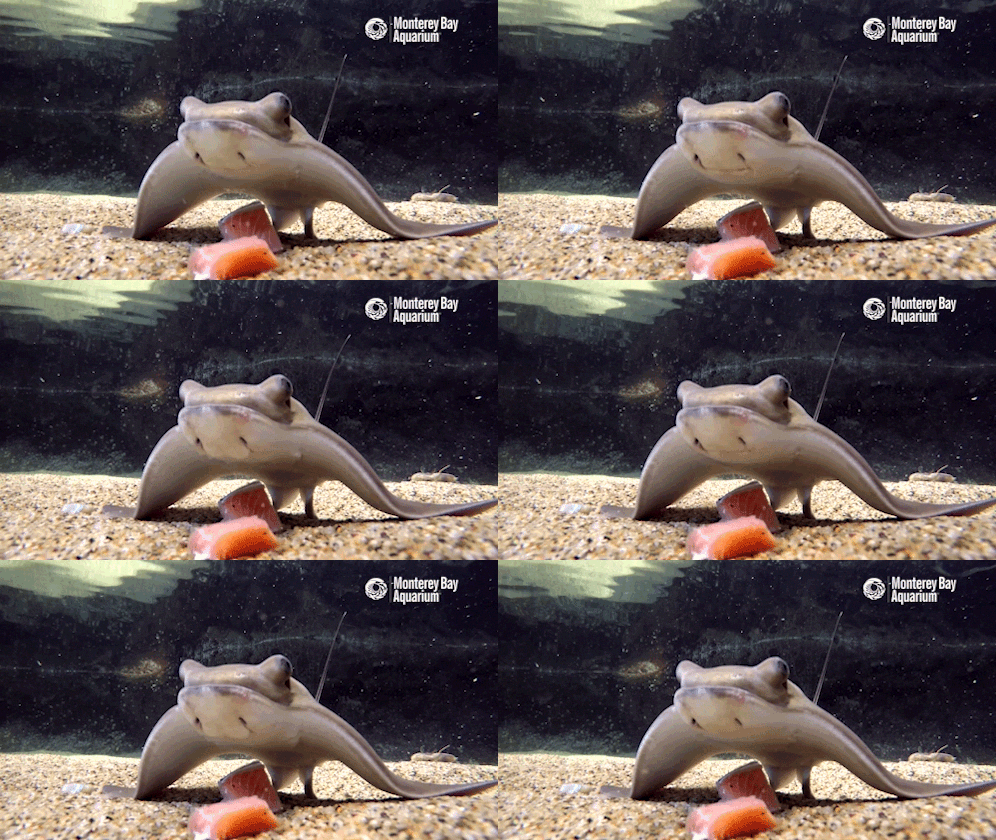
- Watch this spotted eagle ray swim in Arkive footage.
- Follow Samantha Leigh, a graduate student investigating (among other things) how bonnethead sharks can digest seagrass, on twitter.
- Cecil the lion was killed 2 years ago, and wildlife authorities still struggle to protect animals in the park where he lived. By Christina Nunez, for National Geographic.
- Rare footage of crayfish spawning captured by divers in a marine reserve off Wellington, New Zealand. By Ruby Macandrew, for Stuff.
Tangier Island is sinking.
The last inhabited island on the Virginia side of the Chesapeake Bay covers barely 740 acres of marsh and sand, 1/3 of the area it had when it was first mapped in the 1850s. Tangier suffers from the dual onslaught of erosion and sea level rise. In a good year, the island loses 7 to 9 acres of land, while the westernmost beach recedes 4 meters, exposing homes, gardens, and even graves to the Chesapeake’s unrelenting waves. The town, situated on three sandy ridges, rises to a high point just 1.2 meters above sea level. As salt water incursion and erosion deplete trees and other vegetation, erosion will increase. With a conservative projection of mean sea level rise of 4.4 millimeters per year for the southern Chesapeake Bay, the highest point in town, if it manages to stave off the inexorable erosion, would be completely underwater in 270 years. Tangier will be uninhabitable centuries before that.

The Chesapeake Bay and mid-Atlantic coastlines are hot spots for climate change, expecting greater than average sea level rise and more frequent and intense storms. Though the residents of the conservative community on tangier are skeptical, the evidence for human-induced climate change’s impact on the island and the effect of sea level rise is undeniable. Intensifying storms and more dramatic temperature shifts have and will continue to exacerbate erosion. Many residents believe that, had Hurricane Sandy made landfall over the Chesapeake Bay, rather than further north, Tangier would already be largely abandoned. Even the glancing blow from Sandy left significant damage in its wake.
One big storm could spell the end for this 350-year-old community.

Fog Horn (A Call to Action)
- Protect the Outer Continental Shelf! Last week, the president announced a plan to open up significant portions of the outer continental shelf for oil and gas exploration. Call you representative! The public comment period opens today and runs through August 17. We’ll have a template script prepped for your use by the end of the week.
Flotsam (what we’re obsessed with right now)
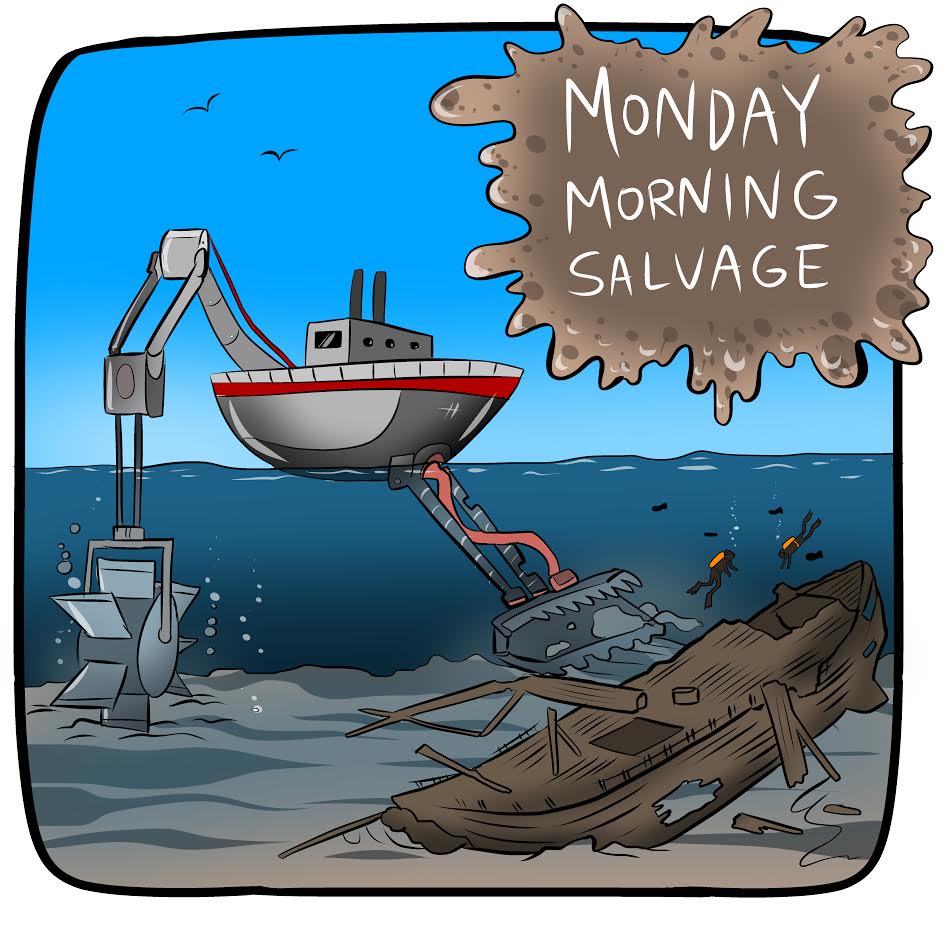
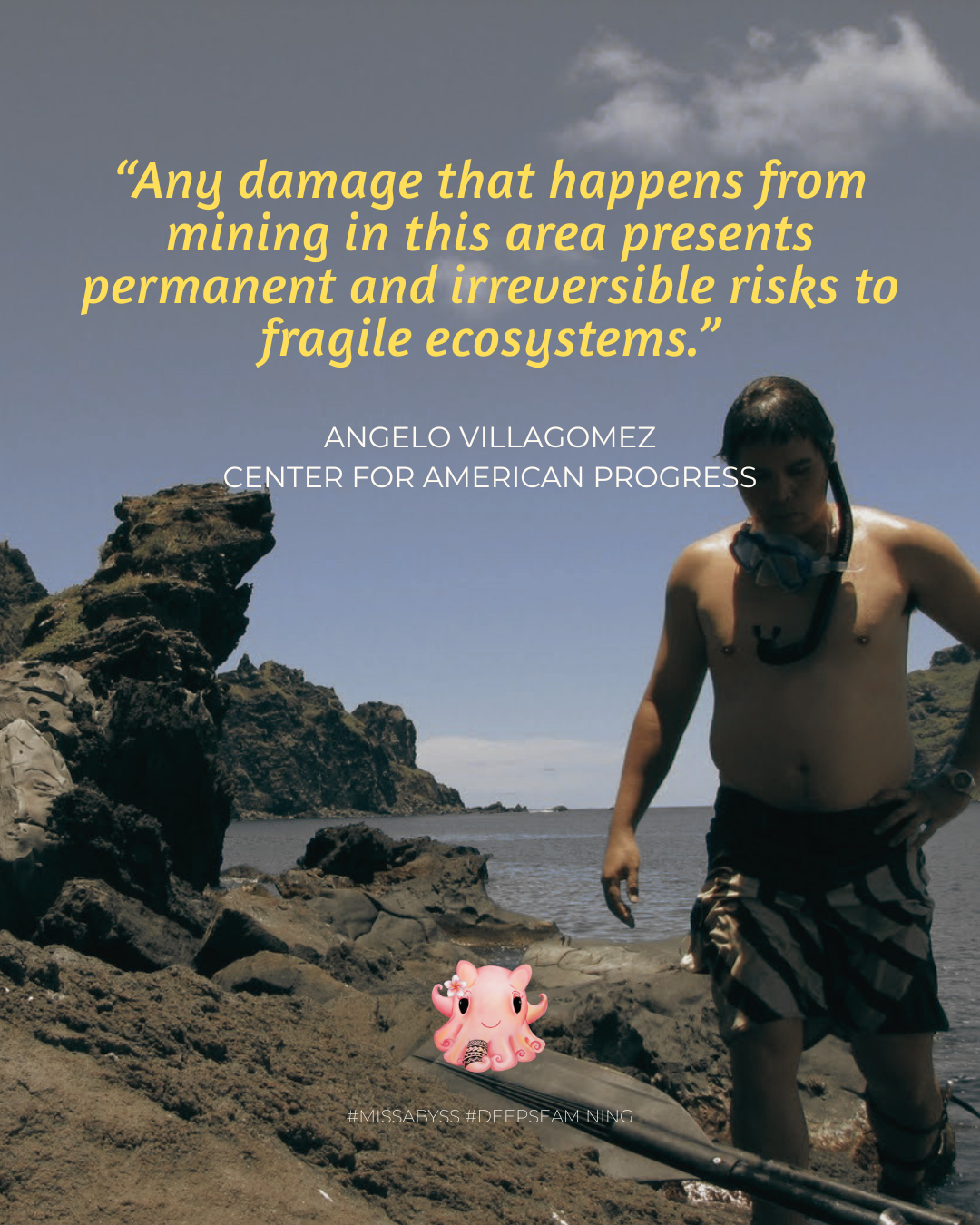
- Deep-sea mining. It’s closer to happening now than ever before, and scientists, conservationists, and ocean stakeholders are very concerned.

- Can deep-sea mining avoid the environmental mistakes of mining on land? As an industry, probably not.
- Experts Warn that Seabed Mining Will Lead to ‘Unavoidable’ Loss of Biodiversity. And check below for the primary source, co-authored by several leaders in deep ocean science.