Skip to content

Southern Fried Science

Over 15 years of ocean science and conservation online

  • Home
  • About SFS
  • Authors
  • Support SFS

Category: Science

What to do after the first fatal shark bite in Massachusetts since 1936: 3 experts respond

Posted on October 1, 2018 By David Shiffman 3 Comments on What to do after the first fatal shark bite in Massachusetts since 1936: 3 experts respond
Science

Two weeks ago, tragedy struck in New England as a boogie boarder was killed by a great white shark. Though shark bites* in general and fatal shark bites* specifically are incredibly rare (Mr. Medici was the first person killed by a great white shark in Massachusetts waters in 82 years), emotions are running high. Some Cape Cod residents are explicitly calling for a cull (targeted killing) of great white sharks.

Such a cull would be devastating for a recovering but still protected shark species, has been shown not to effectively reduce shark bites, and is opposed by shark experts around the world, but what, if anything, should local governments do instead? I’ve written in the past about alternatives to lethal shark control here and here, but not every solution is applicable for every location; local oceanographic conditions vary, as well as local laws and cultural norms. I reached out to three experts to ask what, if anything, they think should be done here. Here’s what they had to say:
Read More “What to do after the first fatal shark bite in Massachusetts since 1936: 3 experts respond” »

The rise of low-cost ROVs and community submersibles

Posted on September 20, 2018 By Andrew Thaler
Open Science, Science

The following appeared this Monday on the DSM Observer, the only trade journal committed to covering all aspects of the emerging deep-sea mining industry. Though written for the deep-sea mining community, the subject is broadly relevant to a host of ocean industries, so we reprint it below. 


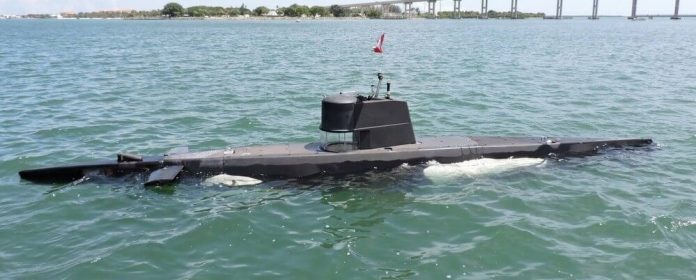
The submarine Noctiluca cruises across the surface. Photo Courtesy Shanee Stopnitzky.

As a community, we discuss mining, management, and monitoring, as well as the regulations that shape them, in terms of governments, major corporations, and research institutions. The deep-sea mining community is small and the complexities of working at abyssal depths engenders collaboration, cooperation, and, in the case of exploitation, compromise. While there are many stakeholders potentially affected by deep-sea mining, only a small proportion of them will ever directly engage with the deep seafloor.

A few extremely wealthy individuals have access to private submersibles and ROVs and have on occasion made them available for research and exploration, but they are the exception. The tools necessary to reach the depths of a hydrothermal vent or polymetallic nodule field are simply too expensive.

That may soon change.

Read More “The rise of low-cost ROVs and community submersibles” »

Shark Week 2018 overall thoughts and episode reviews

Posted on August 15, 2018 By David Shiffman
Popular Culture, Science

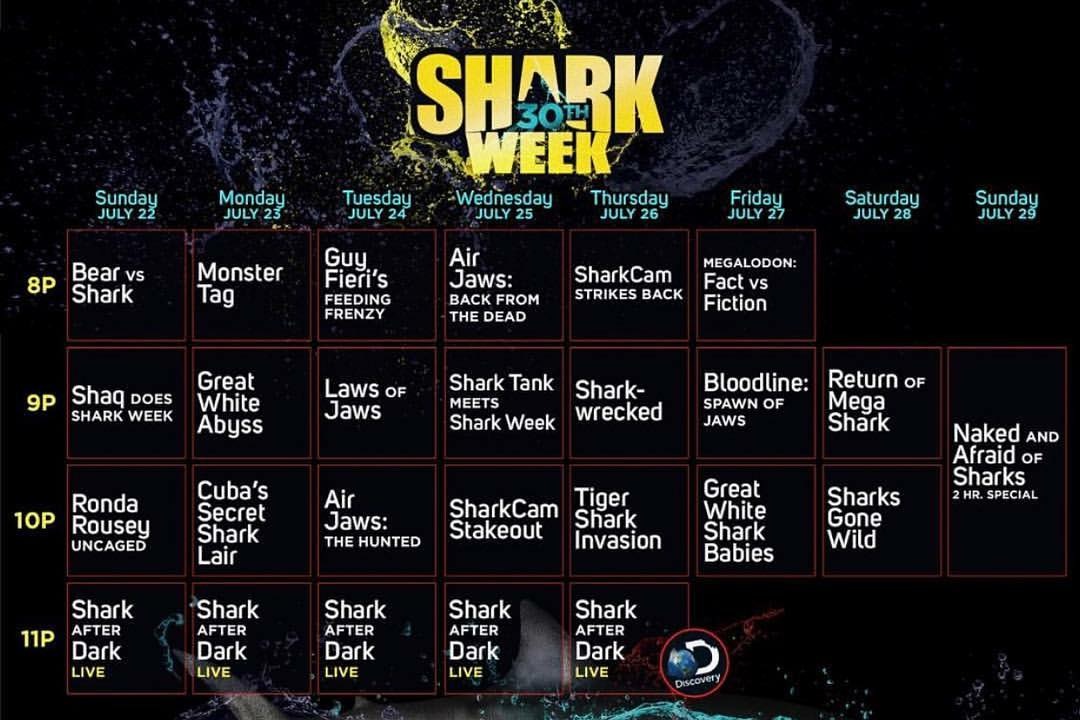
The 30th anniversary of Shark Week was the biggest ever, with 22 episodes. It was, as usual, a bit of a mixed bag, though nothing was anywhere near as bad as the bad old days of Megalodon, and there was some pretty good stuff. As has become tradition here at Southern Fried Science, here are some overall thoughts on this year’s Shark Week, as well as reviews for each episode (not counting the clip shows, which I didn’t watch- even I have limits).

Overall thoughts:

  • I heard more references to shark conservation this year, though almost exclusively offhand references to how the Bahamas is a Shark Sanctuary (there was one mention of shark fin trade bans in the Shark Tank show).
  • There were more women scientists and non-white scientists than I can remember, but still some major issues with diversity of scientists. (The white male scientists were still treated differently, including being given their full titles, and in one case a white male with a Masters was called Dr. while a woman with a Ph.D. was not called Dr.).
  • 22 shows is too many shows. I may be the only one in the world who actually tried to watch them all and I had to skip the clip shows because even I have limits.

Rather than organizing episode reviews in chronological order or air date, this year I’m going to organize them by theme.

Read More “Shark Week 2018 overall thoughts and episode reviews” »

I built a head-mounted LiDAR array that lets you see the world like a dolphin via vibrations sent through your jaw.

Posted on July 24, 2018July 24, 2018 By Andrew Thaler 5 Comments on I built a head-mounted LiDAR array that lets you see the world like a dolphin via vibrations sent through your jaw.
Education, Open Science, Science

I’m Andrew Thaler and I build weird things.

Last month, while traveling to Kuching for Make for the Planet Borneo, I had an idea for the next strange ocean education project: what if we could use bone-conducting headphones to “see” the world like a dolphin might through echolocation?

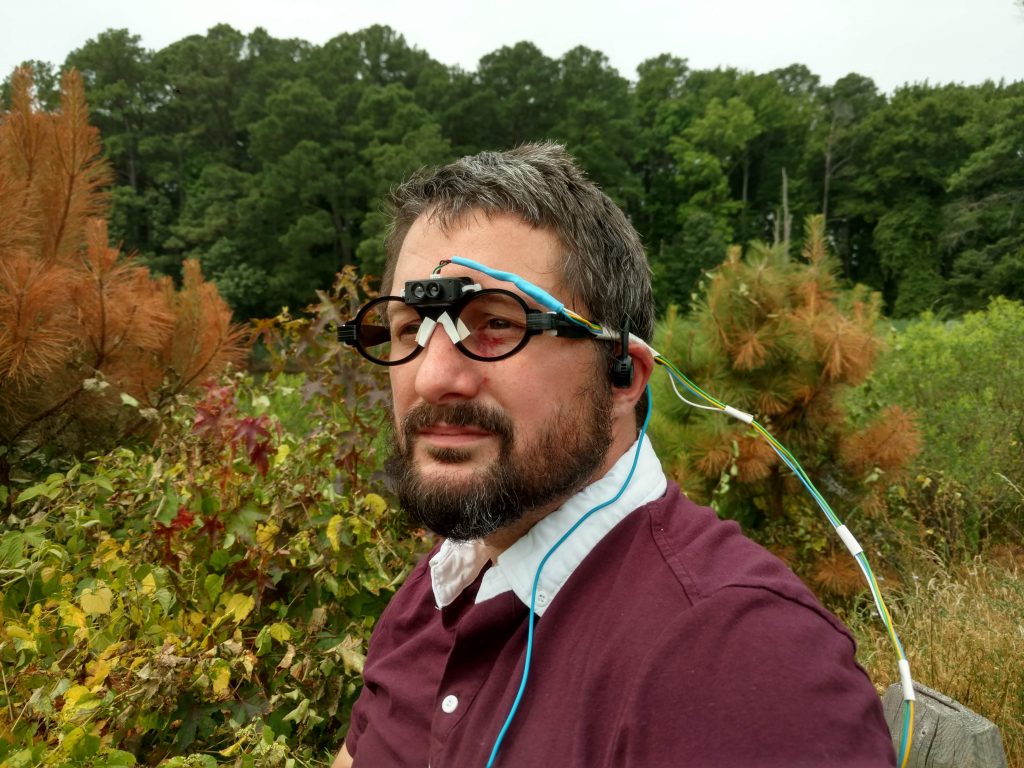
The author wearing a head mounted LiDAR array, looking very pensive.
Spoilers: You can. Photo by A. Freitag.

Bone-conducting headphones use speakers or tiny motors to send vibrations directly into the bone of you skull. This works surprisingly well for listening to music or amplifying voices without obstructing the ear. The first time you try it, it’s an odd experience. Though you hear the sound just fine, it doesn’t feel like it’s coming through your ears. Bone conduction has been used for a while now in hearing aids as well as military- and industrial-grade communications systems, but the tech has recently cropped up in sports headphones for people who want to listen to music and podcasts on a run without tuning out the rest of the world. Rather than anchoring to the skull, the sports headphones sit just in front of the ear, where your lower jaw meets your skull.

This is not entirely unlike how dolphins (and at least 65 species of toothed whales) detect sound. 

Read More “I built a head-mounted LiDAR array that lets you see the world like a dolphin via vibrations sent through your jaw.” »

ACTION ALERT: Protect Florida sharks from harmful fishing practices

Posted on July 19, 2018July 19, 2018 By David Shiffman 3 Comments on ACTION ALERT: Protect Florida sharks from harmful fishing practices
Conservation, Science

After years of scientists and conservationists complaining about problems with common land-based shark fishing practices, the Florida Fish and Wildlife Conservation Commission is finally taking action! At their April meeting, FWC formally announced that they are considering revising regulations governing this activity with the goal of restricting the unnecessary and cruel handling practices that result in killing protected species of sharks.

(For background on this topic, please read my detailed open letter, or this summary of my research).

Here are the options that FWC is considering.

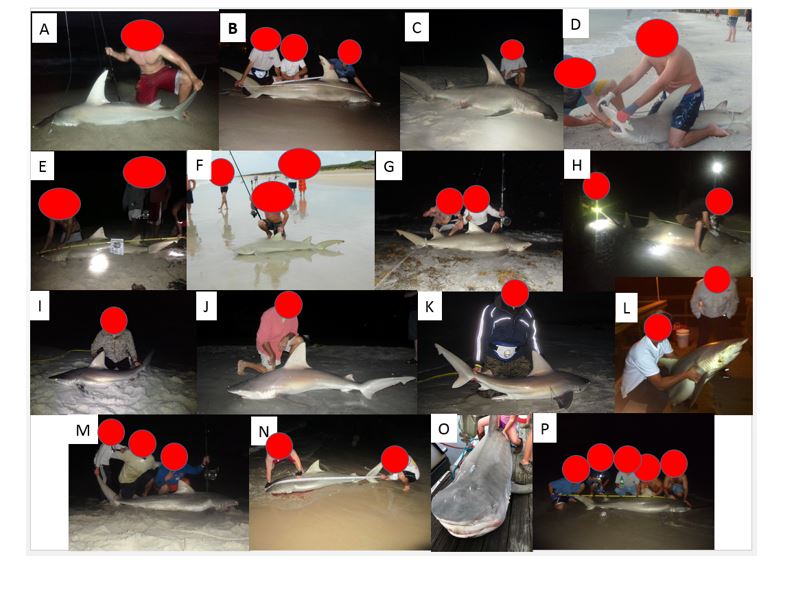
Examples of unequivocally illegal shark fishing from Shiffman and Friends 2017


How can you help? Either physically attend a workshop or send a formal comment online!


Read More “ACTION ALERT: Protect Florida sharks from harmful fishing practices” »

5 things to know about sixgill shark teeth, this month’s 3D printed reward!

Posted on June 18, 2018June 18, 2018 By David Shiffman
Science

I recently unveiled a new tier of Patreon rewards: 3D printed shark and ray models!For $17 per month, you will get a monthly 3D printed educational model of different shark or ray parts in the mail, and you’ll be supporting my efforts to provide these models to schools for free.

This month’s reward is a tooth from Hexanchus griseus, the bluntnose sixgill shark, a member of the cowshark family!This particular specimen was scanned by Dr. Lisa Whitenack as part of her Ph.D. dissertation work on comparative evolution and biomechanics of shark teeth.

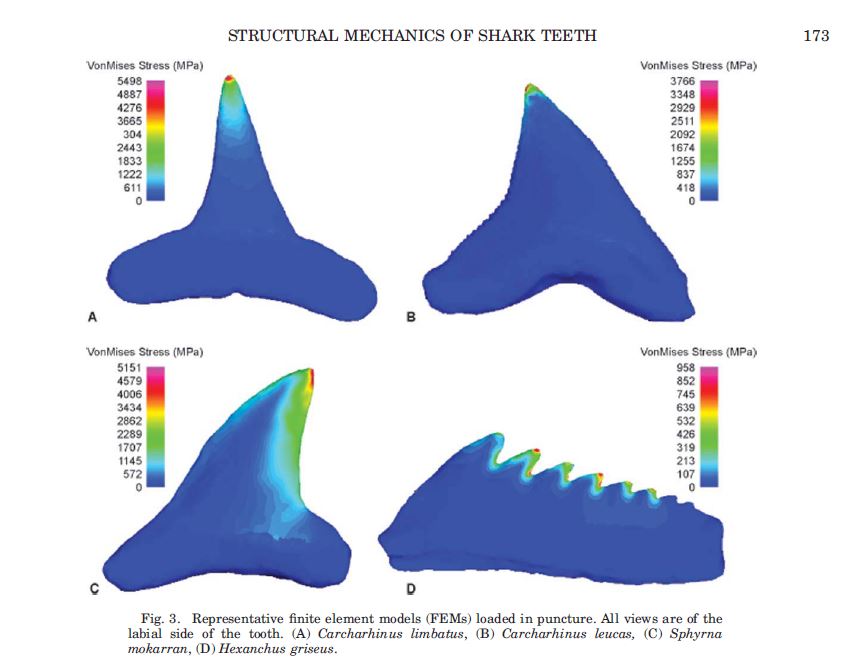
Figure from Whitenack et al. 2011, the sixgill tooth is the one in the lower right! This paper studied teeth of different shapes using Finite Element Analysis (FEA). When Lisa inputs the shape of the tooth, how elastic the tooth is, and how much force the tooth experiences into her computer program, FEA will map out stress on the entire tooth. High points of stress are where a tooth would be likely to break.

Learn more about the bluntnose sixgill shark and it’s unusual shaped teeth below!

Read More “5 things to know about sixgill shark teeth, this month’s 3D printed reward!” »

I asked 15 ocean plastic pollution experts about the Ocean Cleanup project, and they have concerns

Posted on June 13, 2018June 14, 2018 By David Shiffman
Conservation, Science

The online ocean science community has been vocally skeptical about the Ocean Cleanup, a device that aims to physically remove plastic pollution from the ocean. Drs. Kim Martini and Miriam Goldstein published a technical review of its feasibility over at Deep Sea News, and Andrew asked some important questions that have yet to be answered. Also, be sure to read environmental journalist Chris Clarke’s thorough overview of these concerns.

Overall concerns include a lack of understanding of the problem (including but not limited to the fact that much of the harmful ocean plastic is small and well-dispersed), insufficient structural integrity for a large object that will be deployed in the open ocean (which would result in the object breaking and creating even more ocean garbage), and the fact that this device is designed to aggregate objects of a certain size to remove them from the water but cannot distinguish between plastic and living things.

Mainstream media coverage has been noticeably less critical of the Ocean Cleanup, often presenting the idea as revolutionary and it’s creator as a genius.

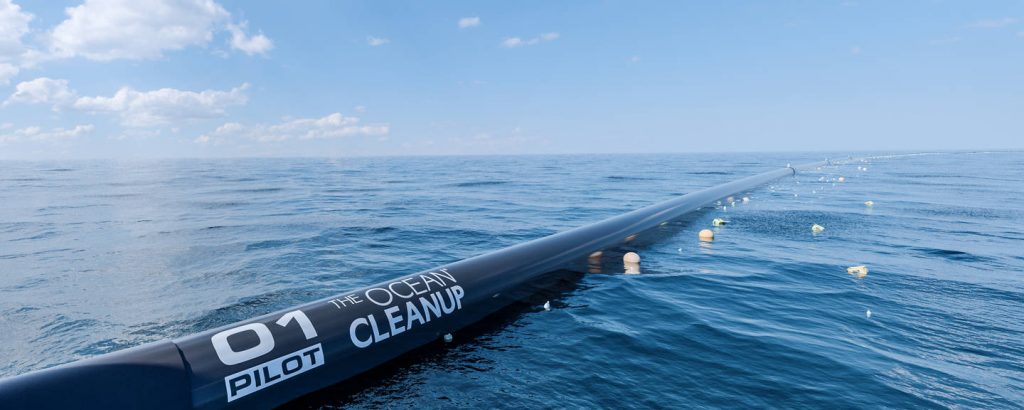
Artist’s conception of the Ocean Cleanup, from TheOceanCleanup.com

I am not an expert in ocean plastic pollution. However, the uncritical tone of most mainstream media coverage of the Ocean Cleanup does not seem to correspond with my impression of expert opinion on this matter from speaking with expert colleagues who study this.

Through professional contacts, I developed a list of 51 ocean plastic pollution experts who work in academia, government, and the environmental non-profit sector, and I sent them some questions about the Ocean Cleanup. 15 (4 in academia, 5 each in government and the non-profit sector, and 1 in industry) agreed to participate in an anonymous survey. While this is not (and not intended to be) an exhaustive survey of the entire field of ocean plastic pollution, the broad agreement among a diverse group of experts is telling. Below, please see what they had to say through some representative quotes. Some respondents chose to provide an on-the-record quote, while many chose to remain anonymous out of concerns about reprisal.

I also asked Lonneke Holierhoek, COO of the Ocean Cleanup, to respond to these concerns. Her comments are included in each section.

Read More “I asked 15 ocean plastic pollution experts about the Ocean Cleanup project, and they have concerns” »

Things that go “POP!” in the deep: crushed cups, whole cans, and seafloor spam.

Posted on June 13, 2018 By Andrew Thaler
Science

This week, two questions echoed through the hallowed halls of Deep-sea Science. It began, as things these days tend to begin, with a tweet. Dr. Diva Amon challenged deep-sea researchers to show off their shrunken cups from the bottom of the abyss. And we obliged, oh but did we oblige.

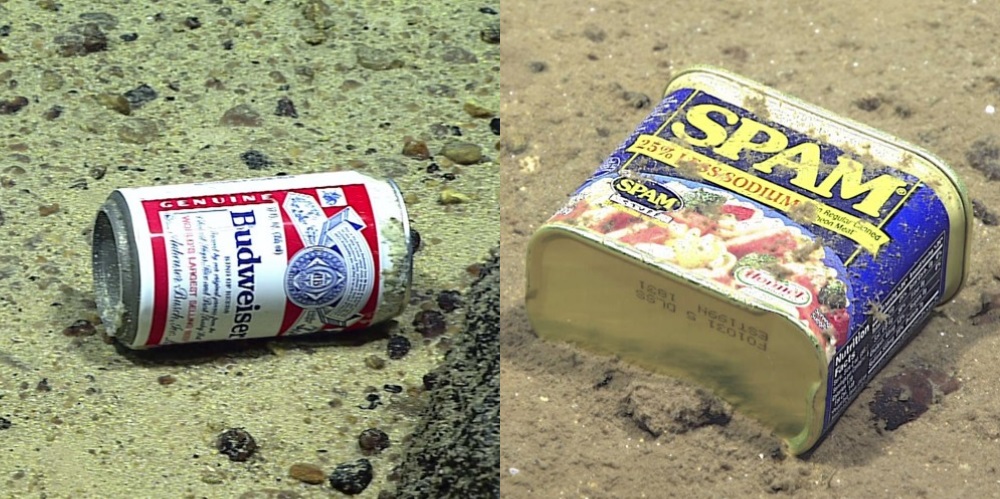
Concurrently, though unrelated, Angelo Villagomez announced out symposium on Human Impacts in the Deep Sea and shared several image of the garbage that finds its way to the ocean floor. Cans of cheap beer and pristine Spam littered the deepest reaches of the Mariana Trench, where they will lie forever as they are slowly buried in sediment.

And thus we found ourselves awash in to variations on the same theme: Why did that ocean thing get crushed? and Why didn’t that ocean thing get crushed?

Read More “Things that go “POP!” in the deep: crushed cups, whole cans, and seafloor spam.” »

5 things to know about stingray barbs, this month’s 3D printed reward!

Posted on May 29, 2018May 29, 2018 By David Shiffman
Science

I recently unveiled a new tier of Patreon rewards: 3D printed shark and ray models!For $17 per month, you will get a monthly 3D printed educational model of different shark or ray parts in the mail, and you’ll be supporting my efforts to provide these models to schools for free.

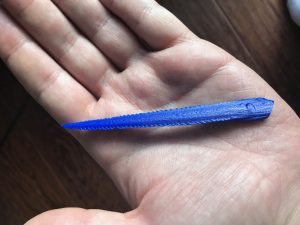
This month’s reward is the barb from a Pacific Cownose Ray, Rhinoptera steindachneri. This particular specimen is a part of the Texas A&M University Biodiversity Research and Teaching Collection, and was scanned as part of the #ScanAllFishes project! 

I reached out to Heather Prestidge and Kevin Conway, curators of the Texas A&M collection. They told me that this particular specimen was collected in 1993 by John McEachran (author of the multi-volume “fishes of the Gulf of Mexico“) and Janine Caira (now a parasitologist at UConn). It was collected in Baja California, Mexico. Heather was pleased to learn that I was using their specimen for this project, and said “our specimens have an unlimited number of uses even after their primary project!”

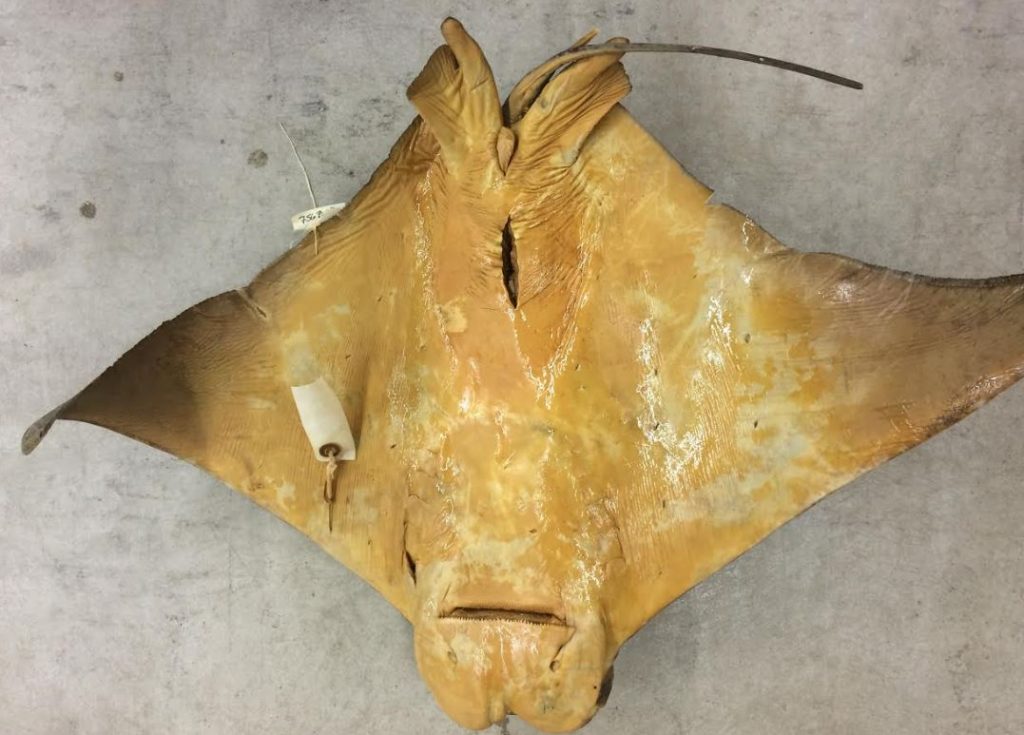
Here’s a picture of another specimen of the same species from this collection, you can see why they’re sometimes called “Golden Cownose Rays”.

Photo courtesy Christian Jones, NOAA

Here’s a CT scan focusing on the barb, from the Virtual Natural History Museum.

Learn more about the Pacific cownose ray and the science behind stingray barbs below!

Read More “5 things to know about stingray barbs, this month’s 3D printed reward!” »

This month’s 3D printed reward is a horn shark and horn shark egg case!

Posted on April 18, 2018April 17, 2018 By David Shiffman
Science

I recently unveiled a new tier of Patreon rewards: 3D printed shark and ray models! For $17 per month, you will get a monthly 3D printed educational model of different shark or ray parts in the mail, and you’ll be supporting my efforts to provide these models to schools for free.

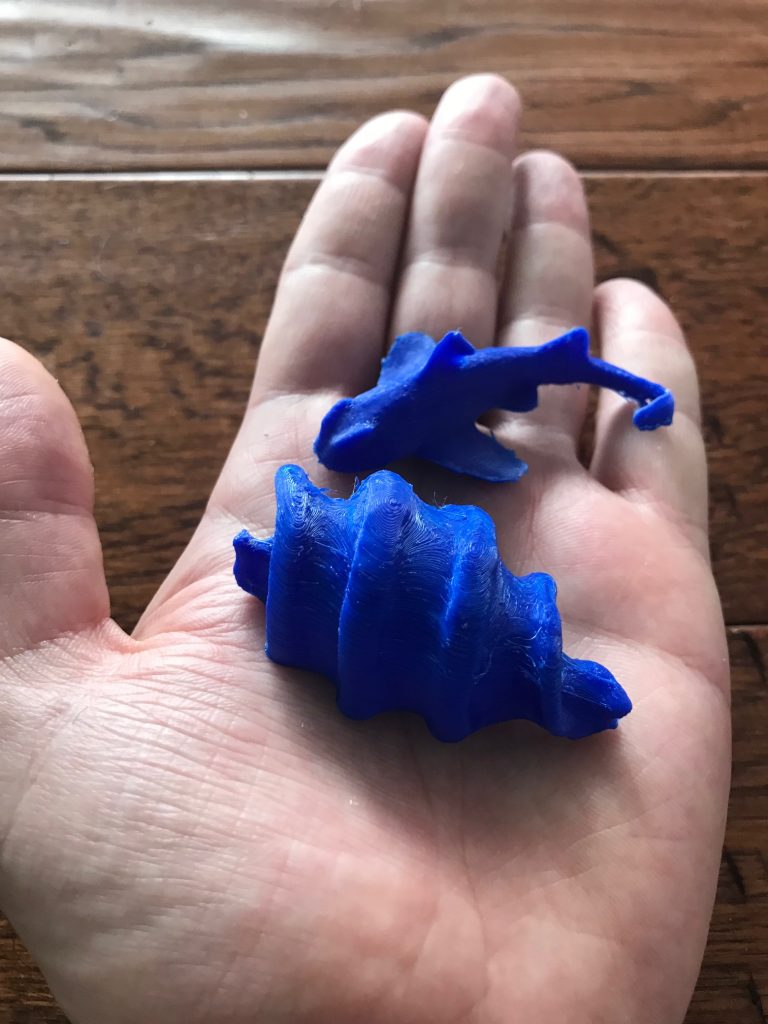
This month’s reward is a model of a horn shark (Heterodontus francisci) and a horn shark egg case!

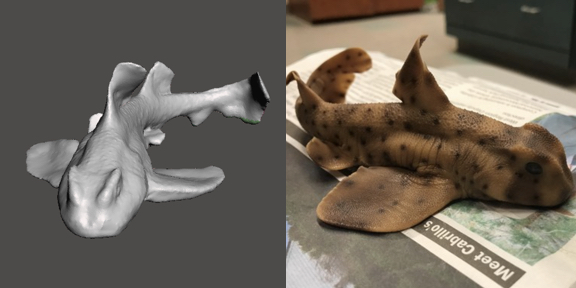
It comes from Alex Warneke, the Science Education Coordinator of Cabrillo National Monument! “”Using 3D printing technology has not only changed the way we educate the public, but it has broadened our perspective on what is possible in National Parks,” Alex told me. “We have been able to connect students to nature from an entirely different angle and provide them the tools and context they will need to succeed as scientists of the next generation.” This individual horn shark comes from the ichthyology collection at Cabrillo, and has been used for public education as well as research. The egg case is one of many that wash up on California beaches.

The original horn shark specimen and the 3D model of it, courtesy Alex Warneke, Cabrillo National Monument

Learn more about horn sharks and their egg cases below!

Read More “This month’s 3D printed reward is a horn shark and horn shark egg case!” »

Posts pagination

Previous 1 … 10 11 12 … 81 Next

Popular Posts

How close did the world's first deep-sea mining come to the dredging the world's largest cold-water coral reef?How close did the world's first deep-sea mining come to the dredging the world's largest cold-water coral reef?March 17, 2026Andrew Thaler
What Ocean Ramsey does is not shark science or conservation: some brief thoughts on "the Shark Whisperer" documentaryWhat Ocean Ramsey does is not shark science or conservation: some brief thoughts on "the Shark Whisperer" documentaryJuly 2, 2025David Shiffman
That's not a blobfish: Deep Sea Social Media is Flooded by AI SlopThat's not a blobfish: Deep Sea Social Media is Flooded by AI SlopDecember 19, 2025Andrew Thaler
Urea and Shark OsmoregulationUrea and Shark OsmoregulationNovember 15, 2010David Shiffman
Here's what I teach my students about finding jobs in marine biology and conservationHere's what I teach my students about finding jobs in marine biology and conservationApril 10, 2024David Shiffman
The story of the pride flag made from NASA imagery: Bluesky's most-liked imageThe story of the pride flag made from NASA imagery: Bluesky's most-liked imageSeptember 27, 2024David Shiffman
Alberta, Canada is the proud owner of the largest man-made pyramid on the planetAlberta, Canada is the proud owner of the largest man-made pyramid on the planetOctober 16, 2012Andrew Thaler
America's Second-Largest Estuary is a Lagoon Full of SharksAmerica's Second-Largest Estuary is a Lagoon Full of SharksApril 12, 2018Chuck Bangley
Here are some ocean conservation technologies that I'm excited aboutHere are some ocean conservation technologies that I'm excited aboutFebruary 19, 2026David Shiffman
I turned my woodshop into a personal solar farm.I turned my woodshop into a personal solar farm.June 21, 2021Andrew Thaler
Subscribe to our RSS Feed for updates whenever new articles are published.

We recommend Feedly for RSS management. It's like Google Reader, except it still exists.

Southern Fried Science

  • Home
  • About SFS
  • Authors
  • Support SFS


If you enjoy Southern Fried Science, consider contributing to our Patreon campaign.

Copyright © 2026 Southern Fried Science.

Theme: Oceanly Premium by ScriptsTown