

Skip to content

Southern Fried Science

Over 15 years of ocean science and conservation online

  • Home
  • About SFS
  • Authors
  • Support SFS

Recent Posts

The next OpenCTD is here!
June 22, 2026
humpback whale in Antarctica
The evolution of the International Whaling Commission – from  whaling quotas to whale conservation
June 10, 2026
Isn’t ironic, don’t you think: dismantling the Ocean Observatories Initiative on World Oceans Day
June 9, 2026
“Why Sustainable Seafood Matters” is now available for preorder! Here’s what it’s about, and why I decided to write it.
June 8, 2026
Here’s how to join my IMCC8 symposium, “Ocean Science Communication: What’s New and What’s Next?”
April 22, 2026
Deep Sea Mining Symposium Announcement
April 21, 2026

Ocean Kickstarter of the Month: Recycled Fishing Net Sunglasses

Posted on August 18, 2015 By Andrew Thaler 2 Comments on Ocean Kickstarter of the Month: Recycled Fishing Net Sunglasses
Conservation

Yesterday on twitter, I discussed what I look for when assessing ocean-themed crowdfunding projects. Before I fund a crowdfunding campaign, I do quite a bit of due diligence, looking at the past success of the creators, the soundness of the project, and whether or not the goals, rewards, and timelines are reasonable. My criteria are:

1. Is it sound, reasonable, and informed by science?

2. Is there a clear goal, timeline, and budget; and are they partnering with the people who have experience hitting those marks?

and;

3. Do some of the parties involved have a successful record with other crowdfunding projects and experience delivering on rewards.

It seems a shame to go through all that work and not pass it on to the rest of Team Ocean. Rather than keep it to myself (or, more likely, just tweet it out), once a month I’ll highlight my favorite ocean crowdfunding campaign. These campaigns are vetted in accordance with the above criteria, are likely to succeed, and are likely to result in a net positive for the ocean. Unsurprisingly, this month it’s the campaign that inspired this post:

The Ocean Collection – Recycled Fishing Net Sunglasses by Bureo 

Can we turn discarded fishing nets into something meaningful? This project is both simple and elegant. the ocean is filled with discarded fishing nets, most of which have decades left on their material usefulness. Nets are durable and malleable, so why not collect and reform these nets into something of value.

Is it sound, reasonable, and informed by science? Yes. Bureo has already demonstrated that recycled nets can be formed into usable products, discarded nets are a real problem and this is a reasonable solution which can have a measurable, if potentially only small and localized, impact. Plus, they have a vision for end-to-end recycling. Once your sunglasses reach the end of their useful life, you can send them back to the company to have them re-recycled.

Read More “Ocean Kickstarter of the Month: Recycled Fishing Net Sunglasses” »

How to NOT get ahead in advertising – what many conservation NGOs are doing wrong

Posted on August 17, 2015August 17, 2015 By Chris Parsons
Conservation, Education

This year’s International Congress for Conservation Biology had a special double symposium on conservation marketing. What is conservation marketing I hear you ask? Well it’s using the tried and tested techniques from the advertising field, behind which there is a significant amount of research, to increase public awareness and especially change public behavior to aid conservation. Conservation marketing is already being used by several NGOs and initiatives – RARE for example. The Society for Conservation Biology has recently set up a working group for Conservation Marketing and Engagement* as it’s believed that this technique could help highlight many endangered species and highlight important conservation issues.

In this symposium myself and several colleagues had a presentation on why the advertising campaigns of conservation NGOs are doing things wrong – specifically these campaigns are often geared towards fundraising, telling members and especially donors what a great job they’re doing, launching surveys or petitions that do little to help conservation, oh and more fund- raising. The general public has a dire understanding of the need for biodiversity conservation or endangered species, and instead of increasing awareness and getting the public to change their behavior to act in a more pro-conservation manner, NGOs are instead concentrating on …hey did I mention fund-raising?!

As the result of many requests for copies of the presentation slides, I’ve decided to make them available for Southern Fried Science. Most of the slides are self explanatory. Feel free to copy and steal memes you like and count up the number of geeky references ….

Read More “How to NOT get ahead in advertising – what many conservation NGOs are doing wrong” »

The difference between animal welfare and animal rights

Posted on August 11, 2015 By Chris Parsons 2 Comments on The difference between animal welfare and animal rights
Conservation

I have just attended a big international conservation meeting for the past week and there was a lot of discussion about the “Cecil the Lion Phenomenon.” In many discussions, the terms animal welfare and animal rights were brought up frequently, and it was very clear that many conservation scientists do not know the difference between the terms, or the differences between those who advocate on issues that are more about individuals than species or populations. When the term “welfare” was brought up, it was often with scorn and PETA was almost always the organisation that was given as an example. This really does show a fundamental lack of understanding about advocates and organisations that represent individual animals, and that could be major (even essential) assets and allies in conservation.

The terms “welfare” and “rights” cover a wide spectrum; lumping them together is like lumping Democrats (left wing liberals) and Republicans (right wing conservatives) together and making no distinction because they are both political parties. There are nuances, but as a basic primer, here are some (very) approximate distinctions:

Read More “The difference between animal welfare and animal rights” »

How I am fixing the internet

Posted on August 11, 2015 By Guest Writer 1 Comment on How I am fixing the internet
Blogging

black white headshotAlex Zrenner is a 2015 Kenan Summer Fellow and rising junior at Duke University. She is from St. Louis, Missouri and is pursuing a major in economics with a math minor. Each summer, the Kenan Institute for Ethics at Duke University supports undergraduate Kenan Summer Fellows, a program meant to help students explore what it means to live an ethical life. Portions of this post were originally published on the Kenan Institute for Ethics’ website. Alex has written weekly updates about her project here, and is also creating video blogs for the project that can be seen here.

My name is Alex Zrenner, and I am fixing the Internet. Well actually, I am researching the Internet. I have spent the past six weeks studying the ethics of cyber harassment and free speech as one of this year’s Kenan Summer Fellows.

Read More “How I am fixing the internet” »

A 3D-printable, drone and ROV-mountable, water sampler

Posted on August 10, 2015August 11, 2015 By Andrew Thaler 2 Comments on A 3D-printable, drone and ROV-mountable, water sampler
Education, Open Science, Science

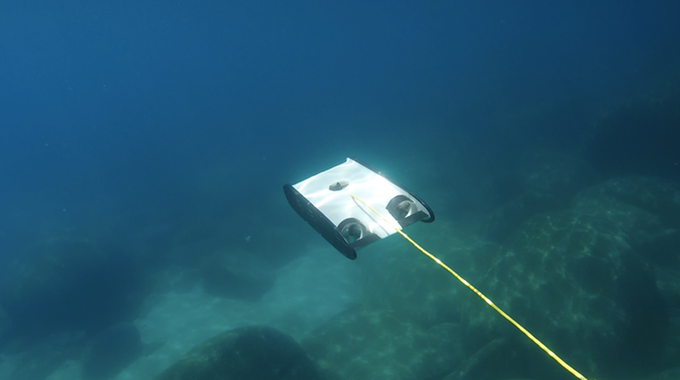
IMG_20150809_160734584_HDRThe Niskin bottle, a seemingly simple tube designed to take water samples at discrete depths, is one of the most important tools of oceanography. Coupled with a CTD, an array of Niskin bottles fit into the rosette, a Voltron-esque amalgamation of everything an oceanographer needs to profile the ocean. Niskin bottles are neither cheap nor particularly easy to use. A commercial rosette requires a decent-sized winch to launch and recover, which means you need a vessel and a crew to deploy. For Rogue Ecologist and citizen scientists, getting a high-quality, discrete water sample is a perpetual challenge. With tools like the OpenROV and the soon-to-be-completed EcoDrone, I wanted a Niskin bottle that was light weight and capable of being mounted on both underwater robots and quadcopters with ease.

Until now. 

After a few months of brainstorming and planning, I sat down this Friday and began building a 3D printable Niskin bottle that could be hand deployed or mounted on an OpenROV or drone. While this version is designed around a 1.25 inch acrylic tube, the trigger mechanism can be expanded to fit any size pipe. The trigger is driven by a waterproof servo developed by the good folks over at OpenROV. Everything else can either be purchased off-the-shelf or printed on you home 3D printer. Later this month, I’ll be taking my prototypes out on the RV Blue Heron for field testing in Lake Superior.

Bill of Materials

Read More “A 3D-printable, drone and ROV-mountable, water sampler” »

28 quotes, facts and graphs from the new UN global use of shark products report

Posted on August 2, 2015August 27, 2015 By David Shiffman
Conservation, Science

AThe United Nations Food and Agriculture organization just released fisheries and agriculture technical paper number 590, “the state of the global market for shark products.” Coauthored by legendary shark conservation researcher Shelley Clarke, this 196 page document is a comprehensive look at, um, the state of the global market for shark products.

It includes an updated review of threats to sharks and the conservation and management mechanisms that governments are used to protect them. If you’re interested in shark conservation, you should read it. If you’re interested in shark conservation but don’t want to read a 196 page technical document, I’ve selected 28 important quotes, facts, and graphs from the report. These are organized into the following four categories (categories which can be used as a TL;DR summary of the entire report):

A) The global trade in shark meat is growing and is significantly different from the fin trade (despite not getting anywhere near the same attention from conservation activists and the media as the fin trade).

B) Many, many countries other than China are involved in the global trade in shark and ray products (despite not getting anywhere near the same attention from conservation activists and the media as China).

C) Many species and populations of skates, rays, and smaller sharks are highly traded (despite not getting anywhere near the same attention from conservation activists and the media as larger, charismatic species).

D) Global trade is complex, and we need a lot more data from governments of shark fishing and trading nations to effectively track trends in shark product use (i.e. science and record-keeping are critical for conservation, and not all important conservation work is glamorous or exciting).

Read More “28 quotes, facts and graphs from the new UN global use of shark products report” »

11 thoughts about Cecil the lion

Posted on July 30, 2015July 31, 2015 By David Shiffman 6 Comments on 11 thoughts about Cecil the lion
Blogging

This is not Cecil the lion. I shot this lioness in 2000 in Tanzania... with a digital camera.
This is not Cecil the lion. I shot this lioness in 2000 in Tanzania… with a digital camera.

1) The manner in which Cecil the lion was killed (he slowly bled to death over nearly 2 days after being shot with an arrow before eventually being shot with a rifle) is strikingly inhumane and atypical of hunting. Lots of people seem to be fixating on the fact that he was skinned and beheaded after he was killed, but that’s pretty typical for hunting.

2) If the hunter who shot and killed Cecil the lion broke the law in doing so (this seems to be not entirely resolved, he had a permit to kill a lion but seems to have lured Cecil out of a protected area) he should absolutely be held responsible for it. In a court.

3) The hunter’s excuse of “I should not be responsible for anything that happened during the hunt because I hired guides to plan everything” is complete bullshit, both legally and morally.

Read More “11 thoughts about Cecil the lion” »

In an Adventure …. with Scientists ! (…or why does America hate science so much?)

Posted on July 30, 2015August 12, 2015 By Chris Parsons
Science

In the UK “The pirates ! In an adventure with scientists” an animated movie by Aardman Animations (the studio behind Wallace & Gromit) saw some success at the movie box office. The film was based by on the popular book by the same name by Gideon Defoe, which features, as the name suggests, pirates, Charles Darwin and scientists of the Royal Society. When the movie was screened in the US however, the title was changed to “The Pirates! Band of Misfits” because it was thought that American children would avoid a movie with scientists in. All reference to Darwin, who was one of the main characters, was also removed from US trailers, presumably because evolution is viewed as ‘controversial’ in the US.

Why is it science is such seen this way in the US?

Read More “In an Adventure …. with Scientists ! (…or why does America hate science so much?)” »

Graduate minions vs masterminds

Posted on July 30, 2015 By Chris Parsons 2 Comments on Graduate minions vs masterminds
Uncategorized

The other day I overheard an academic tell an upcoming graduate student that they should pick a PhD project by finding an advisor who already had a project set up and who had funding and that they should do research where the funding was rather than where their interests lay. This was so totally contrary to my PhD experience it left me reeling.

Read More “Graduate minions vs masterminds” »

Geese, snakeheads, and the ones that got away: Southern Fried Science Book Club, week 5

Posted on July 27, 2015 By Andrew Thaler 1 Comment on Geese, snakeheads, and the ones that got away: Southern Fried Science Book Club, week 5
Blogging

Fortunately, it turns out last week’s chapter was a fluke, and we come down the home stretch of Eating Aliens with some of the strongest sections since the beginning. Canadian Geese was particularly fascinating, as it’s clear this is the species Landers has the most experience talking about. Te chapter is rich with the details, backstory, and information that I was hoping to find throughout the book, with less cynicism about the role of local and national government than we’ve seen previous. If you haven’t caught up yet, I recommend just skipping Nutria and going straight to Canadian Geese.

Then we’re back in the water with numerous marine and freshwater invasives, many from the aquarium trade. Plecos and armored catfish, released by amateur aquarists, are booming in Florida’s warm, protected waters, while tilapia is a holdover from the aquaculture industry. Frankly, there wasn’t much new in these chapters, other than the species–at this point introduced fish are old news, and while the details of each animal are slightly different, the causes and consequences are often the same. Personally, I don’t think I’d eat a pleco, but it doesn’t sound particularly unpalatable. Even though the story is pretty much the same–Landers struggles to catch anything, hijinks ensues, they finally eat it–this was a fun part of the book.

Read More “Geese, snakeheads, and the ones that got away: Southern Fried Science Book Club, week 5” »

Posts pagination

Previous 1 … 89 90 91 … 273 Next

Popular Posts

What Ocean Ramsey does is not shark science or conservation: some brief thoughts on "the Shark Whisperer" documentaryWhat Ocean Ramsey does is not shark science or conservation: some brief thoughts on "the Shark Whisperer" documentaryJuly 2, 2025David Shiffman
What is a Sand Shark?What is a Sand Shark?November 12, 2017Chuck Bangley
Some upcoming public talks on shark science and conservationSome upcoming public talks on shark science and conservationJune 29, 2026David Shiffman
The story of the pride flag made from NASA imagery: Bluesky's most-liked imageThe story of the pride flag made from NASA imagery: Bluesky's most-liked imageSeptember 27, 2024David Shiffman
Tagging Bull Sharks in the Neuse RiverTagging Bull Sharks in the Neuse RiverAugust 4, 2011Guest Writer
That's not a blobfish: Deep Sea Social Media is Flooded by AI SlopThat's not a blobfish: Deep Sea Social Media is Flooded by AI SlopDecember 19, 2025Andrew Thaler
The next OpenCTD is here!The next OpenCTD is here!June 22, 2026Andrew Thaler
Shark of Darkness: Wrath of Submarine is a fake documentaryShark of Darkness: Wrath of Submarine is a fake documentaryAugust 10, 2014Michelle Jewell
Rice’s whale and the curious case of the disappearing species.Rice’s whale and the curious case of the disappearing species.June 25, 2026Southern Fried Science
The Case Against Shark Fin Trade BansThe Case Against Shark Fin Trade BansMay 12, 2017David Shiffman

squishy

Subscribe to our RSS Feed for updates whenever new articles are published.

We recommend Feedly for RSS management. It's like Google Reader, except it still exists.

Southern Fried Science

  • Home
  • About SFS
  • Authors
  • Support SFS


If you enjoy Southern Fried Science, consider contributing to our Patreon campaign.

Copyright © 2026 Southern Fried Science.

Theme: Oceanly Premium by ScriptsTown