
Skip to content

Southern Fried Science

Over 15 years of ocean science and conservation online

  • Home
  • About SFS
  • Authors
  • Support SFS

Recent Posts

The next OpenCTD is here!
June 22, 2026
humpback whale in Antarctica
The evolution of the International Whaling Commission – from  whaling quotas to whale conservation
June 10, 2026
Isn’t ironic, don’t you think: dismantling the Ocean Observatories Initiative on World Oceans Day
June 9, 2026
“Why Sustainable Seafood Matters” is now available for preorder! Here’s what it’s about, and why I decided to write it.
June 8, 2026
Here’s how to join my IMCC8 symposium, “Ocean Science Communication: What’s New and What’s Next?”
April 22, 2026
Deep Sea Mining Symposium Announcement
April 21, 2026

Is peer-review best left to academic journals?

Posted on July 21, 2015 By Bluegrass Blue Crab
Science

If you have ever dealt with scientific data, you’ve probably encountered one of the shadier sides of science: academic publishing. While they’ve stood, in some cases, for centuries, as the official record of scientific advancement safeguarded under the watchful eye of peers, modern journals live in a modern world. Millions of words have already been spilled on the subject, so that’s not what this article is about. Instead, I’m left asking whether academic publishing is the only means of getting the stamp of peer-review these days?

The reasons leading me to ask this question are many, but primarily through working in a management arena lately. One example, in particular, highlighted many of the disconnects between the need for verified scientific data and the incentives of journals. This moment was at a Chesapeake Bay Program Sustainable Fisheries Goal Implementation Team meeting (for those of you not in the Chesapeake region, that’s a consortium of regional fisheries managers), where a room full of decision-makers needed a verified stock assessment of blue crabs to move forward with their management planning. Peer-review is the time-tested, well-understood, and arguably easiest means of verifying data.

Read More “Is peer-review best left to academic journals?” »

Build a dirt cheap, tough-as-nails field computer in a Pelican case

Posted on July 21, 2015June 25, 2016 By Andrew Thaler
Science

IMG_20150720_233502091For and updated version of the BeagleBox, please go here: The BeagleBox 2: a dirt-cheap, tough-as-nails, 3D-printed, versatile field laptop.

Fieldwork is tough. You’re in the elements, facing wind, rain, and salt spray, sometime on an open boat far out in the Atlantic. You and your gear takes a beating. But you’re out there because there’s science that need to get done.

But your equipment is controlled via computer, and your data entry mandates a computer, which means your precious laptop needs to come with you. For graduate students and early career scientists, this can be a dilemma. I’ve see the calculations happen as my colleagues prepare for the field–do I take my one and only computer out into the field and risk damaging it, or do I leave it brute-force my way through sampling without it. That is, if they’re lucky enough to have alternative methods they can employ. For some gear, there’s no choice but to take the computer.

This equation is, counter-intuitively, getting worse. Our sensors, sampling devices, and scanners are getting cheaper and lighter. Rather than buying a $20,000 piece of equipment, you can get a $20 chip, but there’s a trade off, and the trade off is that chip based systems rely on external processing power, they need a general computer, and that means your laptop is coming with you.

I don’t like going out on the water with my laptop. Losing it would be frustrating and time consuming. It’s tough, but it’s not tough-as-nails. And it’s definitely not cheap.

So I tapped into the wealth of Maker experience I’ve accumulated over the last few years and build a new one, using a single board computer, some extra peripherals, and a 3D printer. And I shoved the whole thing into a Pelican case. Say hello to the BeagleBox, a dirt cheap, tough-as-nails field computer for about $200.

Read More “Build a dirt cheap, tough-as-nails field computer in a Pelican case” »

Hacking the Tractor: what the future of farming means for open science

Posted on July 20, 2015July 21, 2015 By Andrew Thaler
Science

I took a gamble when I bought the tractor mower. It was old, but well-cared for and ran well, but it was wearing out. Still, I couldn’t get a quarter as much machine for twice the price. Two months later, the mower deck cracked, rusted out from ten years of hard use. A replacement deck would run into the thousands of dollars, there were no options for just the shell, a cheaper, but still pricey option, and there were no off-brand decks to be found. Those three facts alone should tell you that we’re dealing with a John Deere, here.

John Deere made headlines earlier this year when Wired ran an impressive (and rare) expose on farm tech: New High Tech Farm Equipment is a Nightmare for Farmer. Deere followed up with a rebuttal letter, declaring that farmers did, in fact, own their equipment, while simultaneously outlining all the ways in which they didn’t: John Deere: of course you “own” your tractor, but only if you agree to let us rip you off.

Here’s the short version: Tractors are complicated and increasingly controlled by onboard computers. These computers use proprietary software, and that software is protected by the Digital Millennium Copyright Act (DMCA). The software itself is encrypted to prevent copying or modding. Those encryption are also protected by the DMCA. Breaking that encryption is illegal, regardless of the state of the software. If you have to decrypt the software to remove it, you’re breaking the law.

Read More “Hacking the Tractor: what the future of farming means for open science” »

Tweets from the American Elasmobranch Society 2015

Posted on July 20, 2015 By David Shiffman
Uncategorized

This year, there were 3,680 tweets with the American Elasmobranch Society meeting hashtag #AES15, approximately 1,000 of these from me and the rest from another approximately 20 members who attended the conference. In contrast, the Joint Meeting of Ichthyologists and Herpetologists, of which AES is a small part (approximately 1/6th of the talks), had a … Read More “Tweets from the American Elasmobranch Society 2015” »

American Elasmobranch Society announces new initiative to promote diversity in marine science

Posted on July 16, 2015 By David Shiffman 1 Comment on American Elasmobranch Society announces new initiative to promote diversity in marine science
Blogging

The American Elasmobranch Society, the world’s largest and oldest professional society focusing on shark and ray research, announced a new diversity initiative today. The new Young Professional Recruitment Fund will identify and contact students, postdocs and early career professional from historically underrepresented minority groups and from developing countries whose research focuses on elasmobranchs. Additionally, if you are … Read More “American Elasmobranch Society announces new initiative to promote diversity in marine science” »

Chasing the Elusive Nutria: Southern Fried Science Book Club, week 4

Posted on July 14, 2015 By Andrew Thaler
Blogging

I’m going to have to start with an apology. I intended to get to this chapter before #JacquesWeek kicked off and sucked up all of my time, but I just couldn’t. This chapter was… not fun and not particularly informative. In the longest chapter of the book, Jackson’s fails to hunt Nutria for 90% of … Read More “Chasing the Elusive Nutria: Southern Fried Science Book Club, week 4” »

Shark Week 2015 episode reviews

Posted on July 13, 2015September 7, 2015 By David Shiffman 2 Comments on Shark Week 2015 episode reviews
Science

sharkThese reviews were all posted on my Facebook Fan Page the night each special aired, and are stored here for easy retrieval.

Here’s my review of Shark Week Night 1!

1) Shark Trek! The latest in a series of good specials about Dr. Greg Skomal’s research on great white sharks in New England. Last year they upped the ante by adding an underwater robot that followed and filmed sharks, and I wasn’t sure how they could top that. This year, they added an adorable ten year old shark-o-phone named Sean, and brought Greg down to Florida. He also went diving with several other species of sharks, including my favorite, the sandbar shark! We also got to see Bulls, blacktips, a great hammerhead, and a tiger. A solid natural history and science documentary. A-

2) Island of the mega shark. This special was…not good. It chronicled the efforts of non-scientists doing what they referred to as scientific research. They claimed that no one had ever used a clear shark cage before, but it’s even been shown on past Shark Week specials. Also, this cage was apparently not safety tested before they put someone in it around great whites- he couldn’t close the door! They also had a silly floating shark-shaped ruler, which is not useful in measuring sharks unless they swim right next to it. They referred to a fat shark as “clearly pregnant,” when in reality this method is about as reliable for sharks as it is for humans. On the plus side? No wildlife harassment and no completely made up nonsense. D-

3) Monster Mako. This special focused on efforts by the Texas A&M Center for Sportfish Research to study the world’s fastest shark. Some needlessly dramatic narration, but the content was great! Lots of amazing footage of makos and of spinner sharks, including an amazing breach! I’d happily watch a version of this special for dozens of other shark species. Another solid natural history and research documentary! A-/B+ (some marks off for goofy narration).

Shark species seen so far: 8

Female scientists seen so far: 1

Megalodons seen so far: 0

Conclusion: So far? Shark Week 2015 is much better!

Read More “Shark Week 2015 episode reviews” »

A mega-Storify of Shark Week 2015 tweets

Posted on July 12, 2015 By David Shiffman
Science

sharkI’ve collected 1,000 Shark Week 2015 tweets from myself and other marine biologists and conservationists. They include fact-checks, commentary, reviews of each special, and suggestions for improvement. I’ll post my own more detailed reviews of each special tomorrow.

Read More “A mega-Storify of Shark Week 2015 tweets” »

Up your underwater robot skills with OpenROV Dive Debriefs

Posted on July 10, 2015July 10, 2015 By Andrew Thaler
Uncategorized

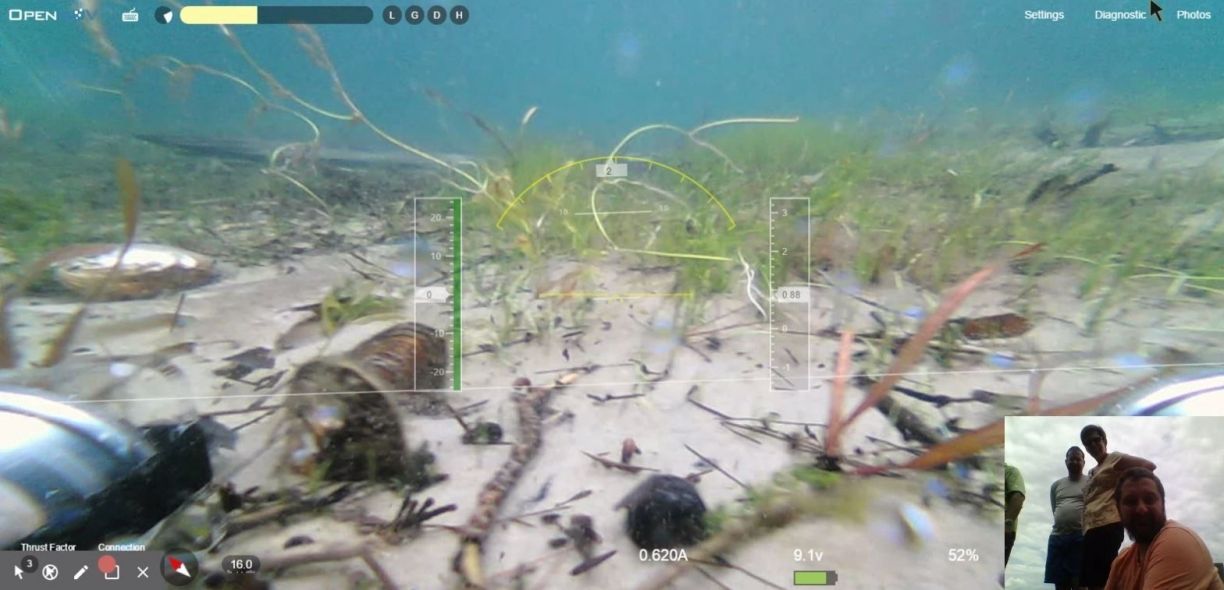
Over the last few months, I’ve been putting together short tutorial videos on how to pilot an OpenROV or other MicroROV. The forth installment, Seagrass: Friend or Foe, just went up, so now ia a good time to take a look back at the playlists. Enjoy!

https://www.youtube.com/watch?v=6MSVjoqItXw

Read More “Up your underwater robot skills with OpenROV Dive Debriefs” »

Crowdfunded shark research: Protect coastal shark migrations

Posted on July 9, 2015 By Guest Writer
Science

272_BK_20140402_U_ChirstopherLangBryan Keller just graduated with his M.Sc. from Coastal Carolina University. For his thesis, he investigated the effect of familiarity on the social preferences of lemon sharks while researching at the Bimini Biological Field Station. Bryan and his team showed that lemon sharks do indeed prefer familiar individuals. Imagine this: You have two classes of kindergarten students that remained separated for one school year, and at the end of the year, the classes are mixed. More often than not, students would choose ‘friends’ based upon whom they are most familiar with, in this case that would be their classmates. Lemon sharks are the same way, they showed a preference for their ‘classmates’.

Offshore wind farms offer countless benefits, but will there be environmental costs? To help answer the looming question, we will tag a population of bonnethead sharks in South Carolina.  The tags will communicate with acoustic receivers, and when the sharks swim close enough to the receiver, its presence will be documented. By using a series of receivers, we will be able to determine where a shark spends most of its time. After we know where the bonnetheads are spending their time, we will be able to conduct laboratory trials to determine if the introduction of offshore wind farms can displace the shark from this area. Recent work in SC showed that bonnetheads returned to the same estuary each year and from this, we know that the sharks aren’t randomly distributed throughout the environment. What if they can’t get back to the habitat they occupy every year? If offshore wind farms disrupt the marine ecosystem and prohibit sharks from returning, then there could be serious repercussions.

Read More “Crowdfunded shark research: Protect coastal shark migrations” »

Posts pagination

Previous 1 … 90 91 92 … 273 Next

Popular Posts

Some upcoming public talks on shark science and conservationSome upcoming public talks on shark science and conservationJune 29, 2026David Shiffman
What is a Sand Shark?What is a Sand Shark?November 12, 2017Chuck Bangley
What Ocean Ramsey does is not shark science or conservation: some brief thoughts on "the Shark Whisperer" documentaryWhat Ocean Ramsey does is not shark science or conservation: some brief thoughts on "the Shark Whisperer" documentaryJuly 2, 2025David Shiffman
Tagging Bull Sharks in the Neuse RiverTagging Bull Sharks in the Neuse RiverAugust 4, 2011Guest Writer
That's not a blobfish: Deep Sea Social Media is Flooded by AI SlopThat's not a blobfish: Deep Sea Social Media is Flooded by AI SlopDecember 19, 2025Andrew Thaler
The story of the pride flag made from NASA imagery: Bluesky's most-liked imageThe story of the pride flag made from NASA imagery: Bluesky's most-liked imageSeptember 27, 2024David Shiffman
The next OpenCTD is here!The next OpenCTD is here!June 22, 2026Andrew Thaler
Shark of Darkness: Wrath of Submarine is a fake documentaryShark of Darkness: Wrath of Submarine is a fake documentaryAugust 10, 2014Michelle Jewell
Rice’s whale and the curious case of the disappearing species.Rice’s whale and the curious case of the disappearing species.June 25, 2026Southern Fried Science
The Case Against Shark Fin Trade BansThe Case Against Shark Fin Trade BansMay 12, 2017David Shiffman

squishy

Subscribe to our RSS Feed for updates whenever new articles are published.

We recommend Feedly for RSS management. It's like Google Reader, except it still exists.

Southern Fried Science

  • Home
  • About SFS
  • Authors
  • Support SFS


If you enjoy Southern Fried Science, consider contributing to our Patreon campaign.

Copyright © 2026 Southern Fried Science.

Theme: Oceanly Premium by ScriptsTown