
Skip to content

Southern Fried Science

Over 15 years of ocean science and conservation online

  • Home
  • About SFS
  • Authors
  • Support SFS
Latest News
  • Norway and Cook Islands put their deep-sea mining plans on pause

Recent Posts

Join Me at Upwell: A Wave of Ocean Justice — Our Fourth Year!
March 24, 2026
How close did the world’s first deep-sea mining come to the dredging the world’s largest cold-water coral reef?
March 17, 2026
Here are some ocean conservation technologies that I’m excited about
February 19, 2026
Walking Backwards Into the Future: Applying Indigenous Knowledge to Deep Sea Mining
February 5, 2026
The Urgency Does Not Exist: My statement on Deep-sea Mining to the Subcommittee on Energy and Mineral Resources
January 24, 2026
Bipartisan Concern Expressed Over Deep Sea Mining at Congressional Hearing
January 23, 2026

Everything you need to know about conservation you can learn from Alien(s)

Posted on August 8, 2018August 10, 2018 By Chris Parsons
Conservation, Popular Culture

As a provider of advice on how to do effective conservation, Southern Fried Science has previously looked to such as The Game of Thrones for inspiration. Today we look at another famous source of conservation tips: Alien (and Aliens)…

A single charismatic animal can be a great motivator for action.

Jones the cat

Scientists sometimes have self interests that can derail a project.

Science officer Ash

Just when you think everything is going ok a crisis hits…

Read More “Everything you need to know about conservation you can learn from Alien(s)” »

Beware the ghost! The problem of conference ‘ghosting’

Posted on August 7, 2018August 8, 2018 By Chris Parsons
Academic life


Ghosting – the practice of ending a personal relationship with someone by suddenly and without explanation withdrawing from all communication.

Have you ever seen a ghost at a conference? That’s when a presentation is in the program, and the audience is assembled expectantly, and the presenter never turns up. Ghosting is becoming increasingly common at conferences, and as a meeting organizer it’s incredibly frustrating. Conferences only have a limited number of presentation slots. So, if someone says they are going to attend, and then don’t, that’s a slot that could have been taken by someone else. For a student, or someone early in their career, having a conference presentation slot could make a huge difference. So for someone to ‘waste’ a presentation slot by simply not turning up, you are being unthinking towards colleagues as well as the meeting organizers.

Read More “Beware the ghost! The problem of conference ‘ghosting’” »

Fun Science FRIEDay – Resurrection

Posted on August 3, 2018August 3, 2018 By Kersey Sturdivant
Uncategorized

Life has unbelievably complex and diverse strategies to ensure survival. Organisms are able to go dormant during unfavorable conditions, and resuscitate once the environment becomes ideal again. This can play out over relatively short time periods such as when animals hibernate, or over longer periods where organisms can go into stasis, e.g. reviving bacteria from 250 million year old salt crystals.

Researchers in Russia recently thawed out permafrost sediment frozen for the past 42,000 years, and revealed once frozen and now living nematodes. Yes you heard that correctly, worms birthed and subsequently frozen during the Pleistocene (42,000 years earlier) were just resurrected in the 21st century. Frankenstein, eat your heart out.

Eophasma jurasicum, a fossilized nematode. (Photo credit: Ghedoghedo)

Read More “Fun Science FRIEDay – Resurrection” »

Gregarious gars, surprising crocs, mustachioed monkeys, ocean wilderness, and more! Monday Morning Salvage: July 30, 2018

Posted on July 30, 2018July 29, 2018 By Andrew Thaler
Weekly Salvage

Logo for Monday Morning Salvage.

Foghorn (A Call to Action!)

  • Completely shameless Patreon Plug! Today marks the 1-year anniversary of our Jaunty Ocean Critter Stickers campaign. We’re going to continue making new red-capped sticker until the end of the year, then the theme will change! Sign up now if you want to support Southern Fried Science and get a very Gregarious Gar!

A gar wearing a red cap.

Flotsam (what we’re obsessed with right now)

  • Did you see marine biologist Melissa Cristina Márquez on Shark Week this week? Read more about her experience here: Marine Biologist Melissa Cristina Márquez Was Bitten and Dragged by a Crocodile…and Lived to Tell Her Story. And, of course, follow her on Twitter.

 marine biologist Melissa Cristina Márquez
Marine biologist Melissa Cristina Márquez

The Gam (conversations from the ocean-podcasting world)

  • I swung by the Speak Up for the Blue Podcast to celebrate their 500th episode with a reflection on 10 years of online ocean outreach.

Read More “Gregarious gars, surprising crocs, mustachioed monkeys, ocean wilderness, and more! Monday Morning Salvage: July 30, 2018” »

How many nuclear weapons are at the bottom of the sea. An (almost certainly incomplete) census of broken arrows over water.

Posted on July 26, 2018January 16, 2024 By Andrew Thaler
Uncategorized

What’s the weirdest think you’ve found in the ocean?

Several week ago, we tackled this question while discussing the incredible shrinking cups the deep-sea scientists like to decorate and send into the wine-dark deep. While toilets and spam cans and beer bottles make for good headlines and shocking images of how extensive human impacts are on the deep sea, those are far from the strangest objects to grace the sea floor.

By most reasonable metrics, that honor has to go to the many nuclear weapons and nuclear weapon components that have been lost at sea over the last 70 years. While a few high-profile incidents have received tremendous coverage, most incidents remain largely shrouded in secrecy, with only sparse reports available. Which brings us to a question that’s been lodged in my brain for the last month: just how many nuclear weapons are sitting at the bottom of the sea?

A Mark-43 nuclear bomb. One of these is at the bottom of the sea.

This, of course, does not include the many, many, many times the United States has intentionally tested nuclear weapons throughout the Pacific, often while forcibly relocating local communities away for their now-test-site homes or, occasionally, not. This also doesn’t include the rare lost nuclear submarine, who’s payloads and whether or not they carried nuclear ordinance are mostly still classified. And, of course, it doesn’t include the Soviets or any other non-US nuclear nation.

For the most part, the 1950s and 60s were a hell of a time for losing track of nuclear weapons. By the time the 70s rolled around we had decided that maybe we should be a bit more careful with these things. But by then, we had accidentally dropped at least ten nukes into the ocean in eight different incidents. And we had lost one in a Carolina swamp. And we had almost accidentally nuked Greenland.

Who the heck thought these things were a good idea?

Read More “How many nuclear weapons are at the bottom of the sea. An (almost certainly incomplete) census of broken arrows over water.” »

I built a head-mounted LiDAR array that lets you see the world like a dolphin via vibrations sent through your jaw.

Posted on July 24, 2018July 24, 2018 By Andrew Thaler 5 Comments on I built a head-mounted LiDAR array that lets you see the world like a dolphin via vibrations sent through your jaw.
Education, Open Science, Science

I’m Andrew Thaler and I build weird things.

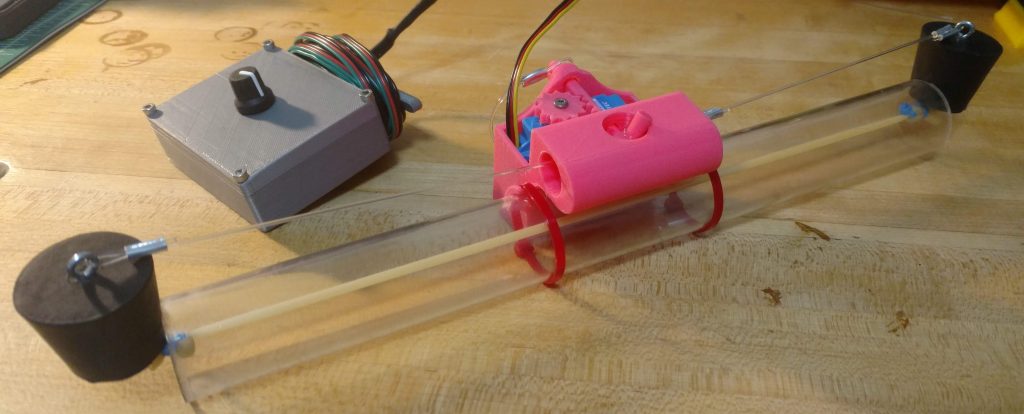
Last month, while traveling to Kuching for Make for the Planet Borneo, I had an idea for the next strange ocean education project: what if we could use bone-conducting headphones to “see” the world like a dolphin might through echolocation?

The author wearing a head mounted LiDAR array, looking very pensive.
Spoilers: You can. Photo by A. Freitag.

Bone-conducting headphones use speakers or tiny motors to send vibrations directly into the bone of you skull. This works surprisingly well for listening to music or amplifying voices without obstructing the ear. The first time you try it, it’s an odd experience. Though you hear the sound just fine, it doesn’t feel like it’s coming through your ears. Bone conduction has been used for a while now in hearing aids as well as military- and industrial-grade communications systems, but the tech has recently cropped up in sports headphones for people who want to listen to music and podcasts on a run without tuning out the rest of the world. Rather than anchoring to the skull, the sports headphones sit just in front of the ear, where your lower jaw meets your skull.

This is not entirely unlike how dolphins (and at least 65 species of toothed whales) detect sound. 

Read More “I built a head-mounted LiDAR array that lets you see the world like a dolphin via vibrations sent through your jaw.” »

Gently jelly-nabbing bots, deep-coral under threat, albino stingrays, #JacquesWeek, and more! Monday Morning Salvage: July 23, 2018

Posted on July 23, 2018July 22, 2018 By Andrew Thaler
Weekly Salvage

Foghorn (A Call to Action!)

  • All Hands on Deck! You’re got one week left to apply to join the MIT Media Lab and NOAA’s Office of Ocean Exploration and Research for this year’s National Ocean Exploration Forum as an Ocean Discovery Fellow!
  • Jacques Week 2018 is here!

Flotsam (what we’re obsessed with right now)

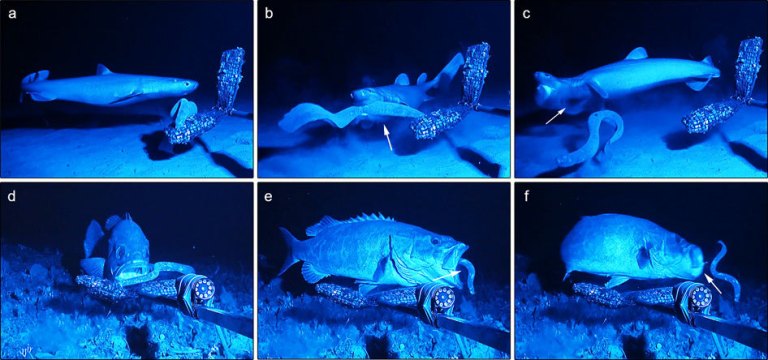
  • What just happened? Everyone is going wild for the deep-sea fish attack video.
  • A gentle jellyfish-grabbing claw for collecting squishies without squishing them!

The Levee (A featured project that emerged from Oceandotcomm)

  • Stitching Hope for the Coast – communicating coastal optimism for Louisiana. Deadline for submissions has been extended to October!

Read More “Gently jelly-nabbing bots, deep-coral under threat, albino stingrays, #JacquesWeek, and more! Monday Morning Salvage: July 23, 2018” »

Fun Science FRIEDay – The Break-up

Posted on July 20, 2018 By Kersey Sturdivant
Uncategorized

Our lives are a blip in the space time continuum. As a result, it can seem that the Earth is relatively static, with many of the large scale dynamic changes that shape our sphere largely unnoticeable to us occurring on geological time-scales. One such change is the movement of landmasses on earth, better known as plate tectonics.

Earth’s landmasses are not static but in constant flux. The Earth’s lithosphere (formed by the crust and the upper part of the mantle) is broken up into a number of tectonic plates that move relative to each other at varying speeds, “gliding” over a viscous asthenosphere. There is still ongoing debate about what force or forces causes this movement, but whatever the forces are they can also cause the plates to rupture, forming rifts, and potential leading to the development of new plate boundaries. When this happens landmasses break-up and new continents forms; this is currently happening in the East African Rift in southwestern Kenya.

View of East African Rift in Kenya from space (Photo credit: Google Earth. Data SIO, NOAA, US Navy, NGA, GEBCO).

Read More “Fun Science FRIEDay – The Break-up” »

Writing an Effective Ocean Advocacy Letter

Posted on July 19, 2018April 18, 2025 By Angelo Villagomez
Policy

Earlier this year, Andrew issued his Summer Science Outreach Challenge: Write an Op-Ed.  Inspired, I thought I would straight up steal Andrew’s idea and give a few tips on writing an effective advocacy letter, the type of letter you’d send to a government official to ask them to help protect the ocean.

In my conservation career I’ve written hundreds of letters to all levels of government, from agency staff to presidents.  Advocacy letters are one of the more effective tools in the arsenal of conservation tactics.  They are a great way of communicating a message directly to a targeted person (assuming the letter gets read, of course!) and are a great way to kick off a discussion on protecting the ocean between concerned citizens and government officials.  Here are a few tips:

Read More “Writing an Effective Ocean Advocacy Letter” »

ACTION ALERT: Protect Florida sharks from harmful fishing practices

Posted on July 19, 2018July 19, 2018 By David Shiffman 3 Comments on ACTION ALERT: Protect Florida sharks from harmful fishing practices
Conservation, Science

After years of scientists and conservationists complaining about problems with common land-based shark fishing practices, the Florida Fish and Wildlife Conservation Commission is finally taking action! At their April meeting, FWC formally announced that they are considering revising regulations governing this activity with the goal of restricting the unnecessary and cruel handling practices that result in killing protected species of sharks.

(For background on this topic, please read my detailed open letter, or this summary of my research).

Here are the options that FWC is considering.

Examples of unequivocally illegal shark fishing from Shiffman and Friends 2017


How can you help? Either physically attend a workshop or send a formal comment online!


Read More “ACTION ALERT: Protect Florida sharks from harmful fishing practices” »

Posts pagination

Previous 1 … 39 40 41 … 271 Next

Popular Posts

What Ocean Ramsey does is not shark science or conservation: some brief thoughts on "the Shark Whisperer" documentaryWhat Ocean Ramsey does is not shark science or conservation: some brief thoughts on "the Shark Whisperer" documentaryJuly 2, 2025David Shiffman
That's not a blobfish: Deep Sea Social Media is Flooded by AI SlopThat's not a blobfish: Deep Sea Social Media is Flooded by AI SlopDecember 19, 2025Andrew Thaler
Shark of Darkness: Wrath of Submarine is a fake documentaryShark of Darkness: Wrath of Submarine is a fake documentaryAugust 10, 2014Michelle Jewell
We Need a "Starfleet" for the OceansMarch 30, 2026Chris Parsons
Join Me at Upwell: A Wave of Ocean Justice — Our Fourth Year!Join Me at Upwell: A Wave of Ocean Justice — Our Fourth Year!March 24, 2026Angelo Villagomez
Urea and Shark OsmoregulationUrea and Shark OsmoregulationNovember 15, 2010David Shiffman
What is a Sand Shark?What is a Sand Shark?November 12, 2017Chuck Bangley
I turned my woodshop into a personal solar farm.I turned my woodshop into a personal solar farm.June 21, 2021Andrew Thaler
Phantom science - how "AI slop" is making environmental policyPhantom science - how "AI slop" is making environmental policyMarch 30, 2026Chris Parsons
What can the funniest shark memes on the internetz teach us about ocean science and conservation?What can the funniest shark memes on the internetz teach us about ocean science and conservation?November 8, 2013David Shiffman

squishy

Subscribe to our RSS Feed for updates whenever new articles are published.

We recommend Feedly for RSS management. It's like Google Reader, except it still exists.

Southern Fried Science

  • Home
  • About SFS
  • Authors
  • Support SFS


If you enjoy Southern Fried Science, consider contributing to our Patreon campaign.

Copyright © 2026 Southern Fried Science.

Theme: Oceanly Premium by ScriptsTown